APLA Research Faculty Designs Systems for Housing Access
When Mackenzie Stagg talks about housing, she doesn’t necessarily start with buildings. Instead, she talks about systems—financing structures, partnerships and processes that determine who can access a home and under what conditions.

As an associate research professor in the School of Architecture, Planning and Landscape Architecture (APLA), Stagg has built a career around connecting thoughtful design with the realities of housing delivery, affordability and resilience.
A 2008 graduate of Auburn’s architecture program, Stagg returned to APLA in January 2018 as an assistant research professor. Since then, her work has centered on the Rural Studio’s Front Porch Initiative, a collaborative research effort in its ninth year. Alongside colleagues Rural Studio Associate Director Rusty Smith, assistant research professors Betsy Garcia and Christian Ayala and research architects Laurel Holloway and Tim Tamulonis—and in close collaboration with Rural Studio faculty, staff and students—Stagg is working to expand access to high-performance housing across the country.
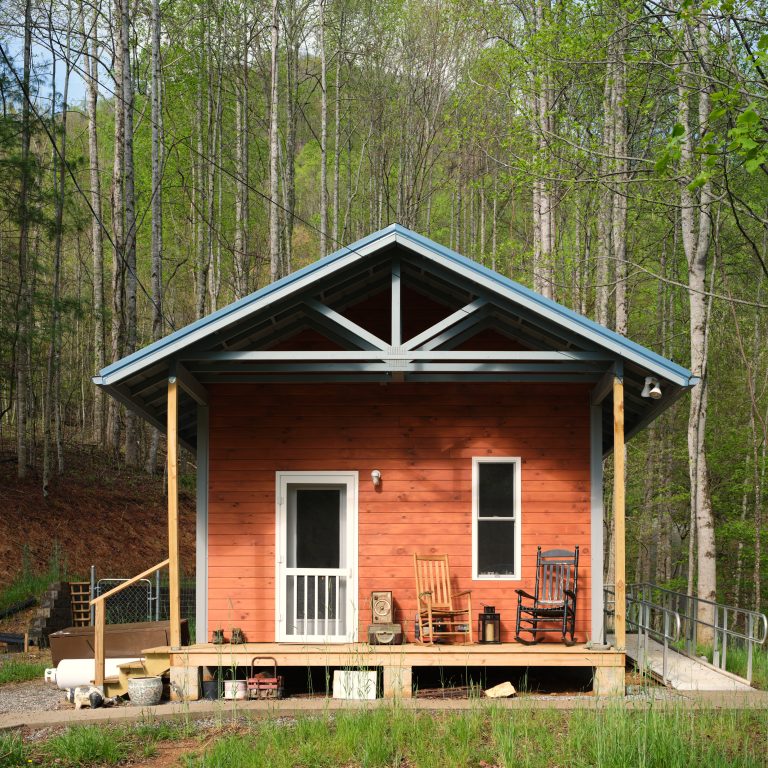
At its core, the Front Porch Initiative works directly with housing providers to extend Rural Studio’s housing research. The team promotes homes that are efficient, resilient, durable and supportive of occupant health and community connection. That work has grown from regional partnerships to a national network of collaborators, including nonprofit housing developers, financial institutions, municipalities, land banks and policy stakeholders. Today, with support from federal agencies, government sponsored enterprises, foundations and financial institutions, the Front Porch Initiative has 22 ongoing home projects across 14 states.
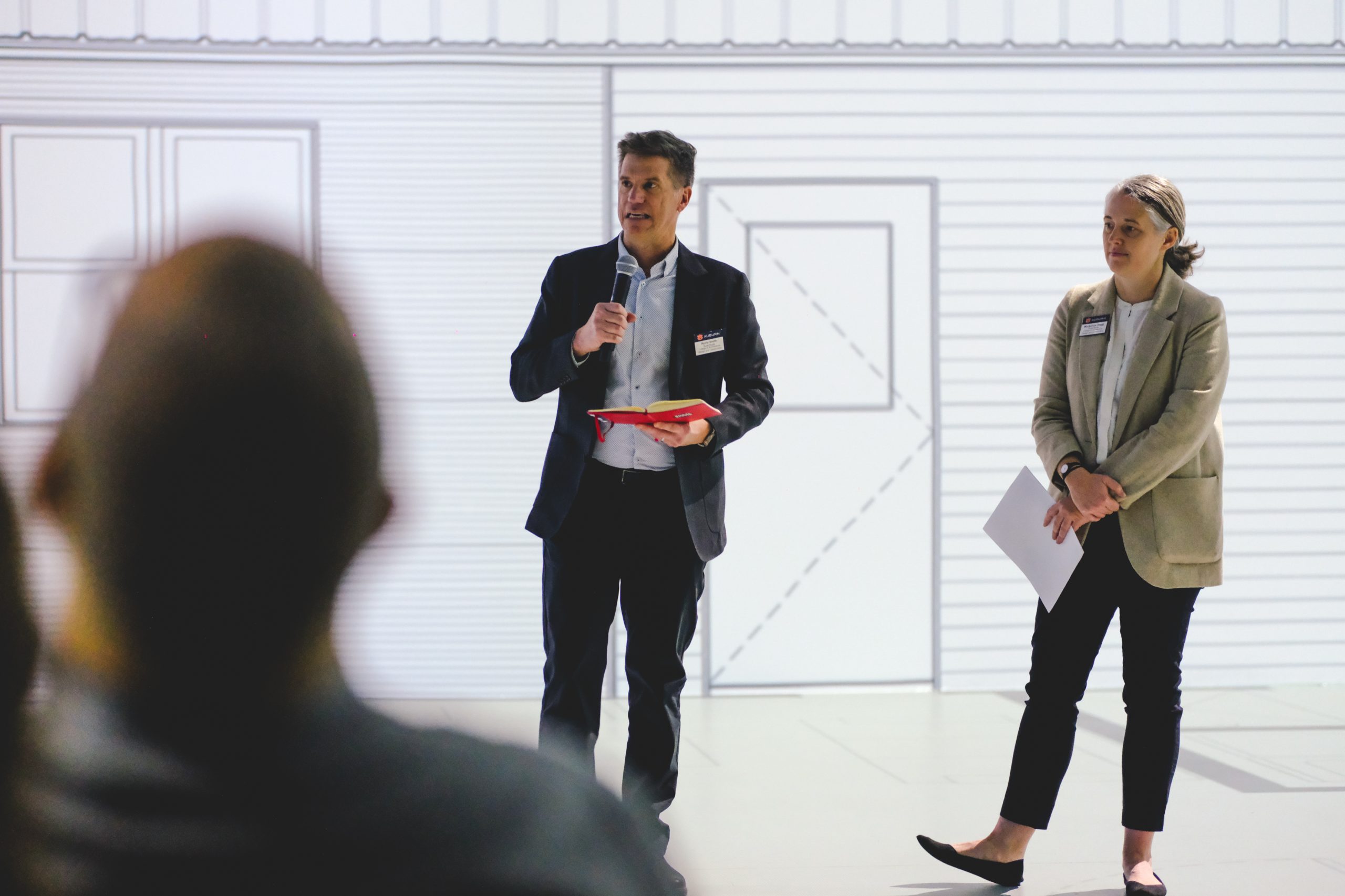
“I’ve really enjoyed working with our housing provider partners,” Stagg said. “A lot of our learning comes from working directly with real partners on real projects.”
Recent efforts range from post-tornado housing redevelopment in Selma, Alabama, to innovative land bank partnerships in Houston, Texas that pair pre-permitted prototype homes with small or underutilized parcels—an approach designed to remove barriers to development.
The internal and external work forms a feedback loop—meticulous design development at Rural Studio informs industry application, while lessons from the field shape future design and construction research.
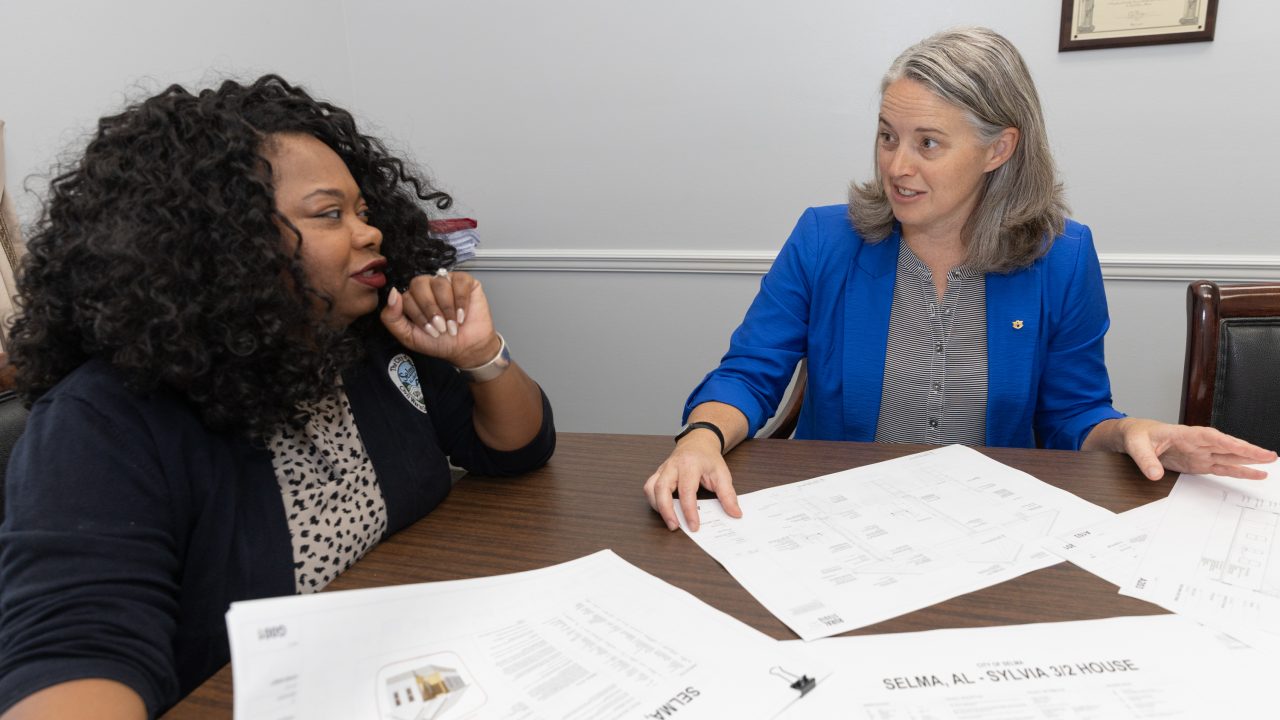
Over the past several years, Stagg’s role has evolved from hands-on design work to managing complex, externally funded research initiatives.
“I have a lot more knowledge about the housing procurement system and how you can arrange and stack capital to make a home affordable to a person,” she said, likening the financial strategies to the brick and mortar of residential construction.
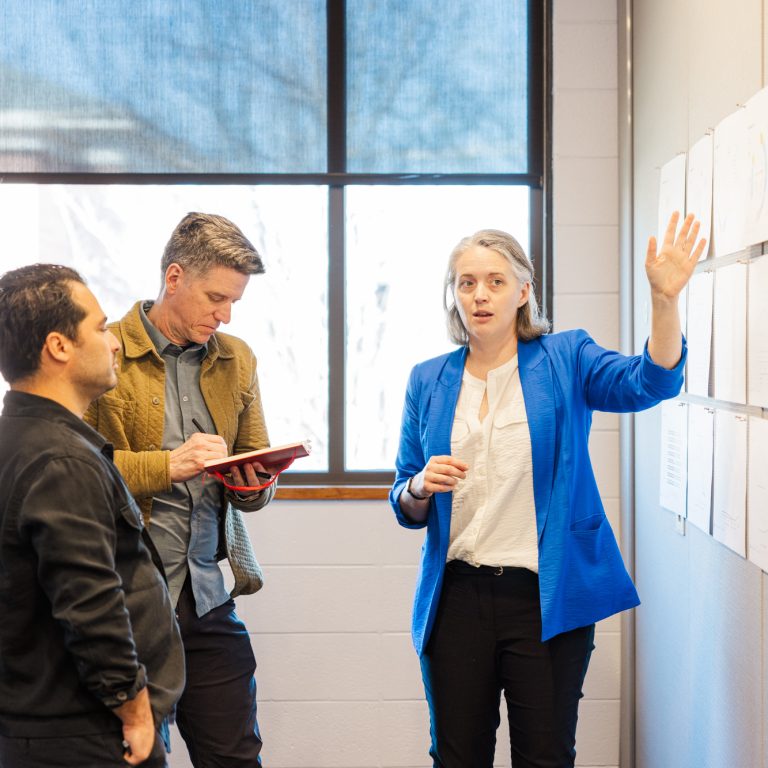
For Stagg, being back at Auburn is both personal and purposeful. An Alabama native and proud alumna, she sees her work as aligned with both APLA and the university’s mission.
“There is something to Auburn being a land grant university and a Tier One Research university with a Carnegie Outreach designation,” she said. “It’s in the DNA of Auburn to think about its place in enhancing the lives of people in the state and beyond.”