BSCI Faculty Present at ASC’s Artificial Intelligence Education Symposium
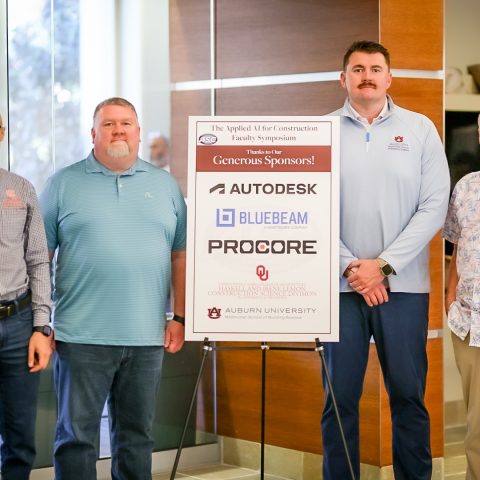
Four faculty members from the McWhorter School of Building Science (BSCI) shared their research about artificial intelligence (AI) in construction education at a symposium in July.
The Associated Schools of Construction (ASC) hosted a multi-day symposium entitled Applied AI for Construction Faculty at the University of Oklahoma. BSCI was a title sponsor of the event, and Professor Wes Collins co-chaired the symposium with ASC President Dr. Tammy McCuen.
The symposium provided construction faculty with actionable AI knowledge they can apply in their classes, including what to teach students about how AI is used in the construction industry and how to leverage AI in the day-to-day tasks of teaching construction. The three-day event included 16 presentations by faculty from across the country, as well as Autodesk, Bluebeam, Rogers-O’Brien Construction, Hensel Phelps and DFW Airport Controls and Analytics. BSCI presenters included Associate Professors Eric Wetzel and Mark Tatum, Collins and incoming Assistant Professor and recent BSCI doctoral graduate Shadi Alathamneh. Lecturer Alexander Adolf assisted with Wetzel’s presentation.
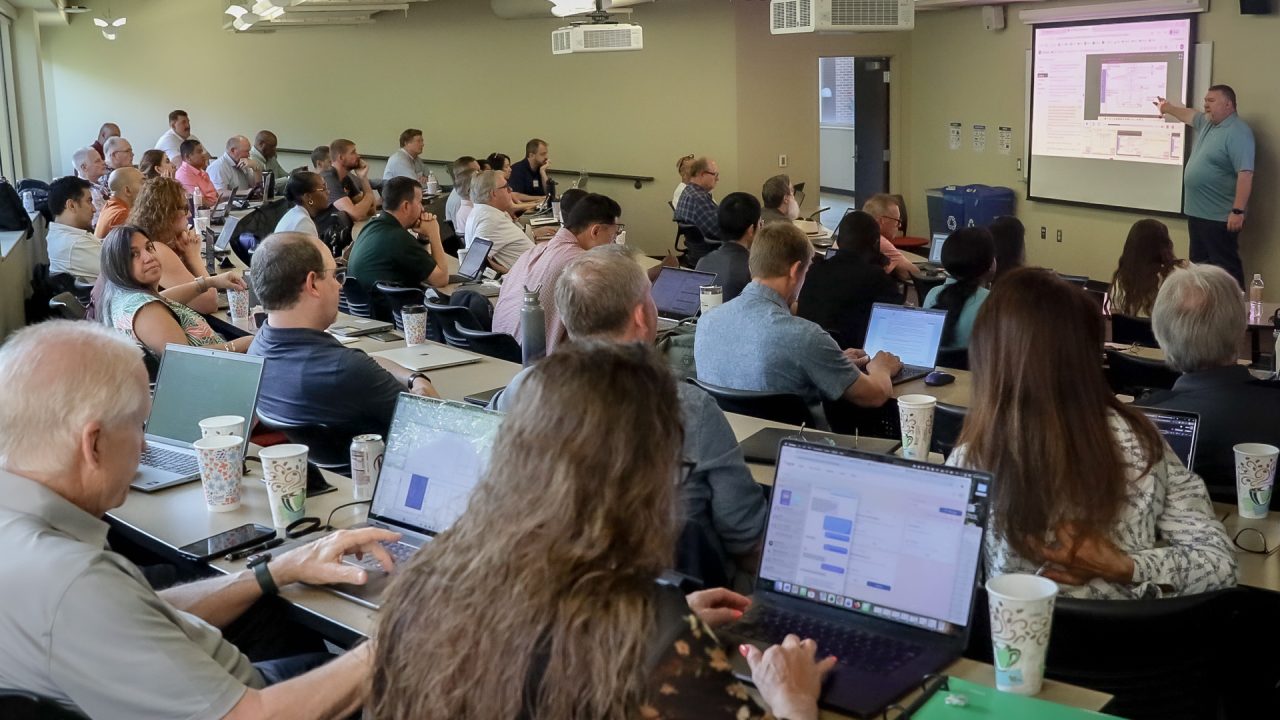
“The McWhorter School of Building Science is contributing to the AI-in-construction conversation through multiple complementary areas of expertise: developing AI-enabled educational tools, preparing students to build and deploy applied AI systems for construction, and evaluating how emerging field technologies such as vision-language AI, reality capture and agentic AI will transform jobsite management and decision-making,” Collins said.
Wetzel’s presentation, titled “Models to Machines: Teaching Construction Students to Build Applied AI Systems for Jobsite Deployment,” outlined the design and delivery of an AI course for construction students with no prior background in programming, machine learning or robotics. Through an application-first structure, the course included programming basics, prompt engineering, machine learning, object detection, agentic AI and construction robotics through hands-on activities, live demonstrations, industry guest lectures and project-based assessments. It was built around the idea of creating a talent pipeline of construction students for future industry innovation.
Tatum gave a presentation titled “Reality Capture & Agentic AI in Jobsite Construction Management” that discussed the shift in AI from a textual tool used for reports and documents to vision-language models trained on real-world site imagery. The session used two DroneDeploy programs, Safety AI and Progress AI, as examples of how major contractors are already deploying these tools. The presentation addressed how construction management programs could prepare students for the likelihood that autonomous jobsite data capture will grow significantly in the coming years.
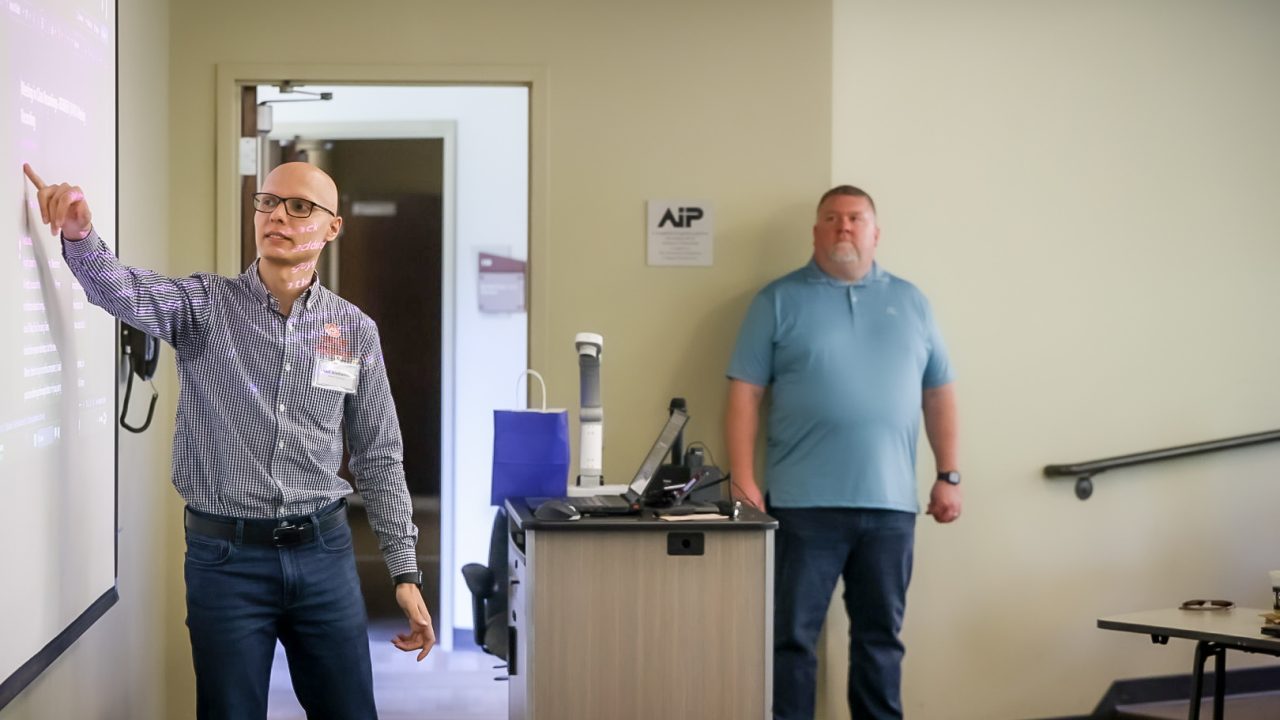
Collins and Alathemneh presented a session titled “Developing Course-Specific Virtual Teaching Assistants Using Microsoft Copilot Studio” that demonstrated how lecture transcripts, assignment guides, software tutorials, and course documents can be used to create an AI agent that supports students outside scheduled class time. The presentation also showcased a live AI teaching assistant currently being used by students, providing a practical example of how this approach could be implemented in a construction management course.
“Collectively, these presentations demonstrate that Building Science faculty are not only researching and teaching AI applications but also helping to define the workforce skills, curriculum models, and industry practices needed to responsibly integrate AI into the future of construction,” Collins said.
See more in:
Artificial Intelligence,
Faculty Collaboration,
Faculty Recognition,
Industry Engagement,
Research
Related people:
Eric Wetzel,
Mark Tatum,
Wesley Collins,
Alexander Adolf,
Shadi Alathamneh