APLA Faculty Member Pushes Students to Challenge their Own Arguments
Graduate Architecture Chair David Shanks is helping the School of Architecture, Planning and Landscape Architecture (APLA) move into a more research-focused future.

Shanks, who was recently promoted to Associate Professor with tenure, has taught at APLA since 2023 and is spearheading the new Master of Science in Architecture (MSA) degree program that focuses on mass timber design.
By integrating high-level inquiry into the studio environment, Shanks is preparing students to move beyond professional baseline expectations and become leaders in an increasingly specialized industry.
Shanks’ teaching philosophy centers on “critical interrogation”—prompting students to challenge and test their own ideas to make them stronger and more defensible.
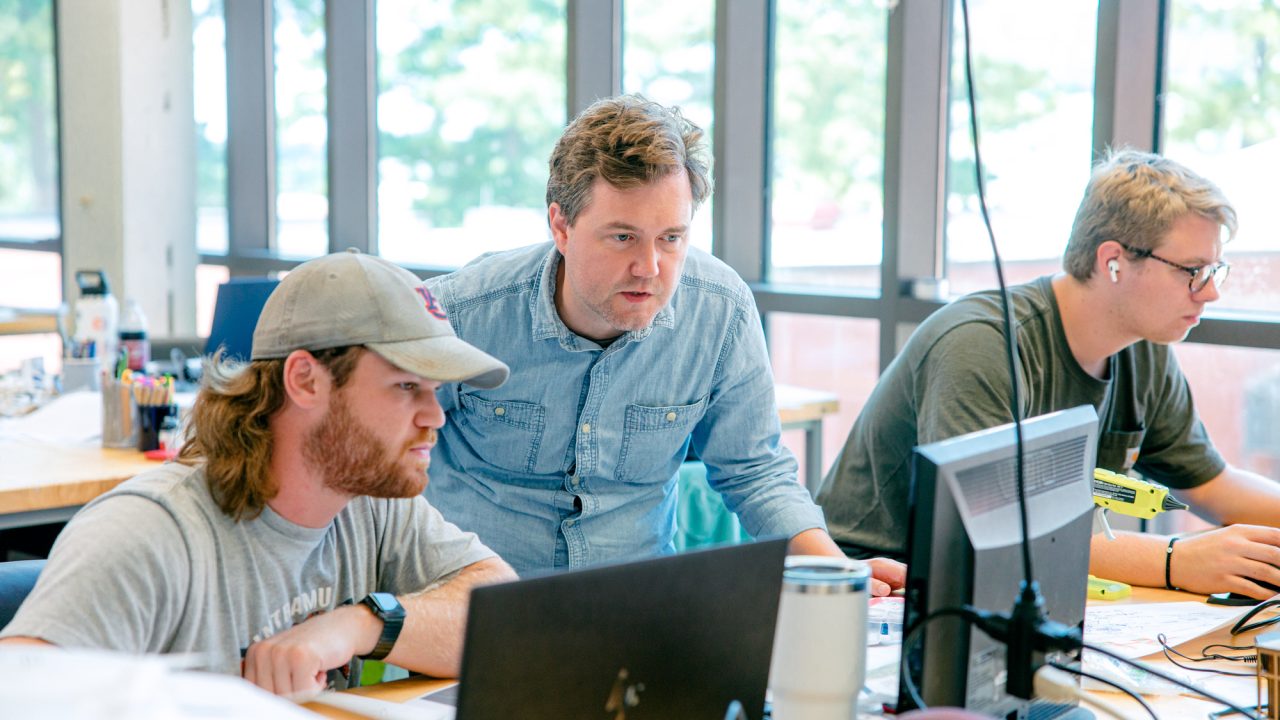
“I want us to not resort to platitudes or take certain arguments as given,” he said. “We can come up with experiments to strengthen our cases.”
In his Fall Research Methods and Spring Capstone courses in the graduate program, students follow academic publication processes, developing prototypes to bolster arguments and then disseminating their research in conference settings. He views the program as a flywheel to accelerate the work currently being conducted by the Auburn Mass Timber Collaborative (AMTC).
Beyond the classroom, Shanks leads interdisciplinary projects that bridge architecture, material science and engineering. He is currently wrapping up production on a portable pavilion that showcases bio-based construction materials—supported by the Alabama Research and Development Enhancement Fund (ARDEF) and HudsonAlpha.
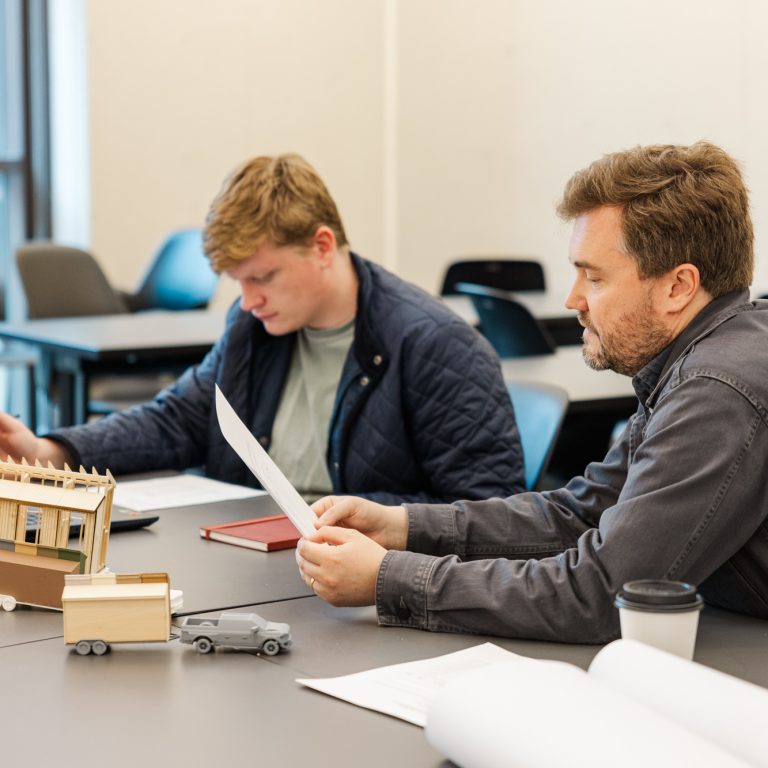
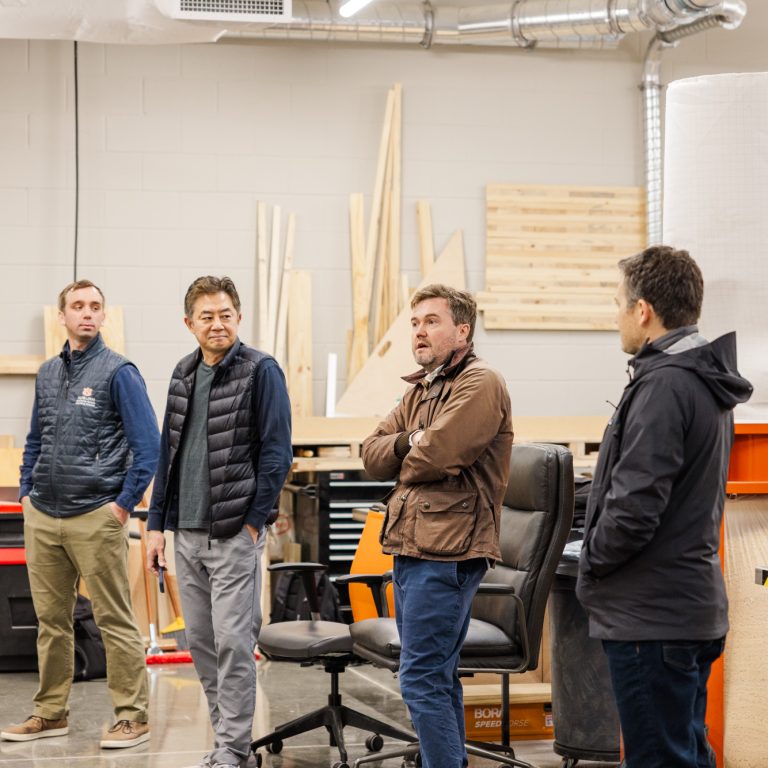
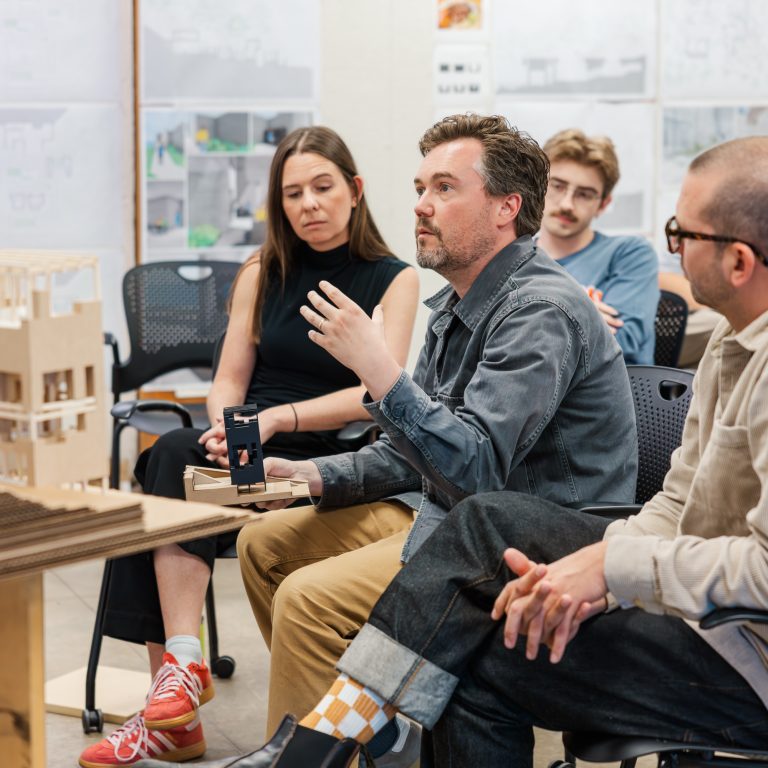
That project—which is a collaboration between the College of Architecture, Design and Construction (CADC) and the College of Forestry, Wildlife and Environment (CFWE) —was a building block for a new $160 million grant that was awarded in July by the National Science Foundation to a group led by the Samuel Ginn College of Engineering. Known as the BRIDGES Engine, the 10-year project will investigate bio-based products that utilize Alabama’s agricultural resources. Within it, Shanks will research how local grasses can be used for insulation and develop protective coatings to improve the durability of mass timber.
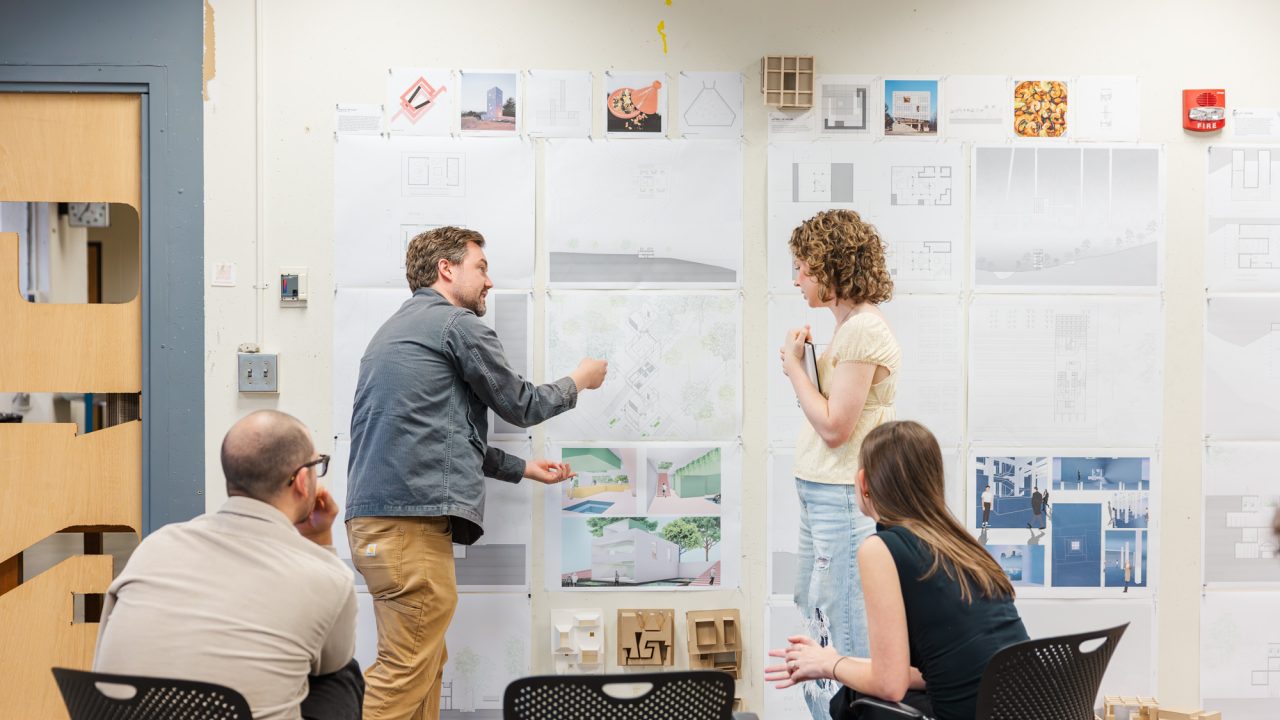
Shanks credits Auburn for allowing him to integrate his research and teaching in a way that has both a strong local impact and a broader implication through a butterfly effect of people.
“The research is about supporting local economies, but I hope we can bring our expertise to a wider context by sending graduates into the world,” he said.
See more in:
Auburn Mass Timber Collaborative (AMTC),
Faculty Collaboration,
Faculty Recognition,
Mass Timber,
Research
Related people:
David Shanks