Urban Studio Fifth Years Present Thesis Projects
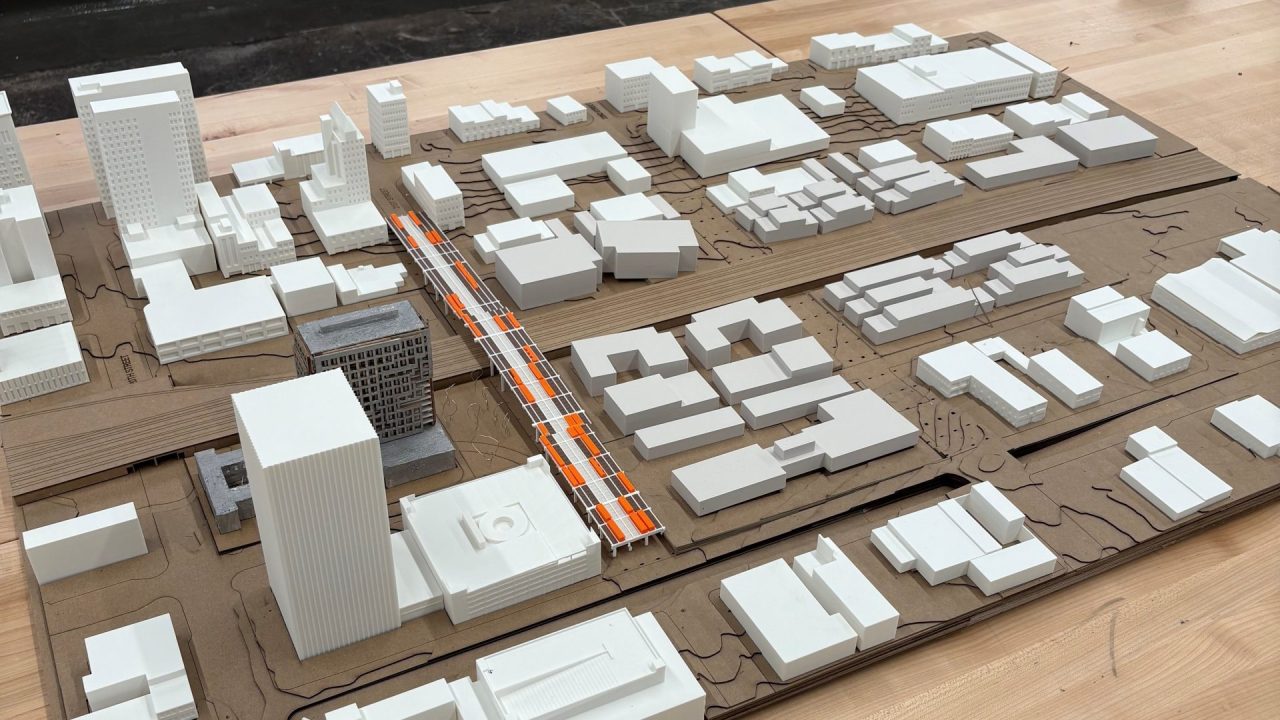
This year’s Urban Studio fifth years gave their final juried presentation in February, presenting the culmination of their architectural studies in a single final project.
The students began working on their concepts in the fall of 2025. They explored topics through thesis research and a written paper and developed a comprehensive plan for the Morris Avenue / Rainbow Bridge area in downtown Birmingham, which they presented in December.
Using feedback from local architects who have mentored them throughout the spring, the students each developed an area of the comprehensive plan through the lens of their thesis topic. The students presented to architects Andrew Bryant, Keaton Ernst ’15 from Nequette Architecture & Design and Adrienne Retief ‘84 from Pfeffer Torode, all of whom served on the fall jury, providing continuity of feedback for the students.
Taylor Anderson | The City of Selves
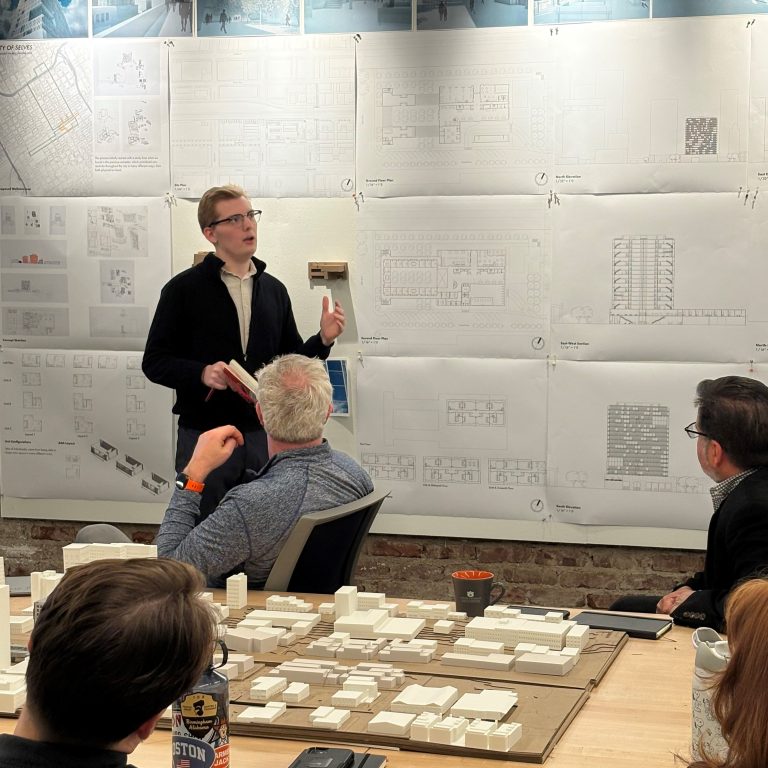
Anderson explored his topics of individualism and collectivism through the design of a mixed-use building that featured both residential spaces and retail opportunities. The project allowed him to demonstrate how residents can express their individuality through lightly programmed units and still remain a part of the city community. He explained this was a “collective that celebrates the individual.”
Abby Best | Poetics of the Mundane
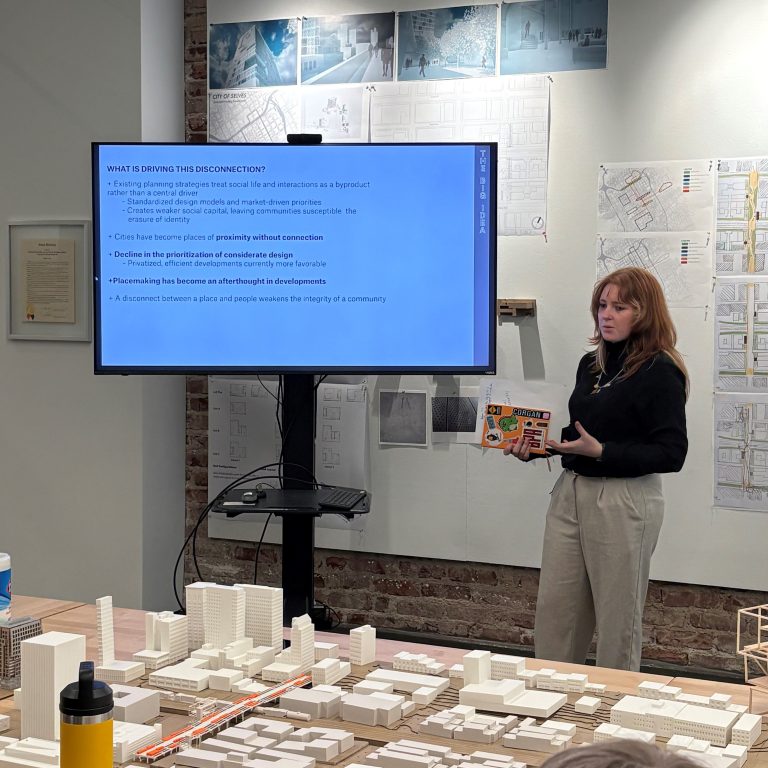
As Best explained during her introduction, urban areas are often places of proximity without connection. By developing the Rainbow Bridge with more pedestrian-oriented design and providing additional access from the ground level, Best developed interaction points throughout the project to encourage the mundane interactions that increase opportunities to develop social capital and community.
Jordan King | Permanance
King began his presentation explaining that residents “can’t have a feeling of permanence without tackling and addressing the food desert in Birmingham.” His section of the site was developed into a farming area, allowing for community education, offering plots for personal gardens and cultivating fresh food for neighborhoods throughout the city.
Gracie LaFont | Don’t Fear the Reaper
LaFont used her site to explore perceptions of death and the culture of remembrance through contemplative vignettes. From a chapel structure to an underground columbarium, she was able to provide a respite from the hustle of urban life and a place to remember loved ones within the heart of the city.


Reese Miller | Happy Living
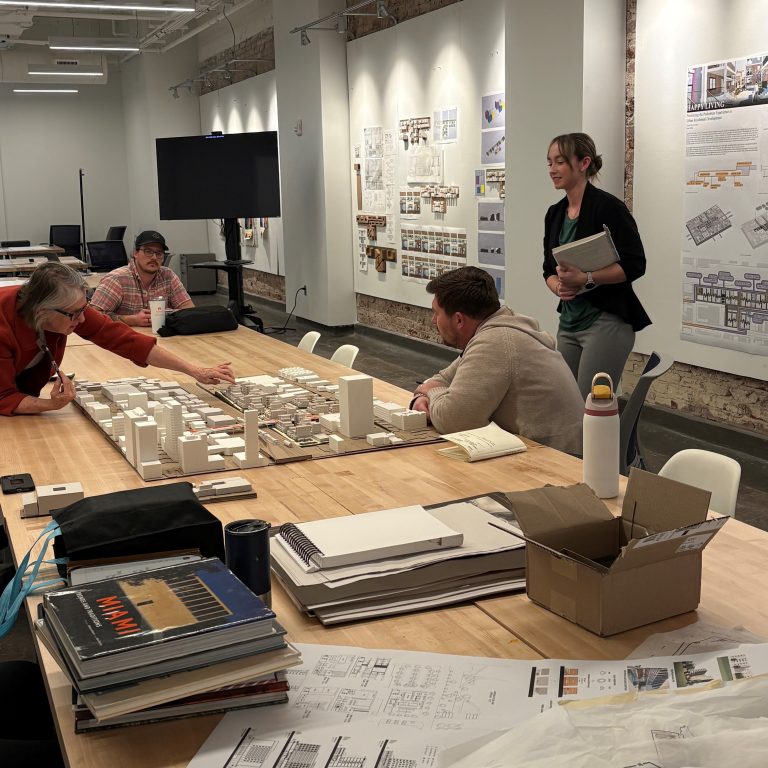
In her thesis, Miller postulated that people would be happier if they were less dependent on individual vehicles. She addressed urban living from the pedestrian scale with limited contact with cars. Miller showed how she could keep a dense urban residential development from feeling visually overpowering by using tiered structures and landscaping, creating a feeling of community, while restricting automobile pathways.
Want to learn more about the Urban Studio experience?
See more in:
Student Experience,
Student Work,
Urban Studio
Related people:
Alex Krumdieck,
Jennifer Cloe