Urban Studio Students Address Downtown Birmingham in Fall Design Projects
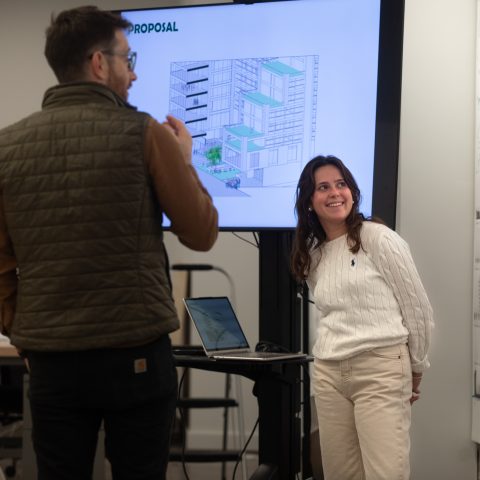
In December, Urban Studio third- and fifth-year students showcased their creativity in end‑of‑semester reviews with local architects.
The students created a variety of designs that reflected both the client’s needs and different concepts they studied throughout the semester.
Third Year
Nine third-year students presented their final designs for a hotel near Railroad Park in Birmingham, balancing guest experience with the realities of hotel operations within the thriving urban neighborhood.
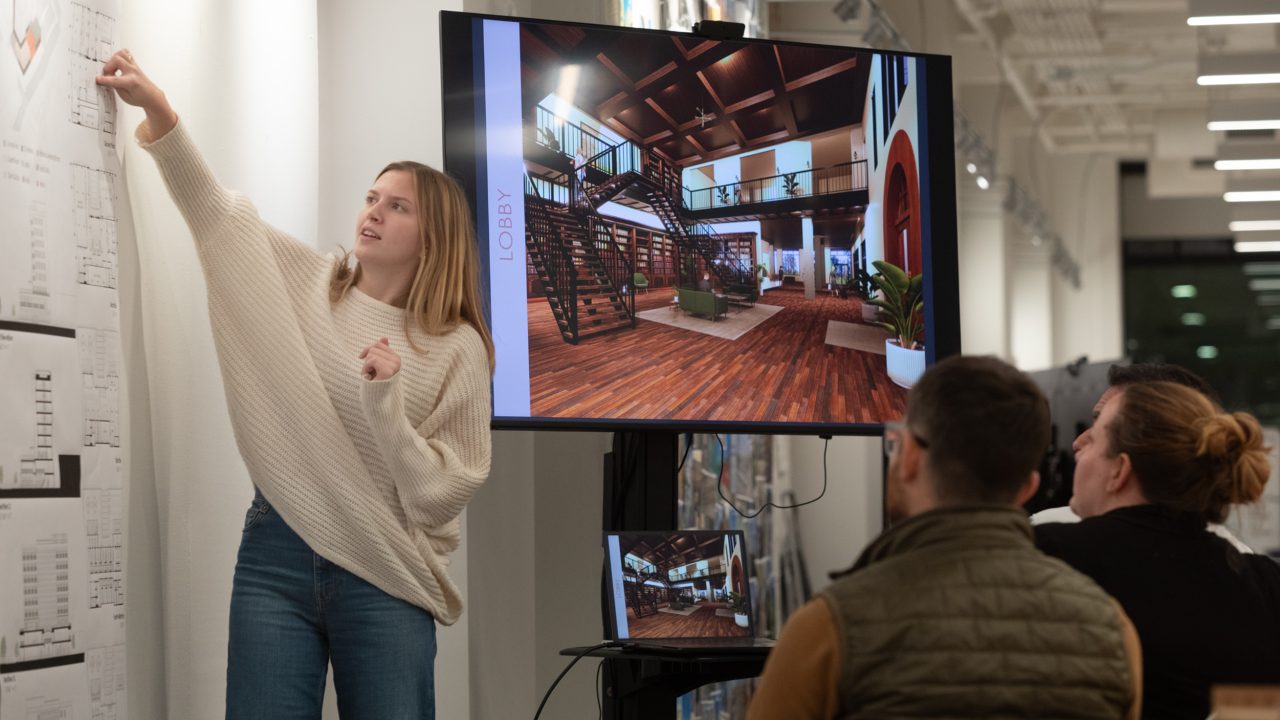
“A hospitality project is rooted in the culture and character of its location, so it creates an opportunity for students to learn and immerse themselves in Birmingham,” explained adjunct faculty member Matt Leavell ‘01.
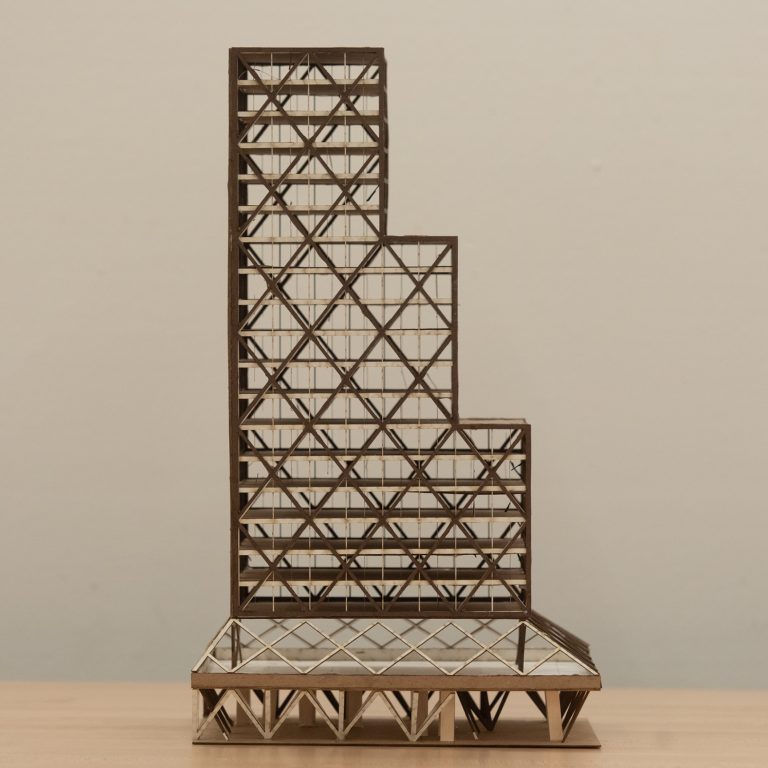
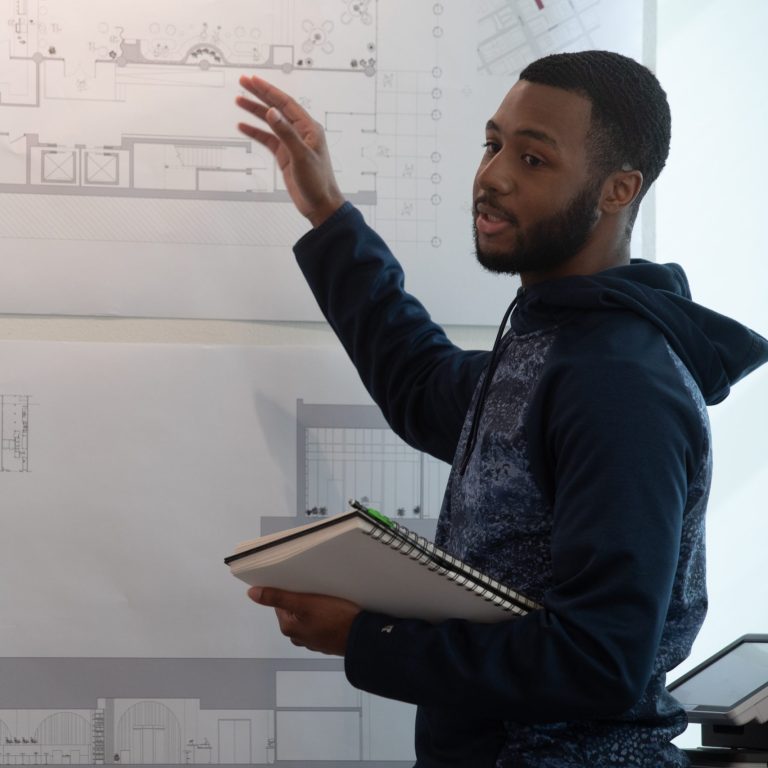
The students worked with local developer Grant Brigham from Matthews Development, presenting their work to someone who could eventually be a potential client.
Leavell explained that Brigham’s engagement “helped students understand that architecture does not exist in a vacuum and must respond to the practical needs of a client and navigate the economic realities of development.”
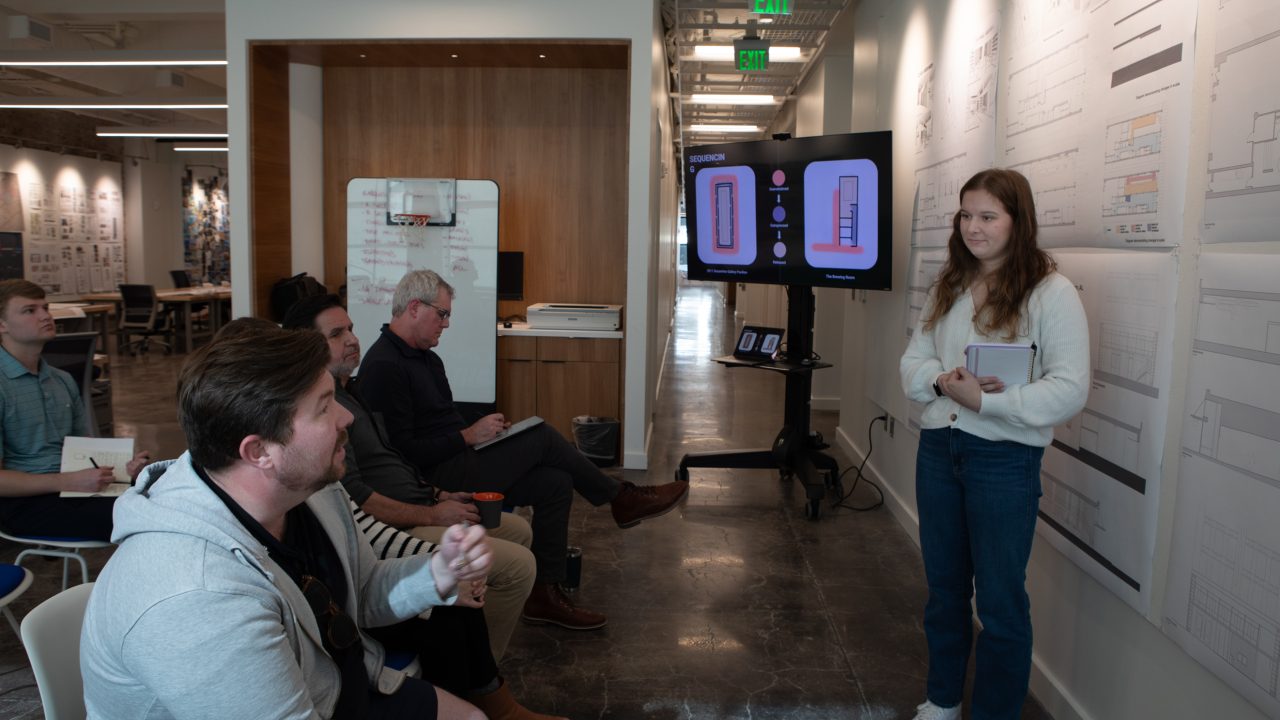
In addition to Brigham, the fall third-year students worked with Will McGarity ‘11 of Stick Architecture and Cameron Acheson ’10, the managing director of David Baker Architects. McGarity and Acheson have years of experience in community-driven design, helping the students see how their designs live, work and fit with the community—one of the principal lessons of the Urban Studio experience.

Fifth Year
Meanwhile, the five fifth-year students wrapped up the fall semester with a juried review of their comprehensive plan and a preview of their spring semester thesis projects.
Director Alex Krumdieck ’86 invited Birmingham architects to serve as jurors, giving unvarnished feedback on the students’ ideas and establishing as valuable connections for their futures. The December jury included Design Initiative’s Andrew Bryant, Nequette Architecture & Design’s Keaton Ernst ’15, ArchitectureWorks’ Alex Hamady ‘12, Pfeffer Torode’s Adrienne Retief ‘84 and Wadsworth Architecture’s Eric Wadsworth.
Joining the jurors were Justin Miller, head of the School of Architecture, Planning and Landscape Architecture (APLA), Urban Studio Director Emerita Cheryl Morgan, Leavell and consultant Rebecca Dobrinski.
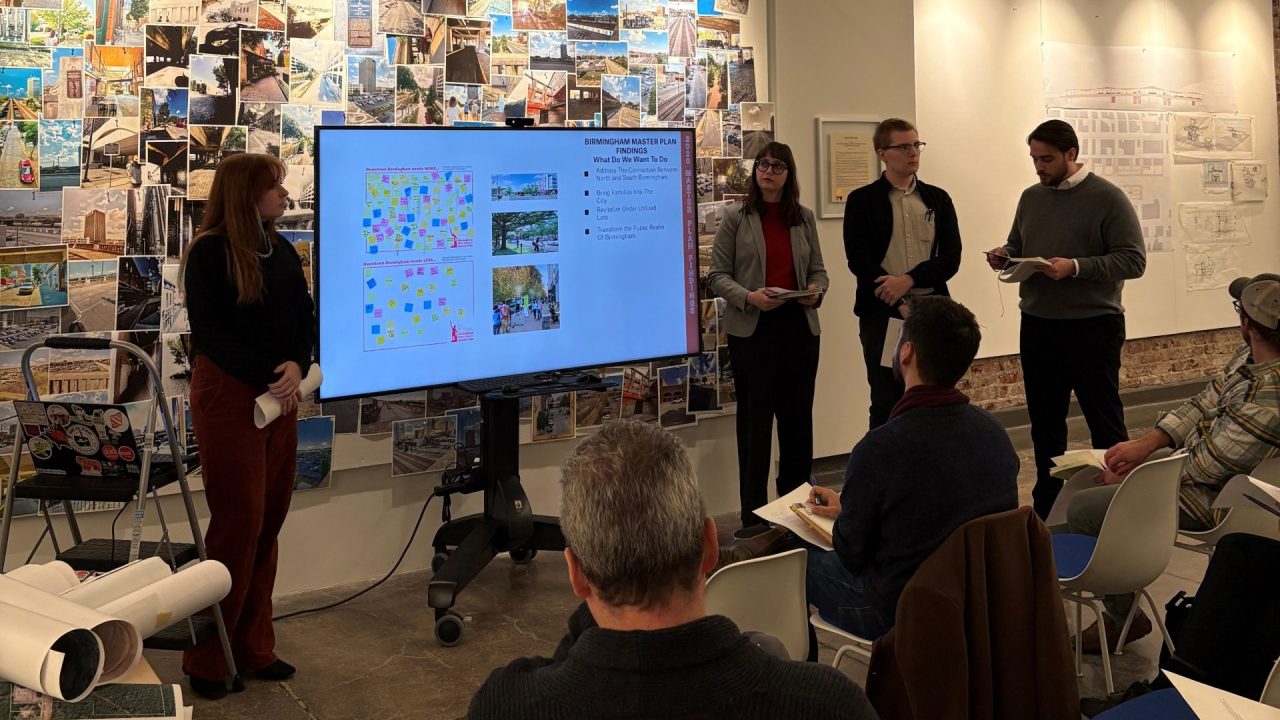
This year’s class reimagined the industrial area between Morris and Powell Avenues in downtown Birmingham, focusing on the area below the historic Rainbow Bridge. They analyzed a variety of comprehensive plans for the site and adjacent districts, realizing the bridge was not going to be reopened.
Instead, they followed the city’s focus of bringing more families to downtown, leaning on a microneighborhood scheme with walkable amenities, schools, play and recreation areas that instill a sense of safety and draw families out of the suburbs.
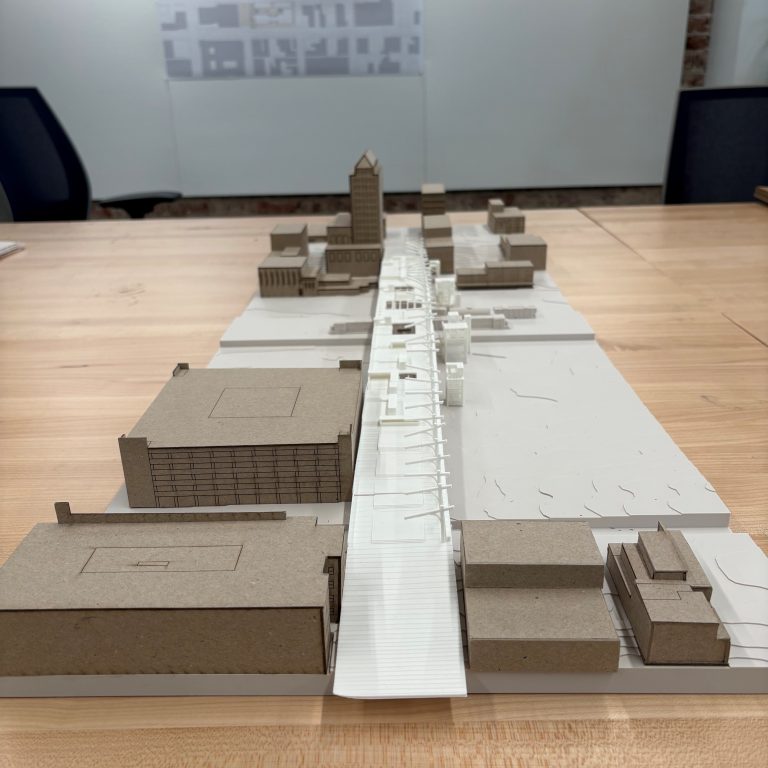
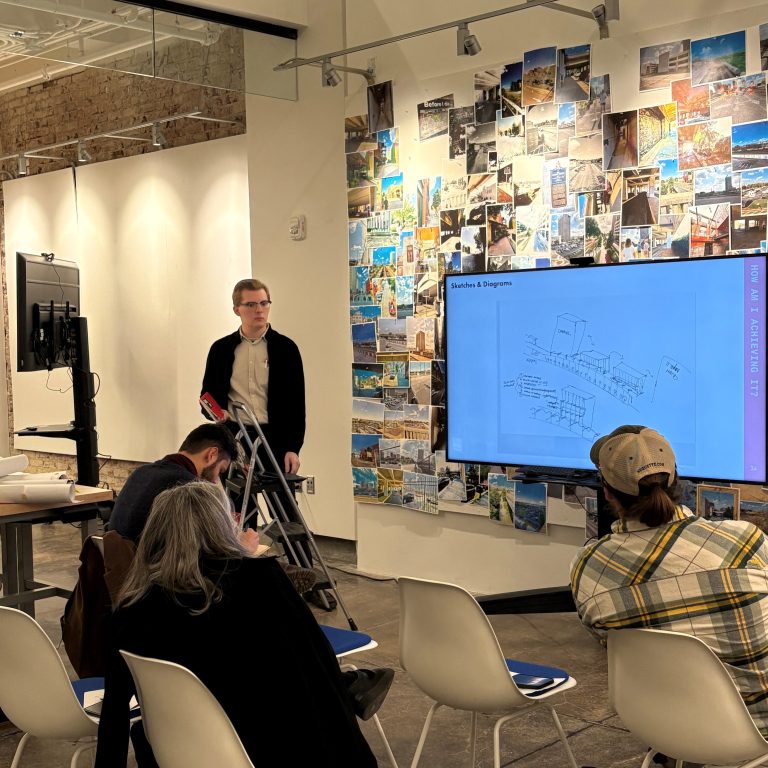
The students developed a set of research topics—to be explored in their spring thesis studio—that will serve as a rubric to understand the needs of their new community:
- Happiness through less automobile usage
- Social capital building through mundane interactions
- Permanence and the feeling of being settled
- Independence through ownership
- Remembrance to provide a foundation
Using feedback from both residents and architects, the students’ new development featured family homes, apartments and amenities that addressed their thesis design rubric.
Garnering local knowledge and feedback is an essential lesson for new architects, helping them better understand user needs for the area. In a real-world context, gathering this type of feedback fosters public trust and creates an empowering process that leads to sustainability and a strong sense of community identity.
See more in:
Student Experience,
Student Work,
Urban Studio
Related people:
Alex Krumdieck,
Justin Miller