Urban Studio Students Study Boston Landmarks, Built Environment

This year in September, Urban Studio students headed north for their annual fall field trip.
Planned by third-year studio instructor Matt Leavell ’01, the group spent a September weekend exploring one of the oldest cities in the US: Boston.
“Boston offers a diverse range of historic architectural styles that reflect the era’s economics, skills, politics and civic engagement,” Leavell explained. “Students experienced so many of the ‘-isms’ such as colonialism, federalism, brutalism and modernism. While each of those styles has a strong aesthetic, they also engage with the cities in different ways. The contrast between these styles introduces the relationship between architectural design and urban design.”
Their first day in town, students gathered in Copley Square for a scavenger hunt of architectural and planning elements around Boston. Each student was instructed to find and sketch sites from a list of architectural landmarks. Once completed, the group reconvened to discuss their observations.
One of the reasons Leavell selected Boston was its similarity to the scale of neighborhoods in Alabama cities. Because of this, the students could experience what it means to design with a human-centered rather than car-centric perspective.
When asked about the experience and what he thought he could bring into his work this semester, fifth-year student Jordan King explained: “I learned to recognize how the right of way can be used to improve citizens’ experience, and I saw it firsthand in Boston.
“They used public spaces to redirect travel routes, helping people feel safer and creating a sense of place in their daily routines,” King said. “This also showed me how I can create density in a city without creating massive, inhumane buildings.”
Leavell also planned a visit to the offices of design firm Agency LP.
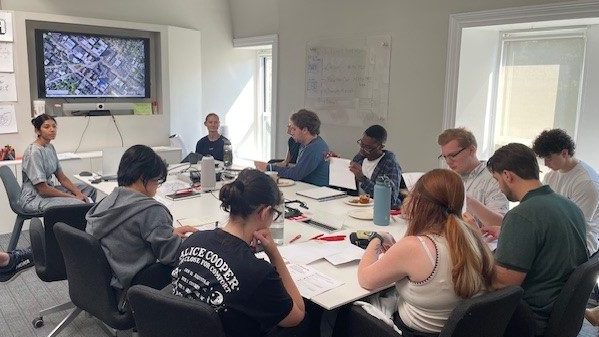
“Agency LP is very intentional about every aspect of their practice, including a deeply integrated commitment to community engagement,” he said. “Their designs celebrate the uniqueness of a place. They have developed a business and operational model that supports their design and engagement process.”
The team at Agency walked the students through some exercises they use to engage with the community and introduced them to some basic urban design principles
“Agency gave us some great ideas about how to work in a group and how to identify people’s skills and tendencies, which I found fascinating,” King added. “They figured out why they were getting decision fatigue which allowed them to maximize each team member’s strength in key moments. They also gave us some advice on how to handle growth in a city while battling the ever-growing problem of parking.”
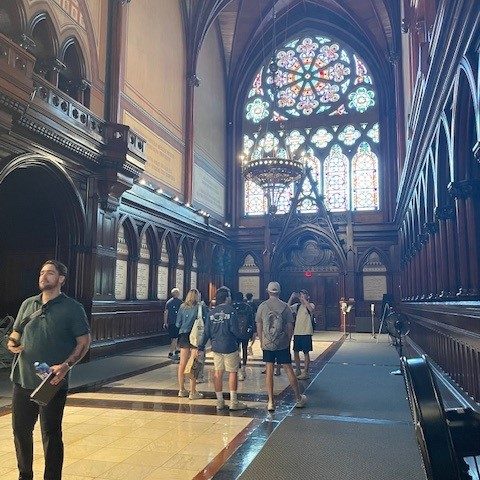
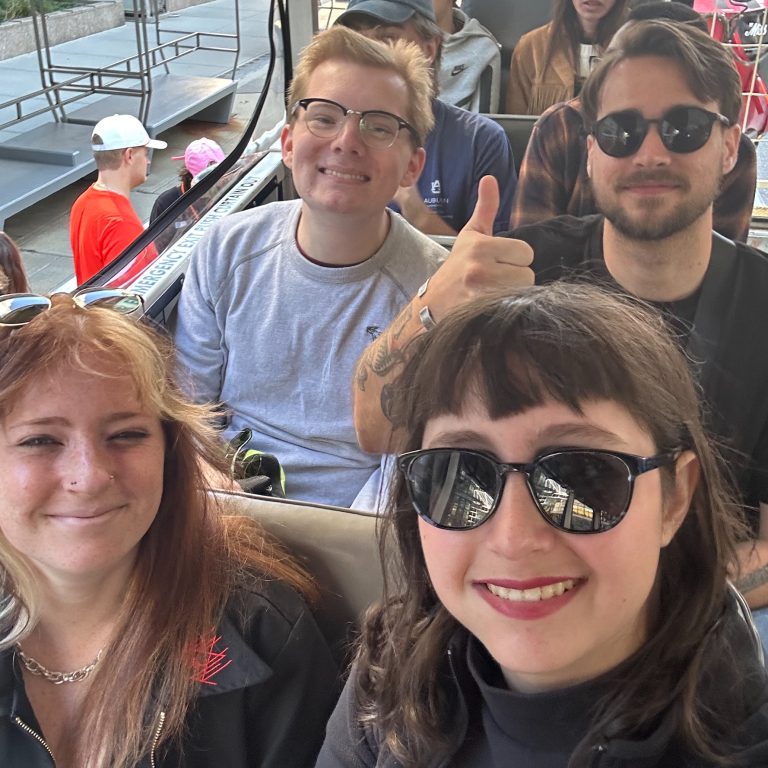
While the students learned a lot, they also had time to explore the city, even taking in one of the city’s famous Duck Boat tours on Saturday. They experienced the seamless connections between buildings and streets, many showing them how blending interior and exterior environments often gave each neighborhood a completely different vibe.
Being immersed in different urban environments is important for architecture students as they prepare to embark on their careers. Boston is one of those unique American cities that provides a wide variety of experiences while remaining approachable as a place to explore.
Visits to cities like Boston provide students with invaluable real-world context not found in the classroom. Students are then exposed to a variety of design solutions and cultural influences, broadening their perspectives and preparing them for their futures.
Want to learn more about the Urban Studio experience?
See more in:
Industry Engagement,
Student Experience,
Urban Studio
Related people:
Alex Krumdieck,
Jennifer Cloe