Urban Studio Students Contribute to Neighborhood Comprehensive Plan
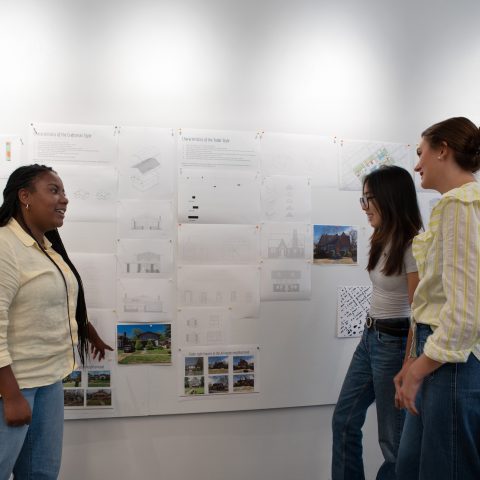
When architect Kyle D’Agostino began organizing a new comprehensive plan for the historic Arlington–West End–Princeton neighborhoods in Birmingham, he knew exactly how he wanted to assemble his team—and he knew he wanted to work with Auburn's Urban Studio on the project.
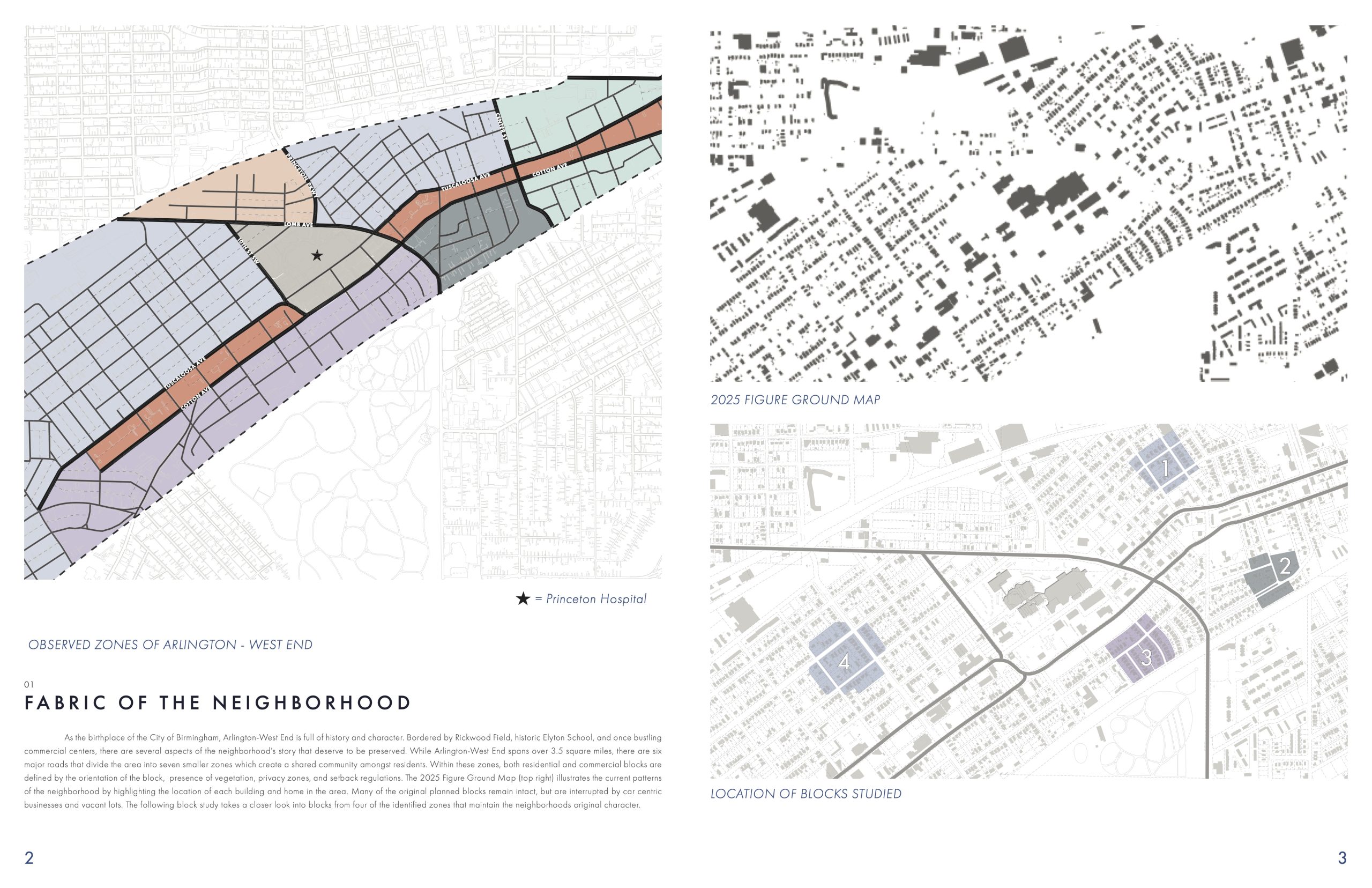
To develop the comprehensive plan, the team, led by Poole & Company Architects, needed an urban analysis to understand these neighborhoods, their connections to each other and how they relate to the Birmingham’s Central Business District (CBD). With the many ongoing, planned and potential projects in the area, the team needed to see a broad, holistic view of the neighborhoods to identify opportunities for different types of development, particularly in relation to sites near Orlando Health’s Baptist Health Princeton Hospital.
In addition to two Urban Studio graduates already working at Poole, D’Agostino selected Place Associates’ Ben Wieseman ’12, Urban Studio Director Alex Krumdieck ’86 and three student interns who would make Birmingham their home for the summer: incoming fifth-year students Emily Watson and Denae Innis and incoming fourth-year student Haeseul Cho.
“I deliberately chose Urban Studio graduates and students because I know what and how Alex teaches them,” D’Agostino explained. “Alex broadens their vision so they can see things at the urban scale—that doesn’t normally come with standard architectural curriculum.”
“Because they have this experience during their academic years, I find Urban Studio graduates are not only good at research, but they understand the urban scale at a level that helps them work quickly and thoroughly,” he continued.
Once assembled, the team worked alongside Cory Stallworth ‘09, Senior Deputy Director of the City of Birmingham’s Department of Community Development, using a grant provided by City Councilmember Crystal Smitherman.
One portion of the project was to discover infill opportunities, often called the missing middle, and determine how different options could affect the neighborhood, from low, medium and high-density properties to mixed use buildings.
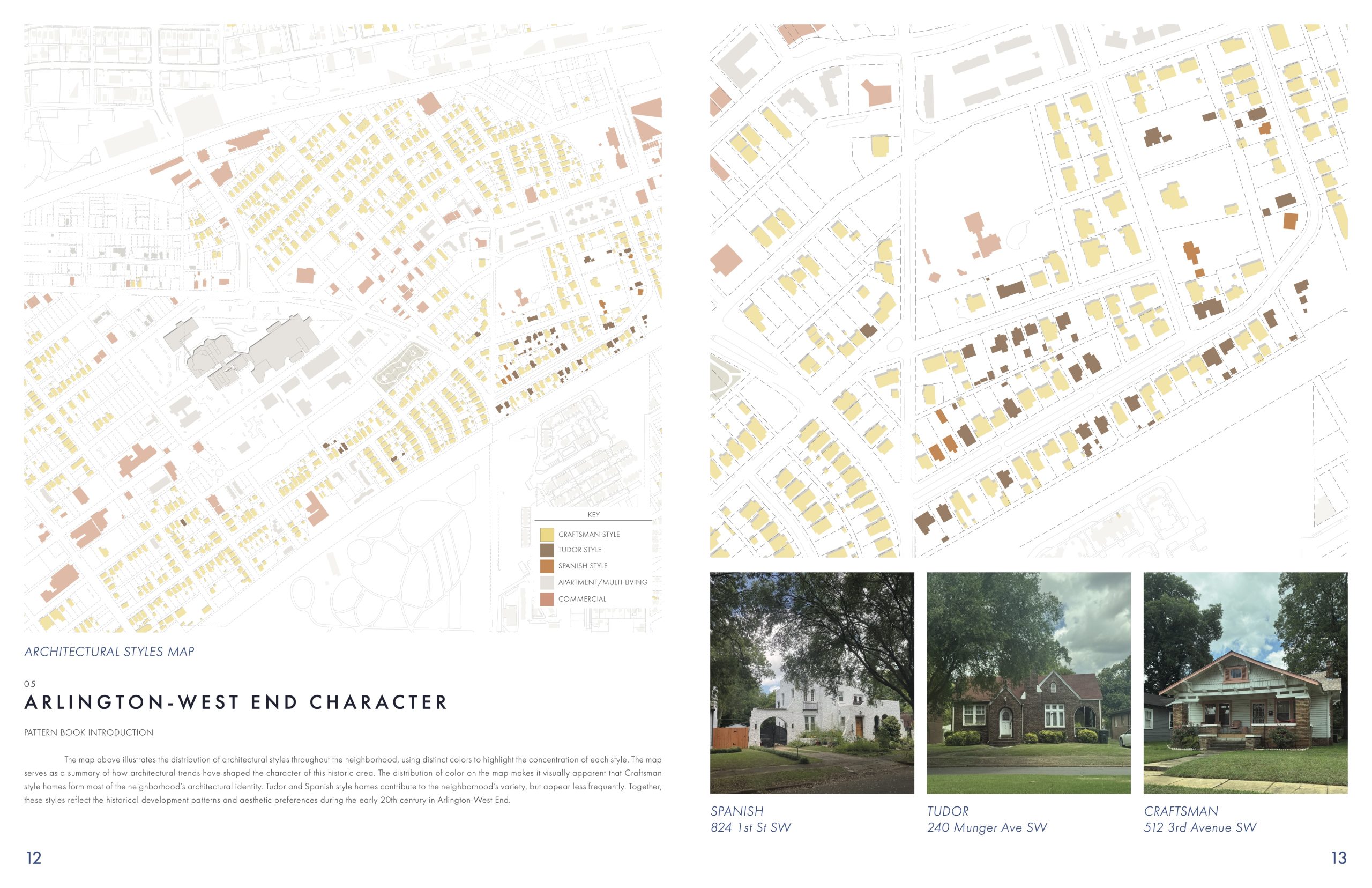
The Urban Studio interns were first tasked with creating an inventory of existing housing and commercial structures. The students began to understand the texture of the neighborhood and develop a pattern book of contributing structures—ultimately discovering four predominant housing styles in the area.
Watson now better understands the importance of listening to community members and their needs and ideas when crafting development plans.
“Since we spent so much time driving around, we have a really good idea of how people would use the space, how they communicate with their neighbors and how it really feels like a community in certain areas of the neighborhood,” she said.
From there, Krumdieck was able to design prototypes for housing that would be appropriate to fill in that missing middle. He lauded the students for their passion and dedication to the project.
“Out of the entire team, they were the ones who had a granular understanding of the neighborhood,” he said. “They ended up teaching us things about the neighborhood, as well as gaining an appreciation for approaching projects like this through the lens of empathic design.”
Cho, Innes and Watson added another level to their architectural education by getting out of the classroom and engaging with the community—one thing that they kept coming back to when discussing their Urban Studio experience. Stepping away from the drafting table and understanding the community was vital to this project and—as they now see—to their vocation as architects.
All three interns agreed that immersing oneself in the project site is invaluable. By simply driving around the area, they observed how people actually use the places in which they live, instead of making assumptions on how residents should use them.

“I think sometimes as students we don’t always take into consideration the people that are going to be using our buildings,” Innis commented.
The students were also responsible for creating and giving stakeholder presentations.
“We were very pleased to see how engaged the students were in their presentations,” Stallworth complimented. “From their research and community engagement to their design book and presentations, the students were knowledgeable and confident every in every interaction we had with them.”
The interns also had the opportunity to experience life in Birmingham.
“I don’t really come up here very often, but I feel like my perspective of Birmingham has changed by working on this project,” Cho shared.
While the summer interns’ participation in this phase of the comprehensive plan has wrapped up, Urban Studio, Poole & Company Architects and the city of Birmingham will continue exploring opportunities for the Central Business District.
D’Agostino summarized this summer’s experience simply: “Working with Urban Studio made this a better project. We were able to tell a better story and focus holistically on the community’s needs.”
Want to learn more about the Urban Studio experience?
See more in:
Alumni,
Alumni Engagement,
Industry Engagement,
Student Experience,
Student Work,
Urban Studio
Related people:
Jennifer Cloe,
Alex Krumdieck