Urban Studio Collaborates with Samford on Community Charrette
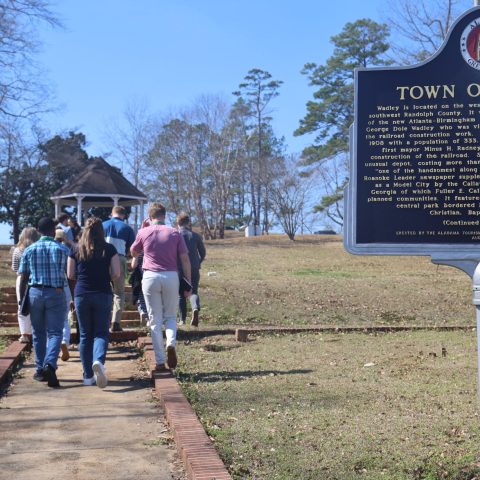
For the first time, Auburn University’s Urban Studio partnered with Samford University architecture students for a two-day charrette, helping the Wadley community imagine a more connected and walkable future.
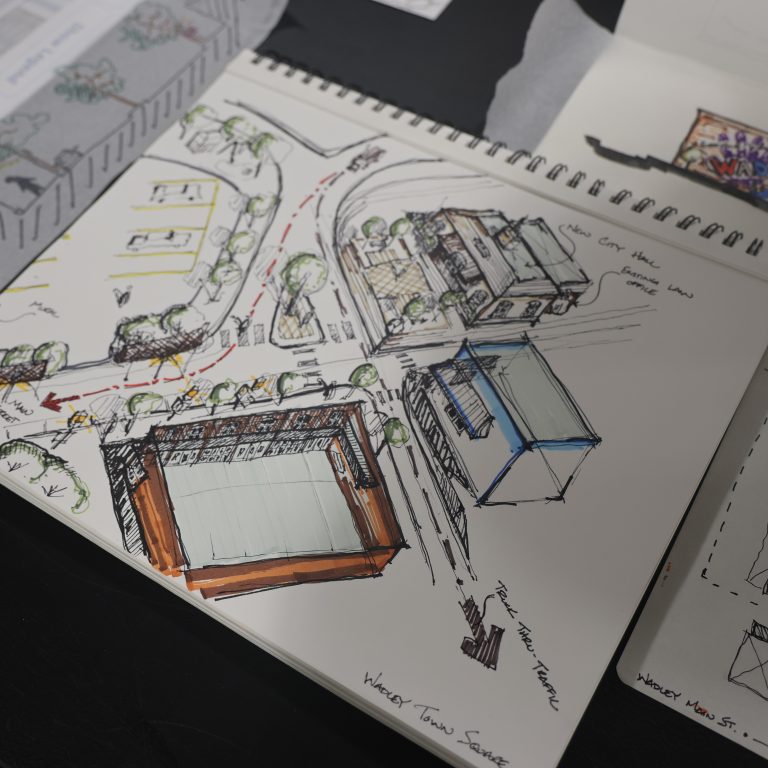
The intensive workshop brought together 21 students—nine Auburn students from Urban Studio’s third- and fifth-year cohorts and 12 fifth-year Samford thesis students—to create an amenities-based master plan for Wadley, a small town located about 100 miles southeast of Birmingham. The collaboration marked a new milestone for Design Alabama’s DesignVision program, which pairs communities with student designers to develop conceptual plans grounded in local priorities.
“The students from both schools worked really well together,” Urban Studio Director Alex Krumdieck said, explaining that each team included an Urban Studio third-year student, fifth-year student and a few Samford students. “They quickly discovered their own strengths and weaknesses and were able to collaborate and divide tasks.”
The collaboration builds on Urban Studio’s longstanding partnership with Design Alabama, marking the latest Design Vision charrette from which communities implemented several student-generated ideas in places like Camden and Wedowee.
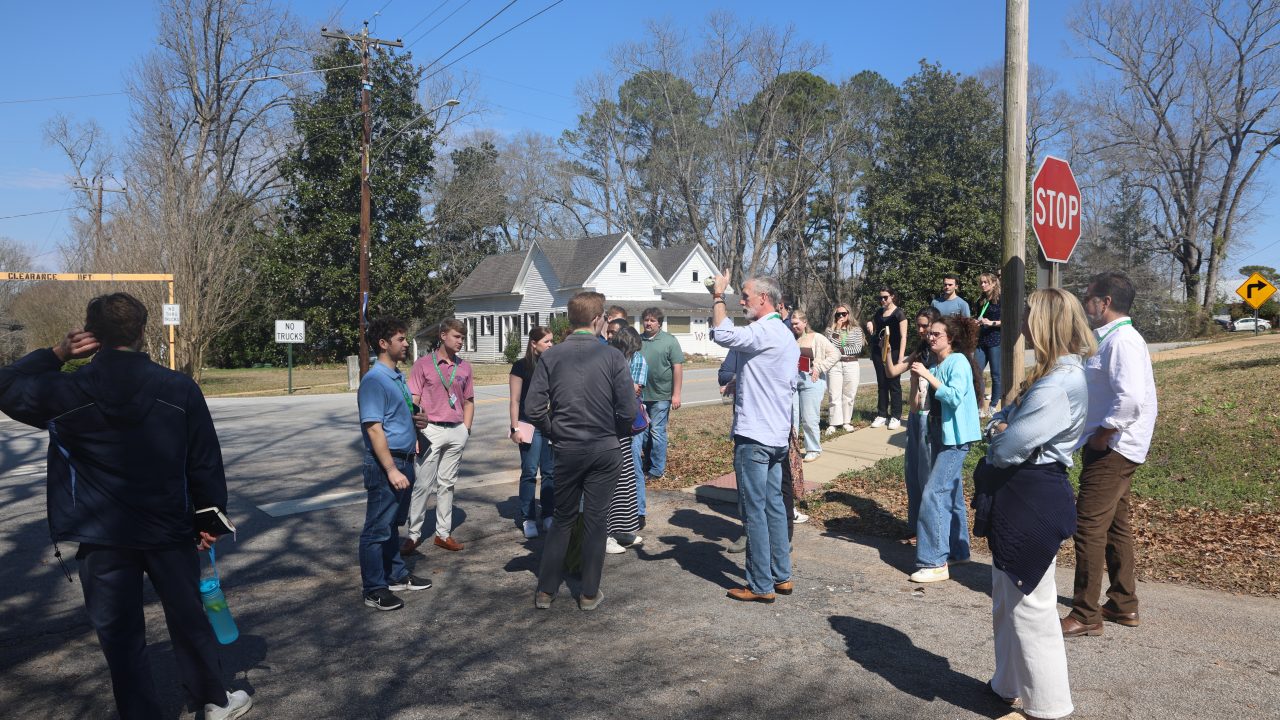
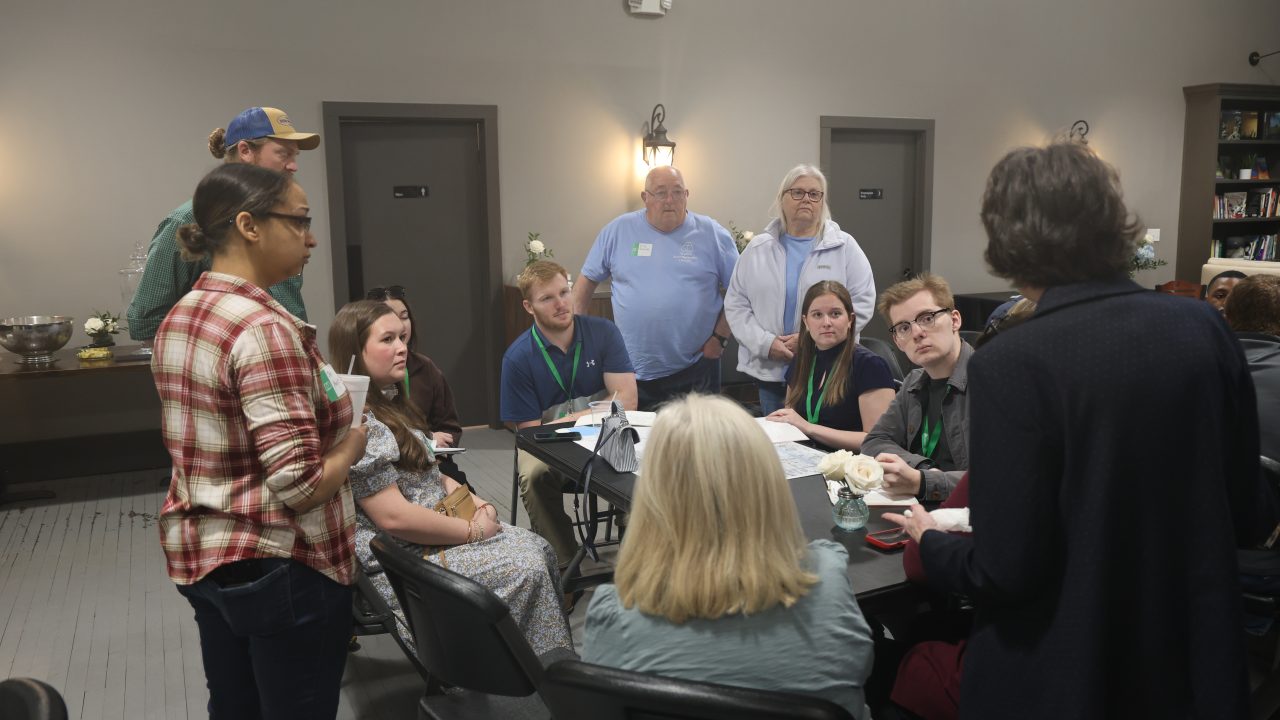
In February, students met with 10 to 15 local stakeholders for an hour-long conversation about priorities, followed by a walking tour of Wadley’s downtown core. Those early discussions helped students identify areas with strong potential for growth and reinvestment.
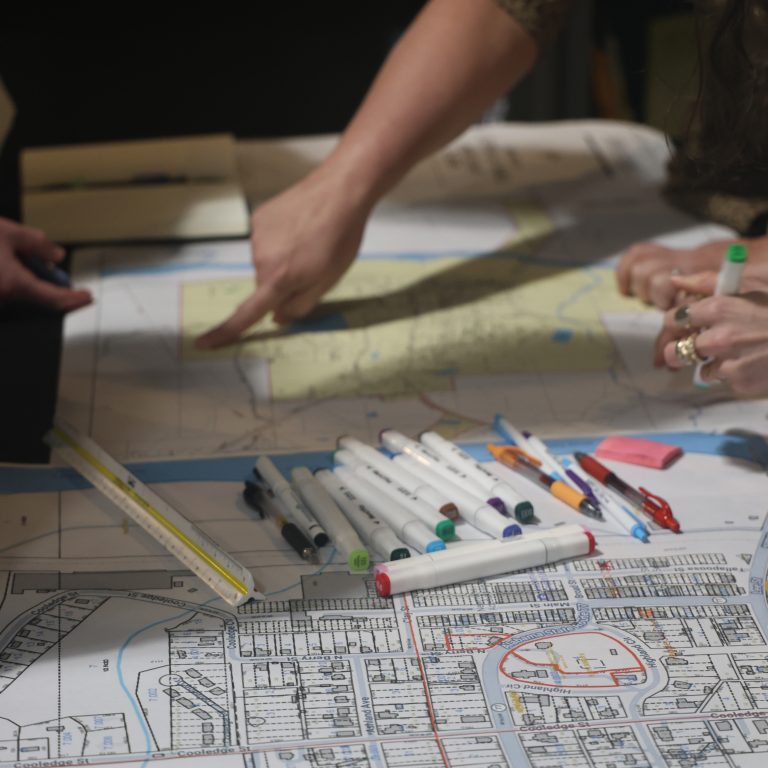
Working in teams, students focused on key opportunities, including Main Street, riverfront entertainment, the Southern Union State Community College campus, an industrial site and an overall connectivity strategy. By the end of the first day, the groups pinned up their concepts, refined priorities and prepared for the next morning’s review with DesignAlabama facilitator Marshall Anderson—who has taught in both the Urban Studio and Samford programs—and community leaders. The following day, students presented the full plan back to community members, gathering another round of feedback that will shape the final report.
For third-year Auburn Architecture student Hannah Easterling, the community engagement component made the experience especially meaningful.
“Getting to engage with the community showed me how their daily lives and routines shape the way the community functions, an understanding that can’t be learned from books,” Easterling said, mentioning how grateful she was to be part of a process that contributes to a community’s future. “The experience also gave me a first look into the practical side of architecture, demonstrating how small, thoughtful design decisions can have lasting effects for a real community of people.”
The central goal was to help Wadley create a common vision that can guide future development efforts. Concepts emphasized walkability, diverse housing options and stronger links between civic, educational and recreational spaces—principles Urban Studio students study in adjunct faculty Ben Wieseman’s “Being There” neighborhood planning course.
After returning to Birmingham, the participants began refining the drawings and assembling a report that outlines Wadley’s existing assets, key opportunities and practical next steps for implementation.
Callan Childs, Assistant Professor in the Department of Architecture and Interior Design at Samford University, said the first-time collaboration between Urban Studio and Samford was the next step for the DesignVision program.
“Working collaboratively across university lines introduced our students to a range of design strategies and viewpoints, enhancing their skills for successful teamwork in professional settings. These experiences are essential, equipping students to become resourceful, community-minded designers ready to make a meaningful difference,” Childs explained. “Through joint efforts like this, our students develop crucial understanding for real-world practice while our universities set a powerful example of how academic collaboration directly helps local communities.”
Organizers hope Wadley will build on the same momentum the previous Design Vision communities experienced, using the shared vision as a roadmap for future growth.
“The Urban Studio has worked with Design Alabama for over 25 years serving over 75 Alabama communities,” Krumdieck said. “This has given our students invaluable experience working with clients and the opportunity to see the power of listening, creating a common vision and empowering a community—and that starts with listening.”
See more in:
Student Experience,
Student Work,
Urban Studio
Related people:
Ben Wieseman,
Alex Krumdieck