Morris Avenue Community Owners Visit Urban Studio
For over 30 years, Urban Studio has been a member of the downtown Birmingham community.
From the days in the Young & Vann Building and 20th Street North to Auburn in Birmingham at the former Hood-McPherson Building, the program is known by alumni and downtowners alike.
Kinetic Communication’s Jay Brandrup ‘95 is both—an alum and a business owner who invested in downtown and Morris Avenue as his company’s headquarters.
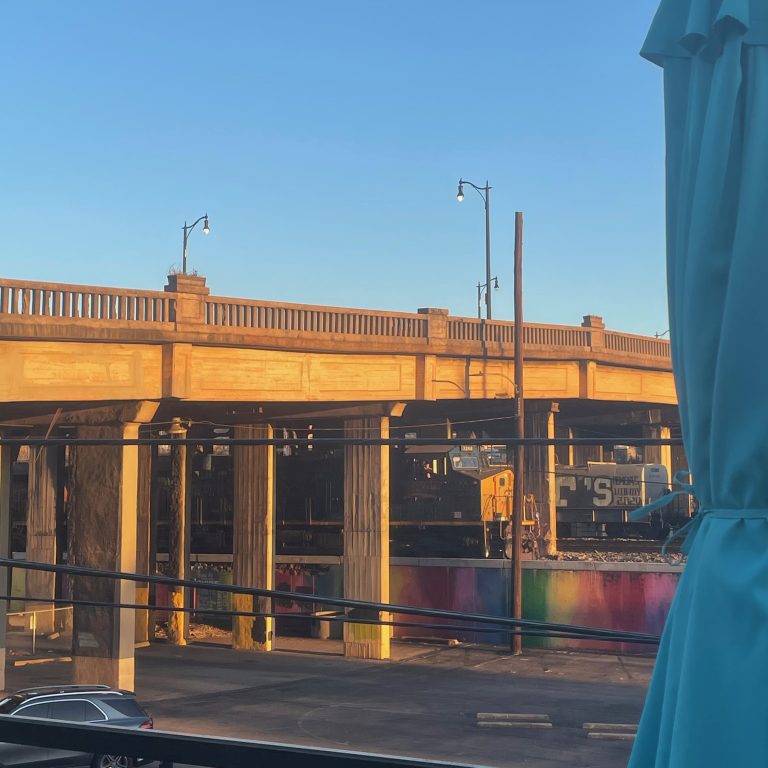
This year’s fifth-year students are working on a development plan for the vacant area along the railroad tracks between Morris and Powell Avenues. Throughout the semester they’ve continually received feedback from local architects and professionals but hadn’t from residents and business owners.
Interested in bringing his friend Carlton Wood, of the Historic Morris Avenue Coalition, to visit Urban Studio, Brandrup reached out to Director Alex Krumdieck ’86 to schedule a visit.
Brandrup’s interest in Urban Studio turned into an opportunity for the students to get feedback from people who live, work and care about Morris Avenue.
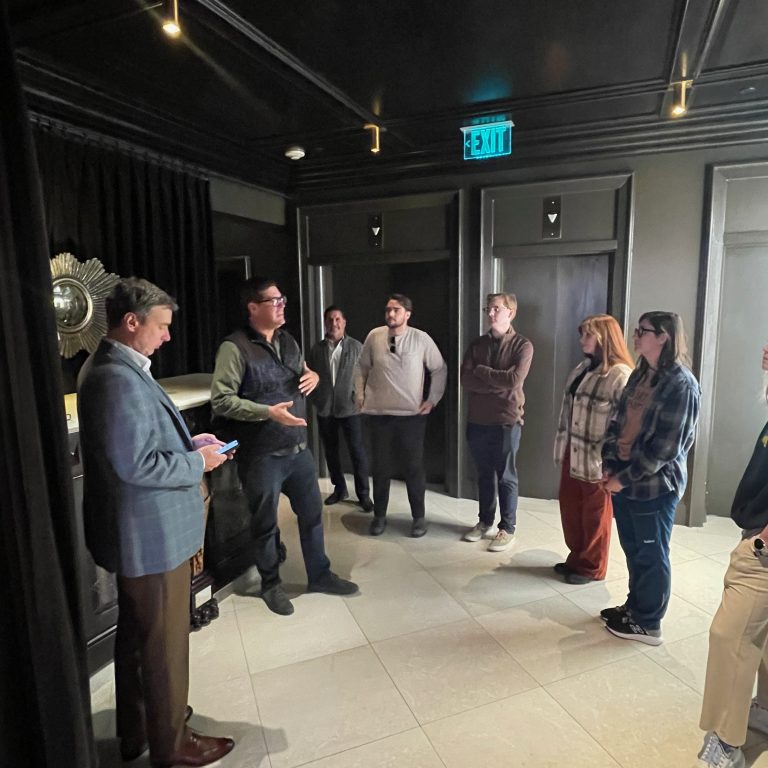
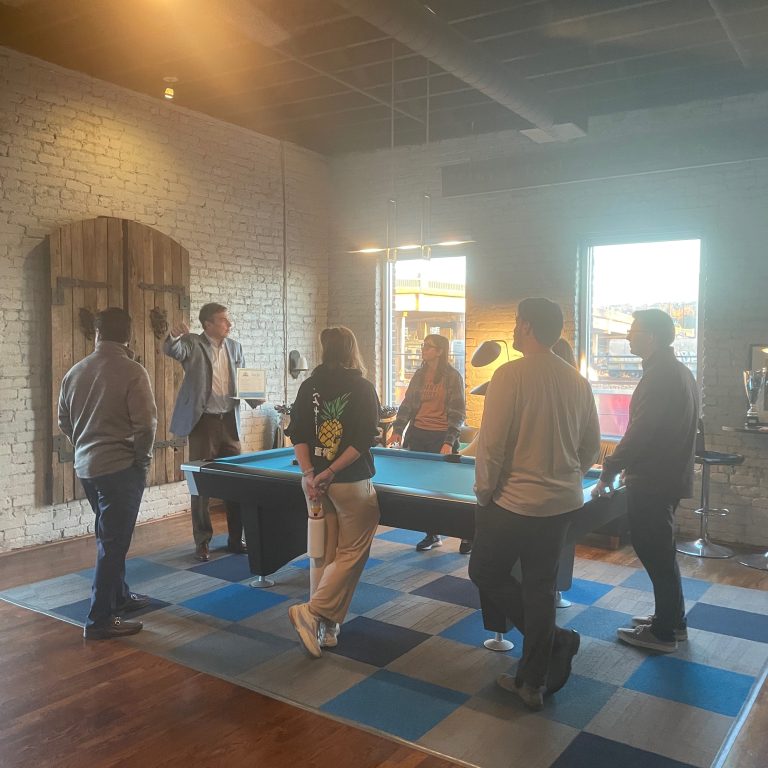
The fifth years presented their ideas to Wood and Brandrup, explaining what they’ve learned this semester and how they envision Morris Avenue and the Rainbow Bridge could be redeveloped. They shared ideas about housing, walkability and celebrating the history and significance of the Bridge.
As people who spend a significant amount of time on Morris Avenue, Wood and Bandrup have a far-reaching perspective on the evolution of developments on the street to share with the students. Both can remember times when Morris Avenue was grittier than is it now.
As many architects and planners know, constituent feedback can be a challenge for any urban project. Plans are often developed before anyone speaks to an area’s users. Students don’t always have the opportunity to experience feedback sessions with property owners.
“They did amazing work and have an amazing vision,” Brandrup commented, adding that he and Wood both enjoyed the presentation.
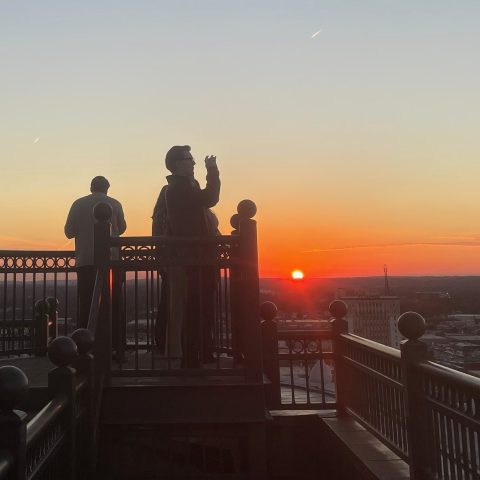
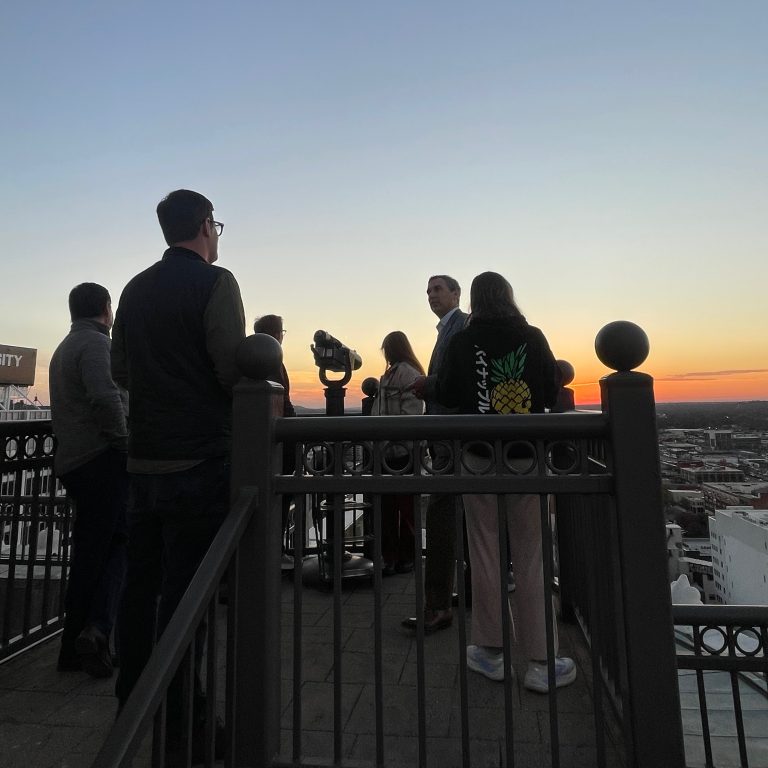
Brandrup later treated the students to a tour of the Kinetic office to see their site from the business’s perspective. He talked to the group about the history of his building and of Morris Avenue. Afterwards, Brandrup invited everyone to visit the John Hand Club, where students were able to see their entire project site from the rooftop views. The aerial perspective and expert feedback helped the students finalize their designs before the end-of-semester reviews.
Want to learn more about the Urban Studio experience?
See more in:
Alumni,
Alumni Engagement,
Community Engagement,
Urban Studio
Related people:
Alex Krumdieck,
Jennifer Cloe