LAND Faculty Promote Maintenance of Indigenous Earthworks

Two Landscape Architecture faculty members are collaborating to reimagine stewardship and preservation practices of Indigenous earthworks in North Alabama.
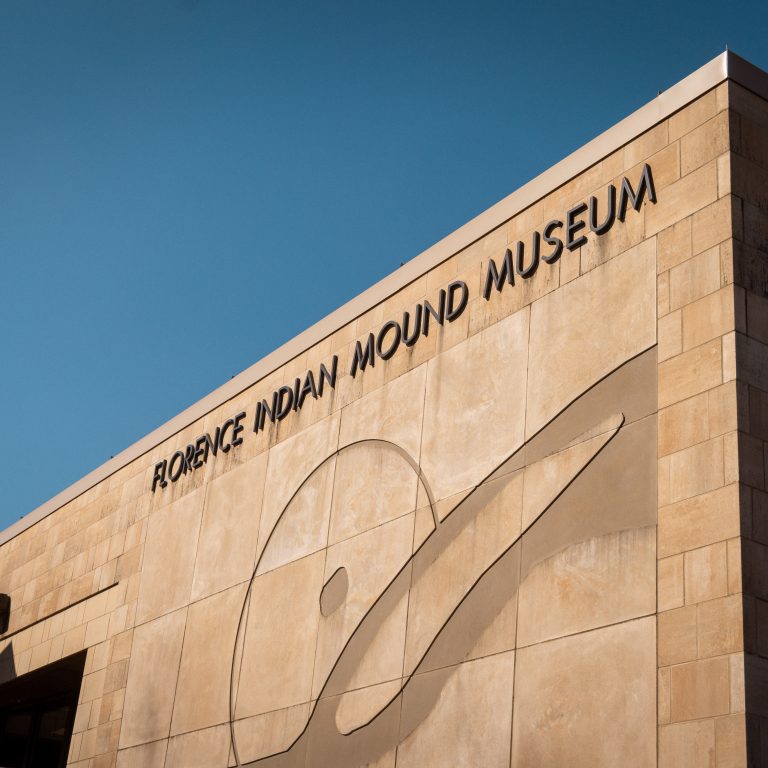
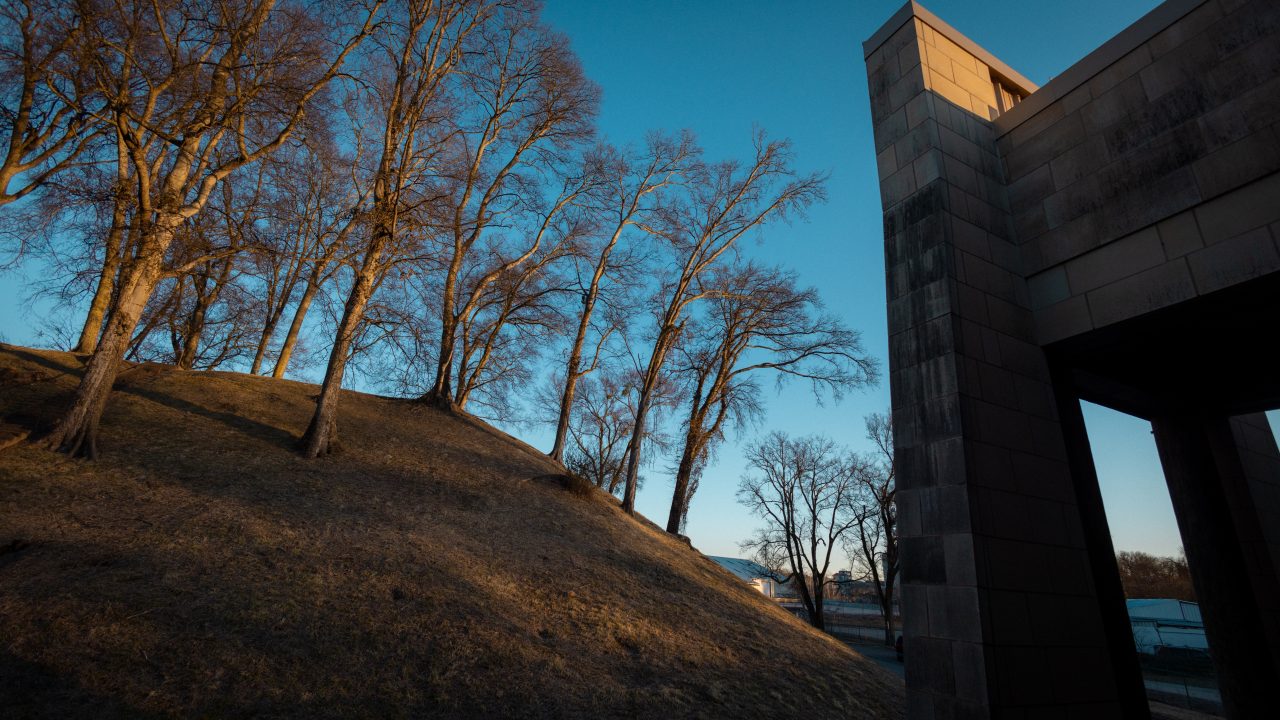
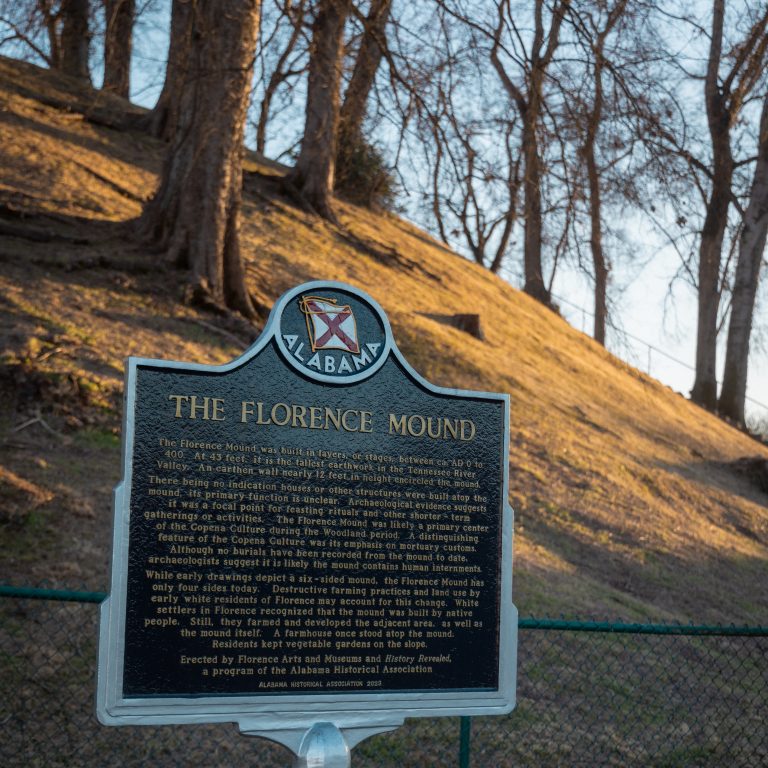
Isaac Cohen and Sarah Coleman, both Assistant Professors of Landscape Architecture in the School of Architecture, Planning and Landscape Architecture (APLA), have been studying new approaches to maintenance and preservation of the Florence Mound in Florence, Alabama, which has stood along the margin of the Tennessee River for at least 1,700 years.
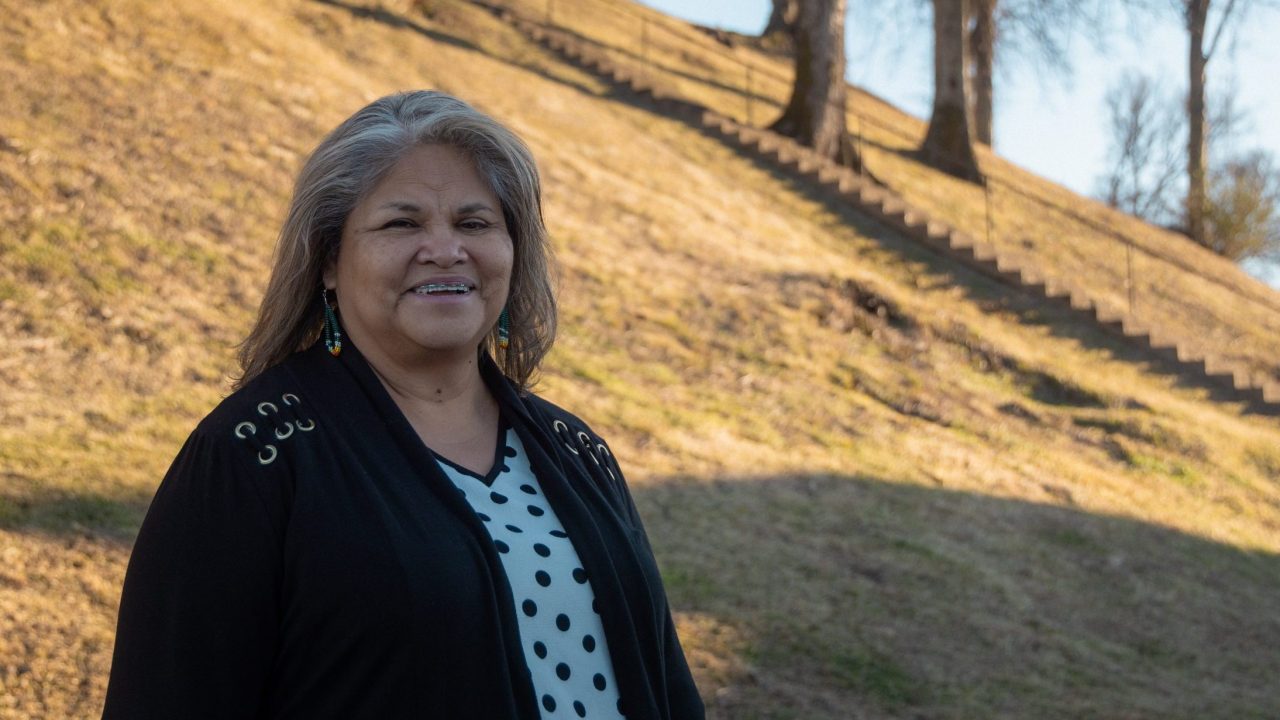
Managed by Florence Arts and Museums (FAM), the Florence Mound sits on city-owned land and rises 43 feet in the air, with a steep slope to its flat top. The earthwork was a cultural center for people during the Woodland period, before becoming a site of ceremony and activities for Mississippian peoples. It has remained an important site for descendant communities of its original makers, including the Chickasaw, Eastern Band of Cherokee and Muscogee Creek Nations.
Cohen and Coleman have been collaborating with the Mound’s accompanying museum to explore how Alabama residents and visitors can find connection and understanding of the area’s history at the site, while working to preserve and maintain the earthwork after the City of Florence rescinded maintenance services, citing expense and complexity.
“Maintaining Indigenous earthworks so they remain part of our contemporary landscape is essential as their presence makes visible much longer histories of land use, knowledge and governance that are often overlooked or erased,” Coleman said. “They do not simply mark the past but actively shape how history is understood in the present, offering an alternative to southeastern narratives that begin with colonization.”
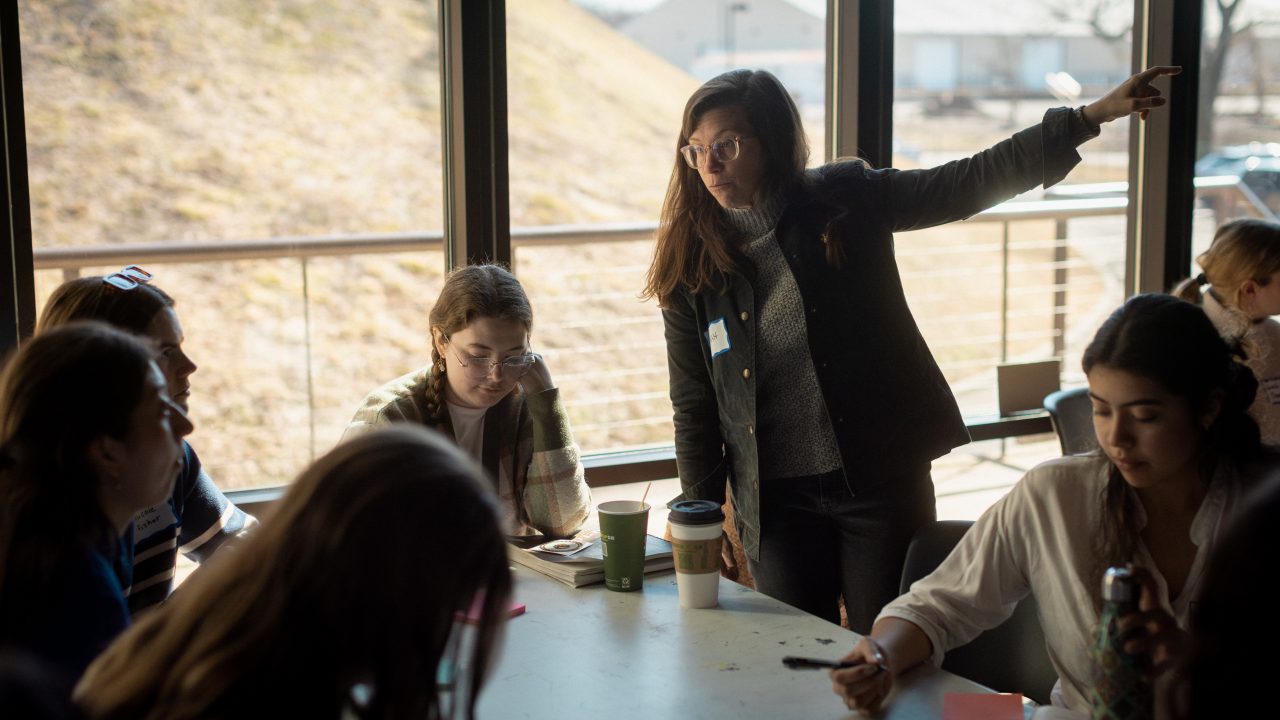
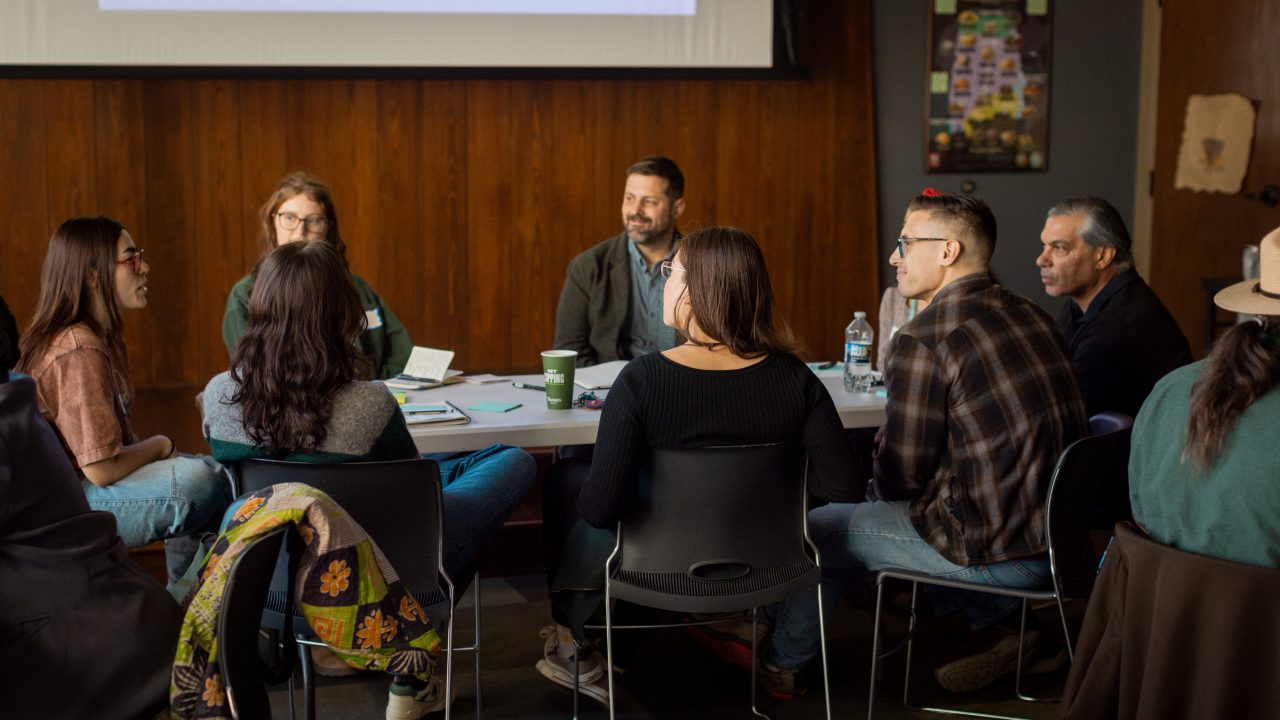
Convening tribal representatives, regional site managers, historians and community members, the pair created a symposium, exhibition and workshop that developed and articulated best practices for care of the Florence Mound and engaged descendant communities in its interpretation. The research aims to communicate the site’s history and articulate a critical politics of care that will guide future site maintenance.
“Maintaining Indigenous earthworks requires recognizing that ‘care’ is not universally defined. Practices prioritized in fields like preservation or archaeology can be at odds with Indigenous perspectives that understand these sites as living cultural landscapes,” Coleman continued, explaining that tribal stakeholders—generations of whom have shaped these ancestral landscapes—must be central to the decision-making.
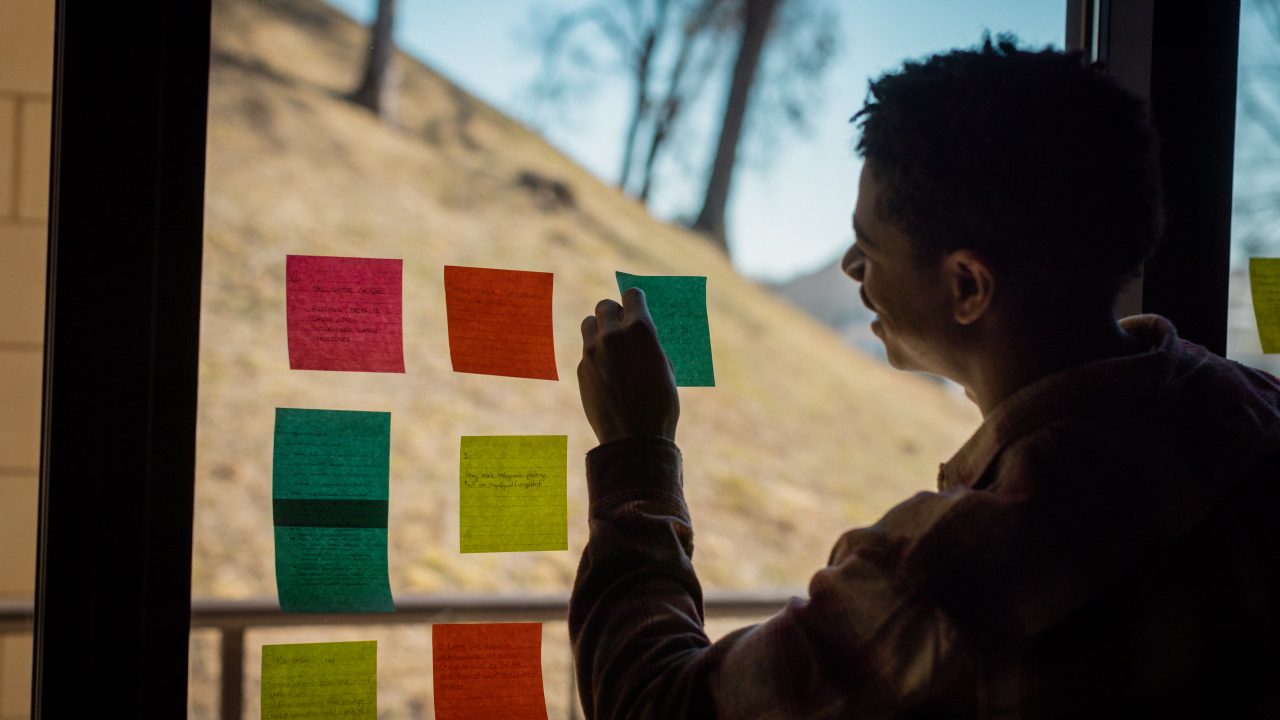
The project has been supported by several grants—including a 2025 CADC Seed Grant, which provides funding to support faculty research, scholarship and creative work; an Auburn University Office of the Vice President for University Outreach’s Competitive Outreach Scholarship Grant, which seeks to promote community-engaged scholarship in the context of mutually beneficial and reciprocal university and community collaboration for the public good; and the Alabama Humanities Alliance’s 2024 Alabama Public Humanities grant, which seeks to support public humanities programs across the state to make Alabama a more vibrant place to live.
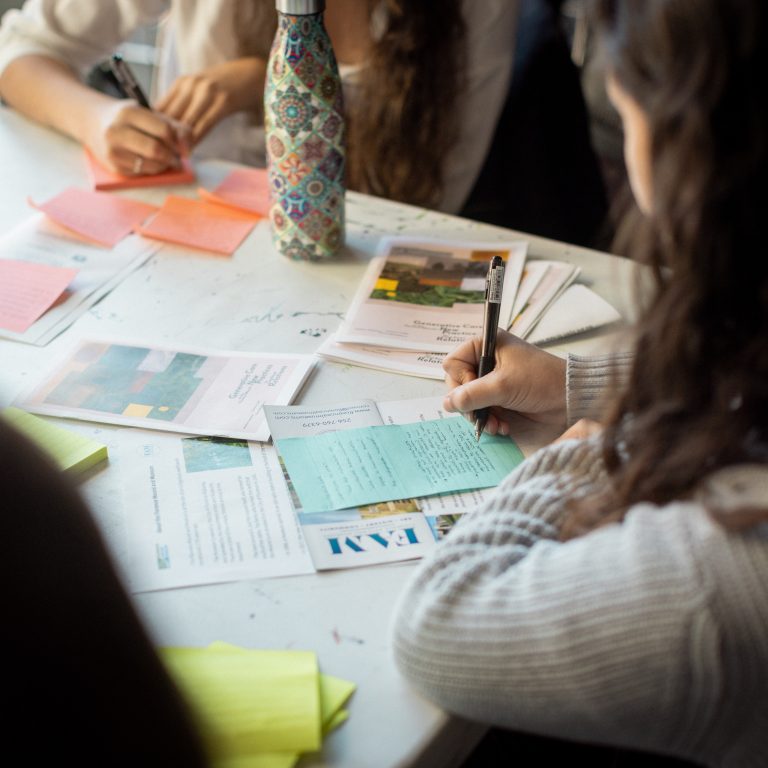
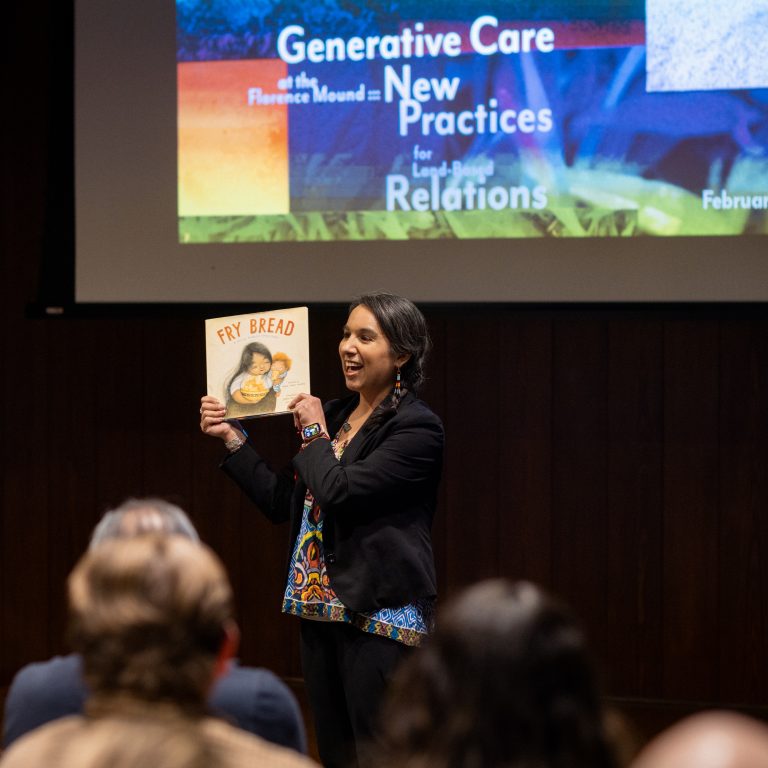
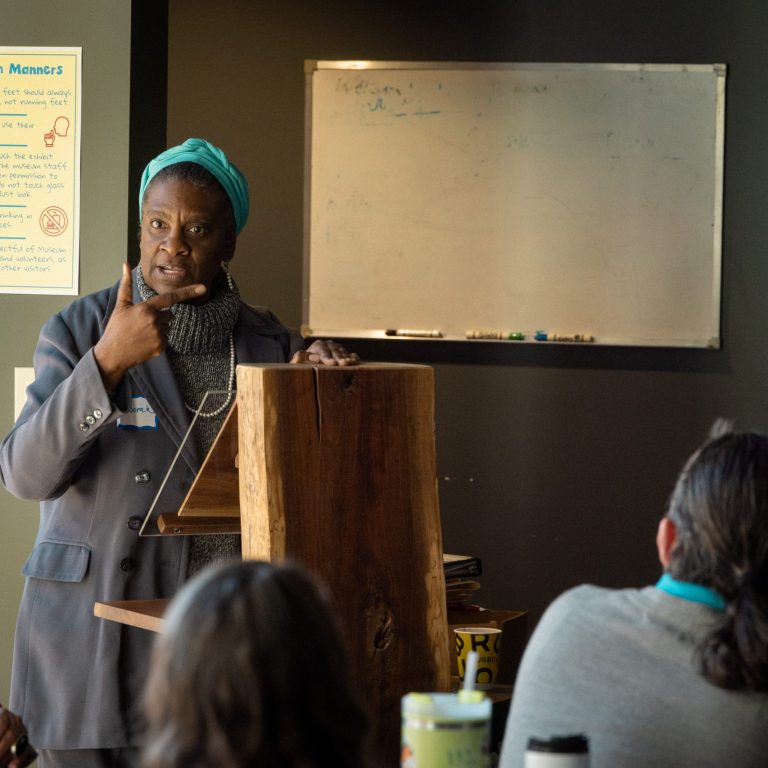
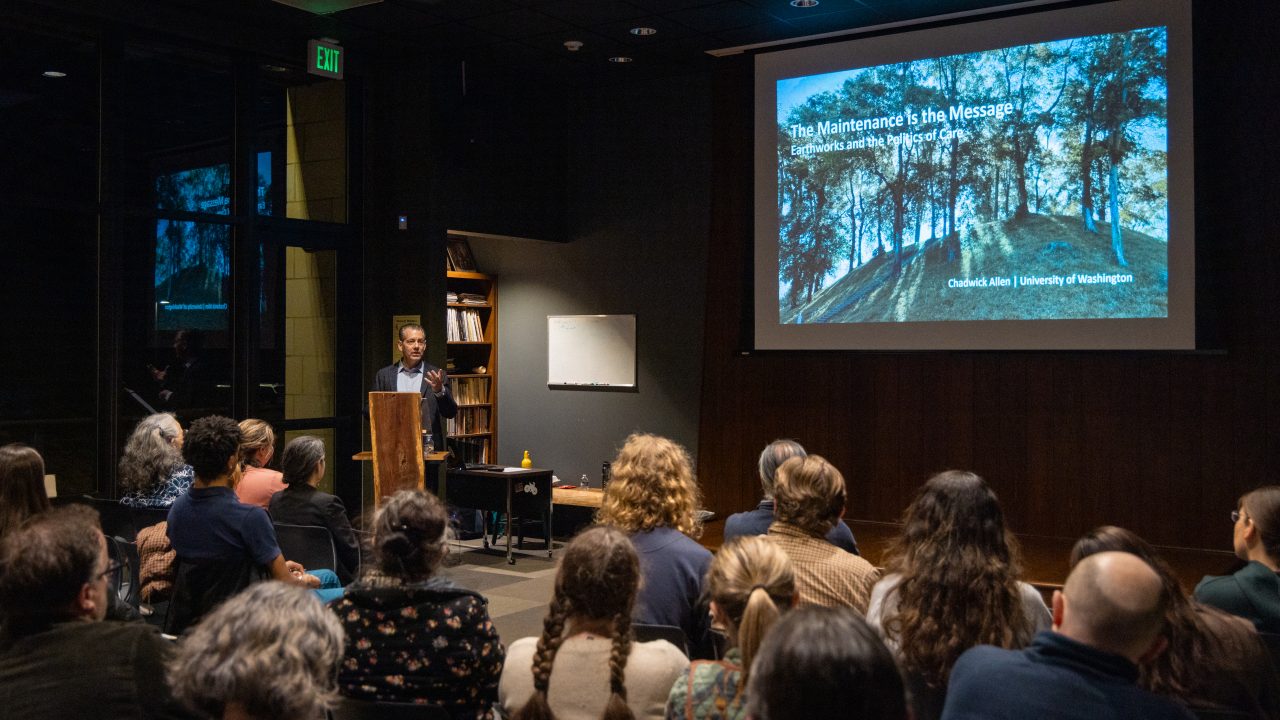
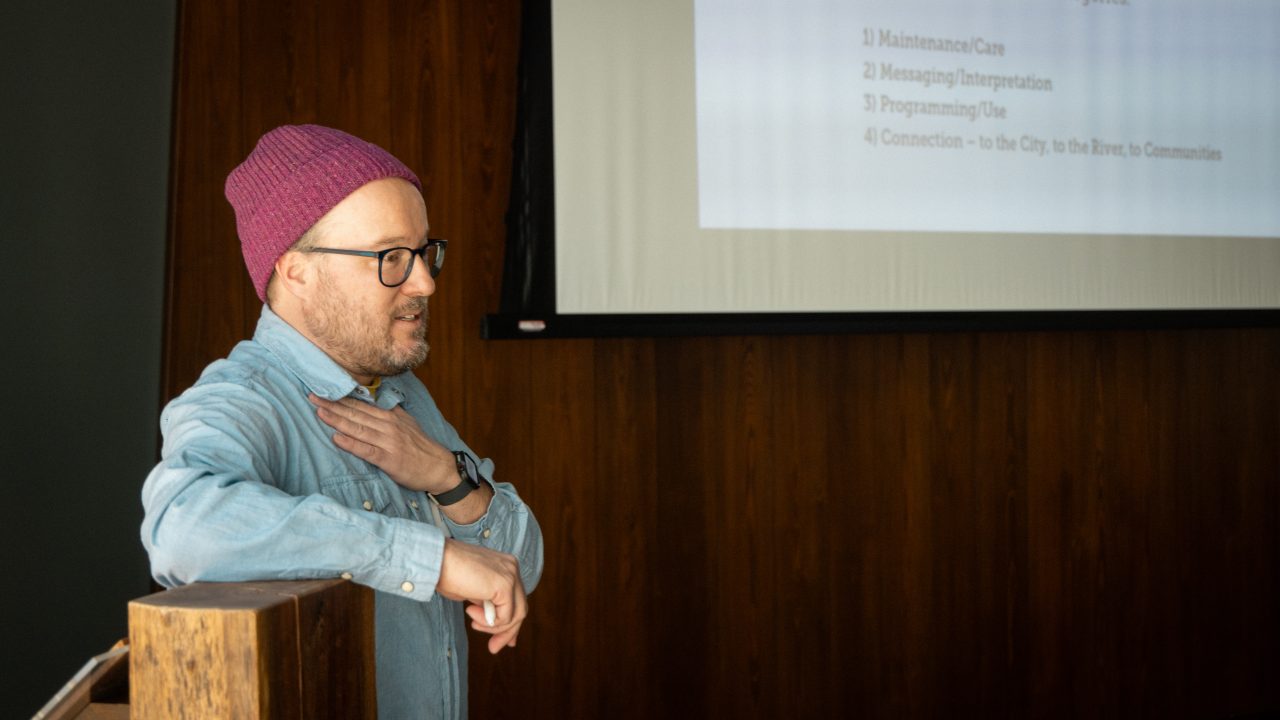
Out of their research, Cohen and Coleman put together a two-day event at the museum in February called “Generative Care at the Florence Mound: New Practices for Land-Based Relations.” During the event, representatives from the site and museum, the Eastern Band of Cherokee, The Department of Culture and Humanities for the Chickasaw Nation presented their expertise, as well as Chadwick Allen, a professor of English from the University of Washington, whose scholarship focuses on Native American, Maori and Oceanic literatures and cultures.
Following a panel with Mark Brink, site manager at Poverty Point World Heritage Site, and Brenda Williams, Landscape Architect and Partner at Quinn Evans, who presented case studies of design collaborations at other Indigenous earthworks, attendees joined a series of workshops designed to brainstorm ways the community can care for the Florence Mound. Attendees were also asked to share challenges, from either their disciplinary or tribal perspective, that they have encountered in caring for these kinds of sites.
“Through listening and participating in discussions, I learned about the particular challenges that sacred Indigenous sites face in the present, but also the remarkably strong interest and community engagement that these places foster,” Martin Brice, a student in Auburn’s Master of Landscape Architecture (MLA) program, said.
Sofia Gomez-Gutierrez, another MLA student, said that what stood out to her from the workshop was the importance of listening to knowledge-holders and recognizing that they can speak for themselves. The workshop prompted her to question who does the interpreting, who holds the knowledge and how that shapes what is preserved, she said.
“Being at the symposium at the Mound in Florence made me understand the site as a living landscape, not just a story of the past but an ongoing one,” Gomez-Gutierrez said.
Recently, the event received a 2026 Communications Merit Award from the Alabama chapter of the American Society of Landscape Architecture (ASLA) for its use of landscape architecture tools to communicate cultural and ecological significance.
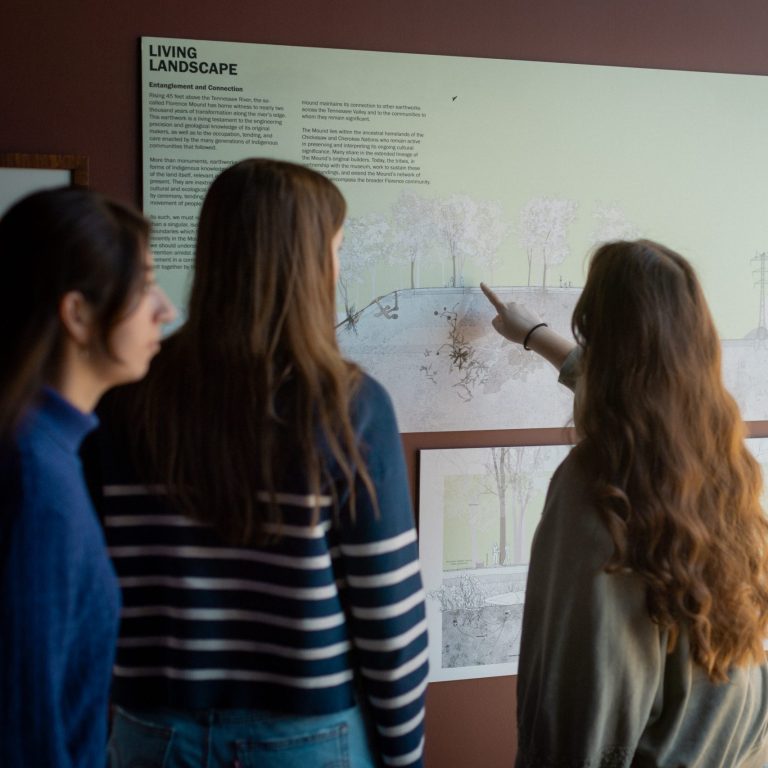
Next, Cohen and Coleman will produce a report that can be shared with the collaborators from the symposium and use it to direct conversations with the City of Florence. The team is also working with the museum and its advisory board to develop a long-term strategic plan to reimagine the industrial floodplain to better integrate the site spatially, ecologically and culturally into the city and region.
Additionally, the pair are documenting the Mound across multiple seasons, during maintenance events and within its surrounding industrial context.
“The goal is to better portray the Mound as a dynamic landscape, continually shaped by ongoing practices and pressures, rather than as a static relic of the past,” Cohen said. “We hope this kind of sustained observation can help make visible the relationships between care, context and use over time and offer a truer understanding of the site, which we hope will lay the ground for new approaches to decision-making.”
This project is supported by the Alabama Humanities Alliance, a state affiliate of the National Endowment for the Humanities. Any views, findings, conclusions or recommendations expressed in this website do not necessarily represent those of the Alabama Humanities Alliance or the National Endowment for the Humanities.
All photographs by Abraham Rowe Photography.
See more in:
Community Engagement,
Cultural Heritage Preservation,
Faculty Collaboration,
Faculty Recognition,
Faculty Work,
Outreach,
Research,
Sustainable Design and Development
Related people:
Sarah Coleman,
Isaac Cohen