CADC Alum Speaks on Filling City Gaps at Urban Studio
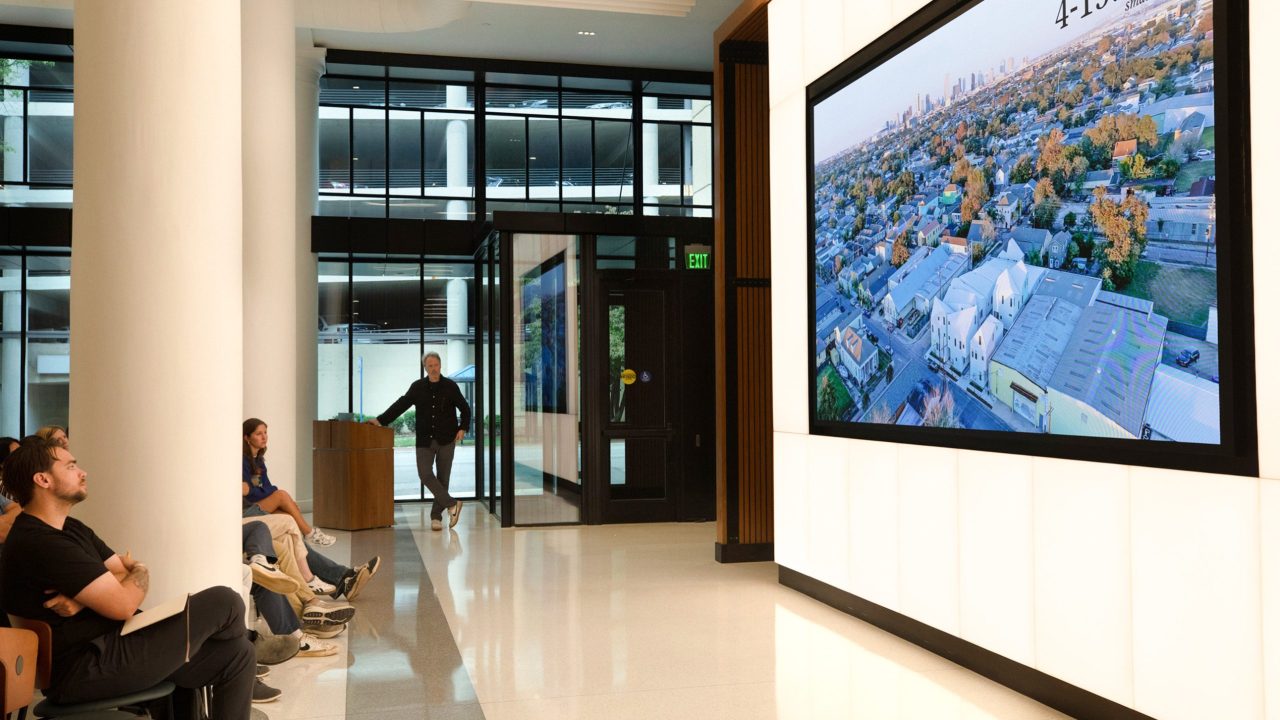
Guest lectures are a fixture at Urban Studio, and each semester local architects share their knowledge and experience with students.
This fall, Director Alex Krumdieck ’86 invited New Orleans-based architect and Auburn University College of Architecture, Design and Construction (CADC) alum Jonathan Tate ’97 to speak with the students.
Tate established his firm, OJT, in 2011 “as a creative, expansive and exploratory practice with a desire to contribute to contemporary discourse.” One of OJT’s focuses is housing—also a focus of the fifth years’ planning and thesis projects.
“While I was at Auburn, I really appreciated hearing from working architects, especially when they talked about their career trajectories and how they worked through different challenges,” Tate discussed. “It’s important, even an obligation, to be an active part of the design community. We are in a vocation where we continually learn. When I’m with students, it’s a reciprocal environment where we are learning from each other.”
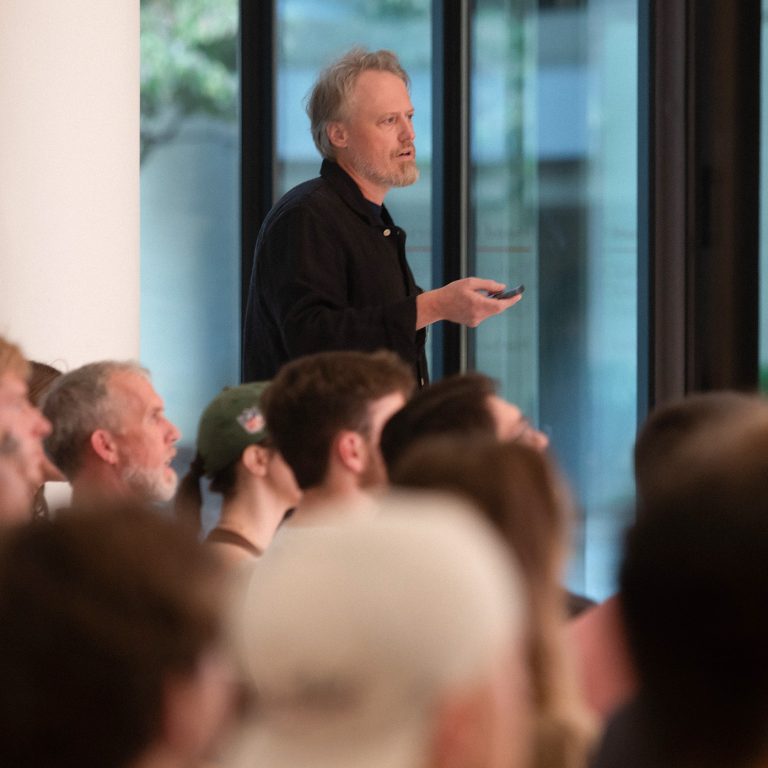
Students, instructors, local architects and recent graduates assembled at the Auburn in Birmingham building to hear Tate speak on housing, thought processes and his work in Memphis and post-Katrina New Orleans. One of the goals Tate set for himself was to show students how to broaden their focus through design direction.
“The lecture was fascinating. He didn’t focus on large, extravagant buildings but on spaces that people considered unusable,” fifth year Jordan King commented. “His projects took the idea of filling in the gaps in a city fabric to a new level.”
“The most impactful idea for me was that things don’t have to be complicated or overdesigned to be good,” he continued. “If you design with the person in mind, everything else should fall into place.”
Tate discussed a few projects in locations people felt were undesirable spaces, explaining how these sites are often opportunities to create a sense of growth and new developments. One part of the presentation included how he works by using the concept of home to collectively create housing.
“He also talked about his journey from a more glamorous life in architecture, working on larger projects, to now focusing on developing more personal spaces, which really resonated with me,” King added. “As a soon-to-be graduate, the path after school often feels open-ended, with many options and little time to explore. My main takeaway from this part of the lecture was to let your passions guide you and to pursue work that you believe in.”
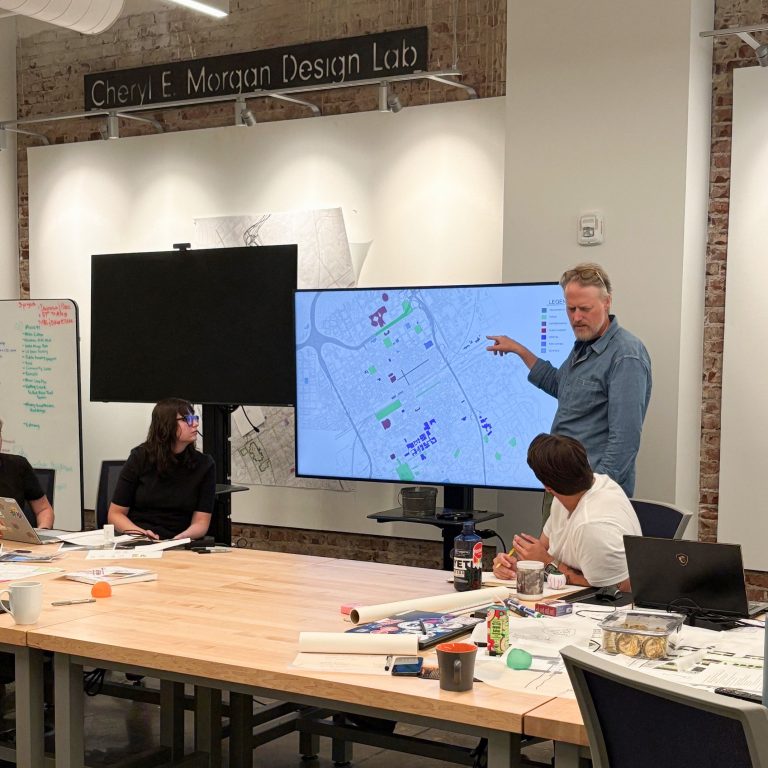
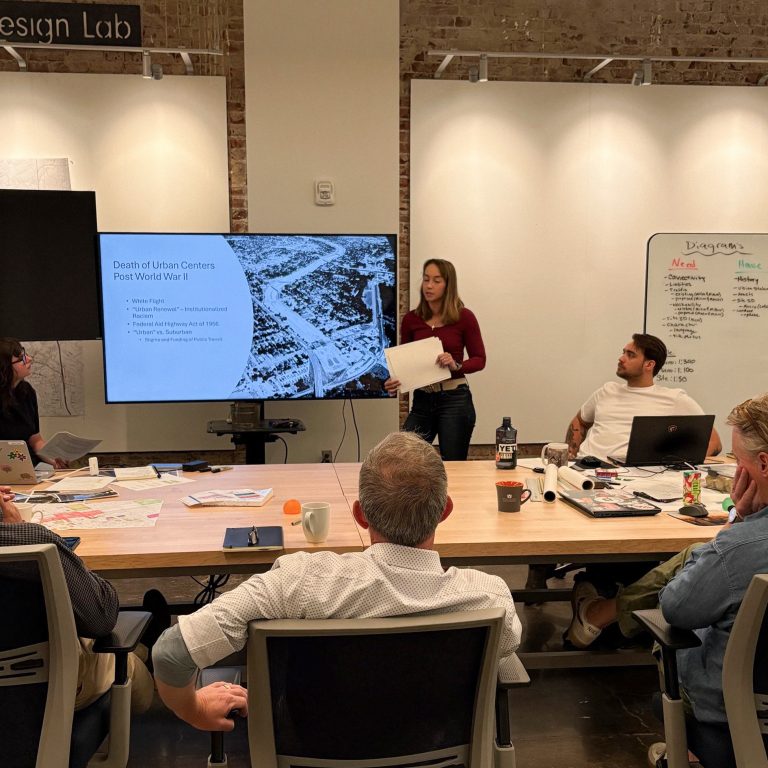
Tate spent the following day with the fifth years for a feedback session. The group presented draft ideas for their Rainbow Bridge master plan and then discussed their thesis topics, with Tate asking questions and helping them clarify both their collective and individual visions for this semester.
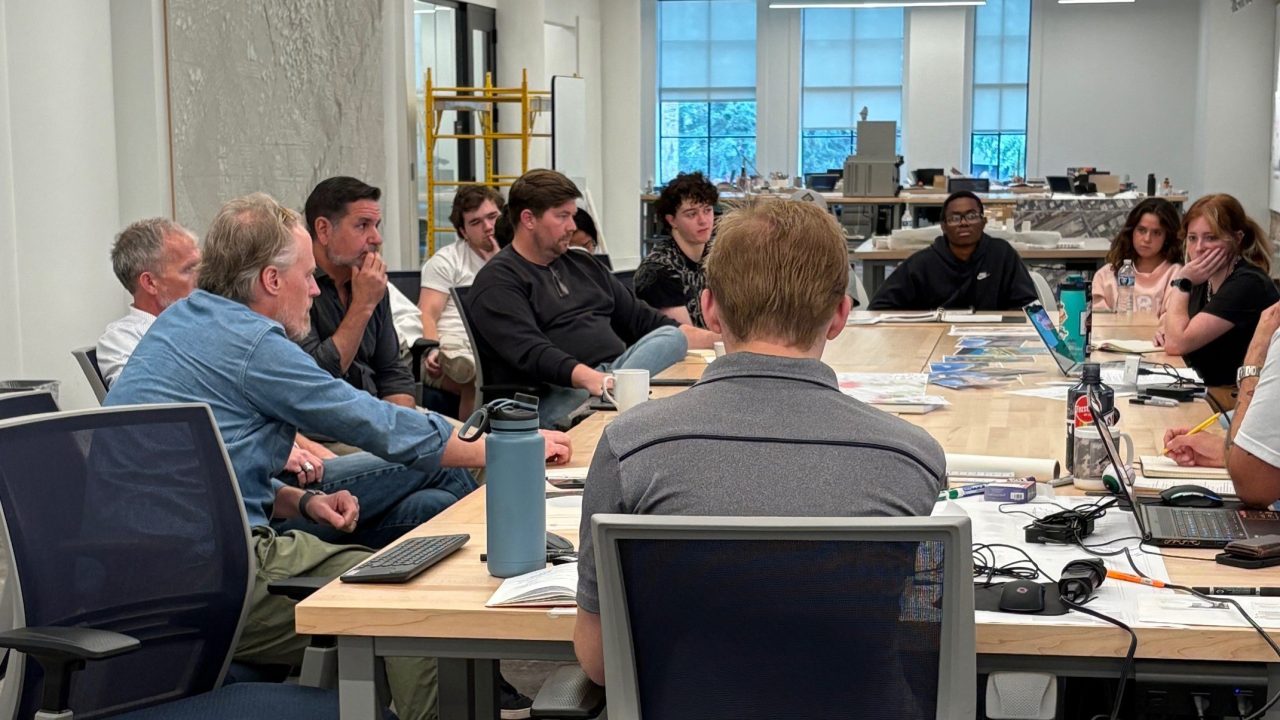
“I’d previously seen Jonathan speak at Rural Studio and thought he would be ideal as a guest lecturer for the Rainbow Bridge project this year. His work on sites like the area underneath the Bridge gave our students context and ideas for how to work on a site many consider undesirable and challenging,” Krumdieck explained.
In addition to Tate, guest lecturers and topics for this :
- Kyle D’Agostino, Poole & Co. — Community Planning
- Tim Gambrel and James Fowler ‘06, City of Birmingham, Urban Planning & Transportation
- David Fleming, REV — Economic Development Strategies
- Louis Nequette ’93, Nequette Architecture & Design — New Urbanism
- Amanda Loper ’05, David Baker Architects —Affordable Housing Strategies
Want to learn more about the Urban Studio experience?
See more in:
Alumni,
Alumni Engagement,
Alumni Recognition,
Industry Engagement,
Industry Recognition,
Student Experience,
Urban Studio
Related people:
Alex Krumdieck,
Jennifer Cloe,
Ben Wieseman