APLA Faculty Facilitates Homeowner-Driven Housing Design at Rural Studio

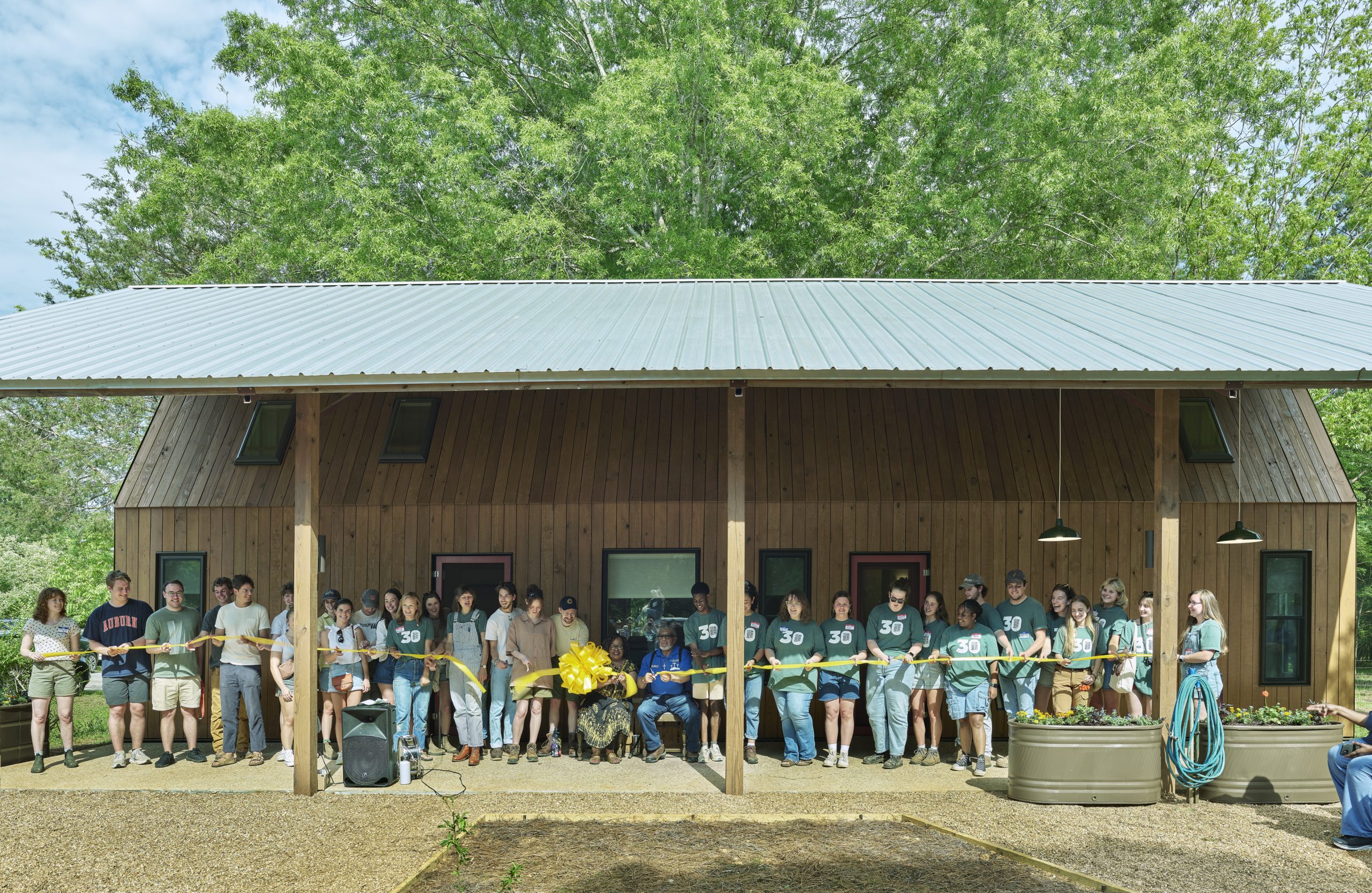
After 30 years in Hale County, the team at Rural Studio is still investigating housing solutions, and Associate Professor Emily McGlohn is helping that line of inquiry evolve with a feedback loop between third-year architecture students, research teams and housing clients.
Once a Rural Studio third-year and fifth-year student and then consultant, McGlohn returned to the School of Architecture, Planning and Landscape Architecture (APLA) as a full-time faculty member in 2017. Over the last nine years, she has overseen the creation of Ree’s Home, Mrs. Patrick’s Home, Ophelia’s Home and Rosie’s Home, which have helped her refine the Studio’s housing efforts and the third-year experience.
McGlohn sees the students as a voice for the housing clients, adapting the Studio’s existing prototypes to fit the individual needs of community members and sharing the homeowners’ experience back with research teams like the Front Porch Initiative (FPI).
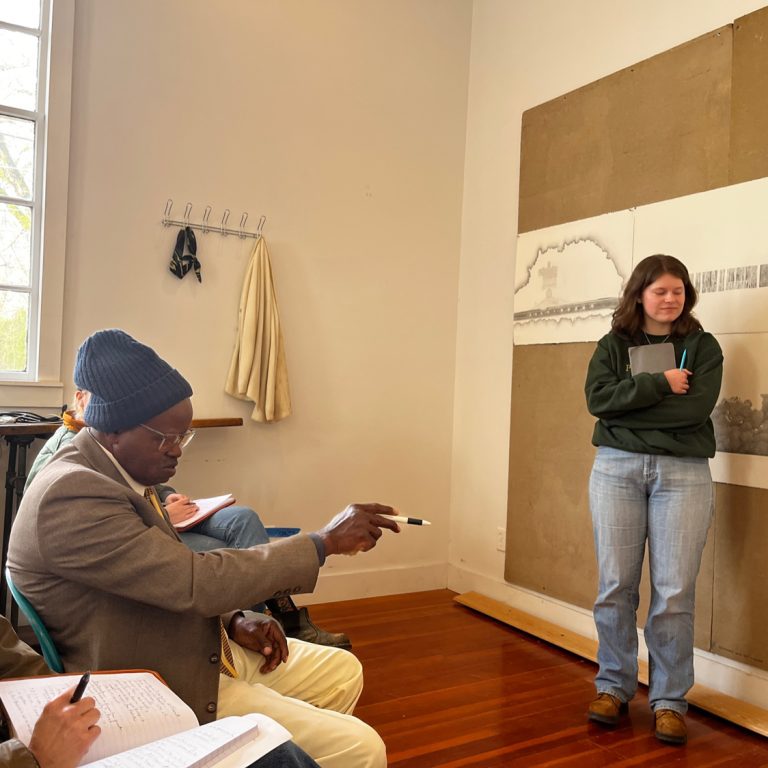
One of the ways that McGlohn helps students understand the homeowners’ needs and how the prototypes can be adapted is through Empathetic Drawings, a method of cataloguing and representing the way the clients live before moving into a Rural Studio House that McGlohn has developed over the last few years. The drawings help the students recognize and record beauty in both the love and wear of daily living.
“I want the students to understand how cared for these homes are,” McGlohn said. “They help the students see what the clients improvise to solve a problem and how we can incorporate solutions into the future design.”
After the COVID-19 pandemic slowed construction at Rural Studio, McGlohn saw an opportunity to reformat the third-year experience. Rather than designing and constructing a house within a single academic year, she has spread the projects out to four or six semesters.
“The design questions change with each new group of students,” McGlohn explained. “The goal is to make a house that is seamlessly designed with all these hands.”
The expanded timeline allows the students to dive deeper into creating solutions for the clients that improve their quality of life without compromising their way of life—and provides time for the testing and prototyping that is essential to pushing practical housing research forward.
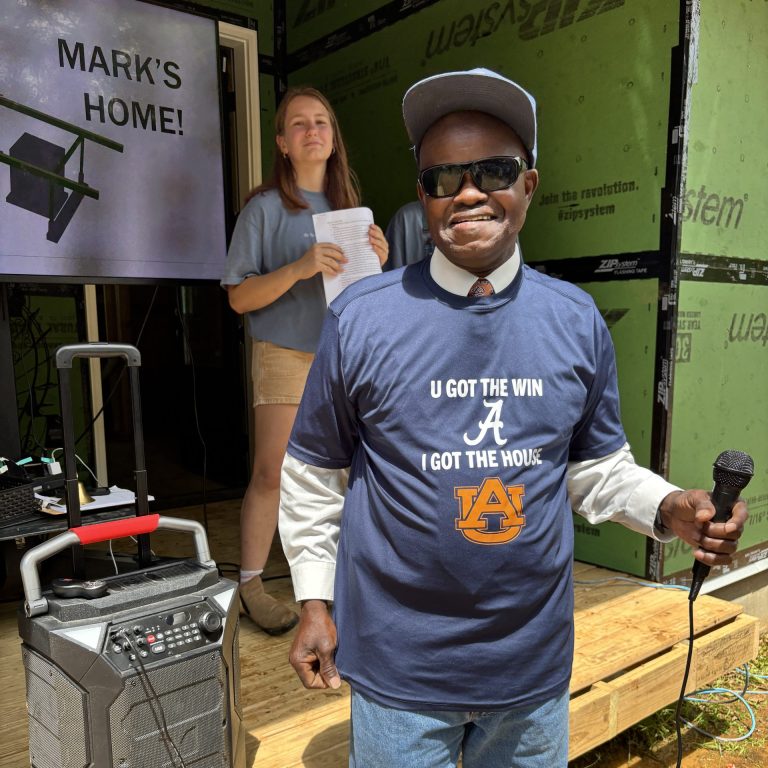
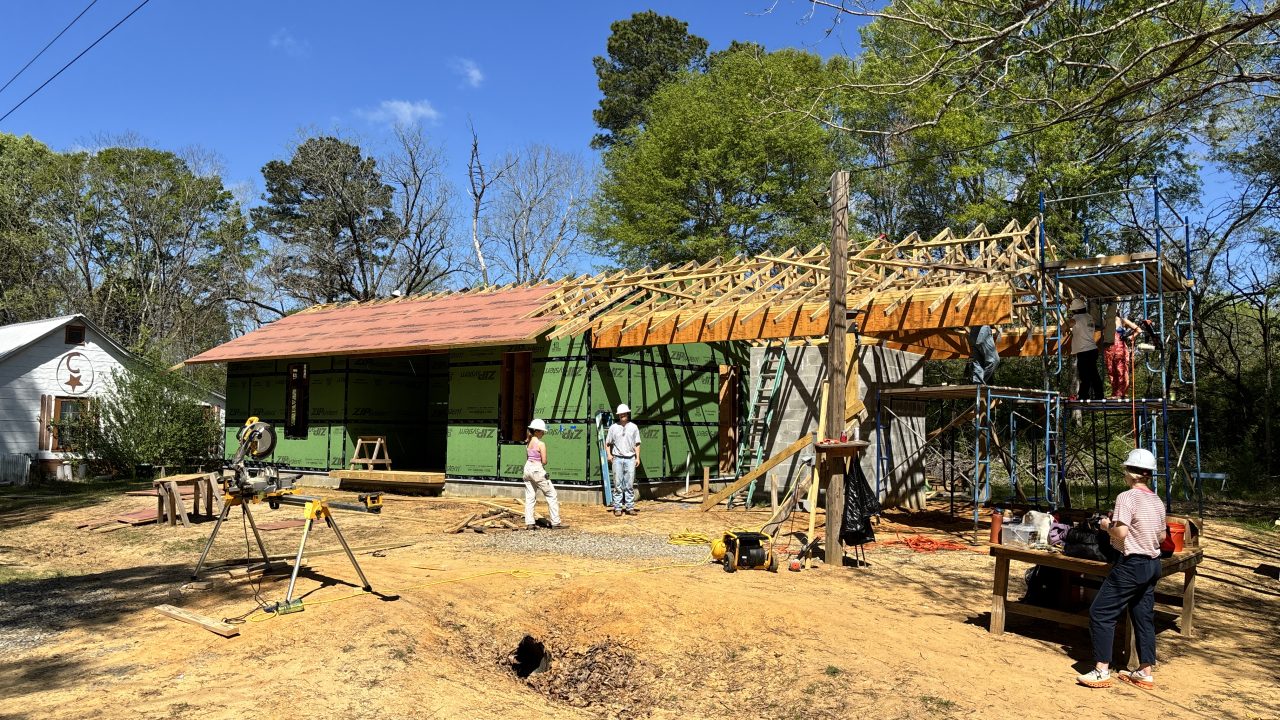
Currently, McGlohn’s students are hard at work on the Cost-Effective, Resilient, Energy-Efficient, Equitable, and Durable (CREED) House for Rural Studio client Mark. Supported by the inaugural Auburn Alumni Association Creed Grant, the house is being constructed to meet the 2025 FORTIFIED Home Gold Standard, a voluntary building standard intended to strengthen houses against severe weather and high-wind events common throughout the Southeast.
Students worked closely with engineers and contractors to develop a continuous load path that tied the roof, walls and foundation together as a single structural system. The house also incorporates a FEMA-engineered safe room, reinforced roof construction and a wired emergency generator capable of supporting essential systems during extended power outages.
Like the other houses McGlohn has overseen, the work won’t stop when the CREED House is complete, but it contributes to a feedback loop that passes knowledge to research teams and outreach partners, back to architecture students and ultimately to the clients through their built homes.
“Nothing we do is one-off,” McGlohn said. “All third-year houses are looking for best practices that we can move forward, and we will try another iteration of the design in the next house.”
As part of her housing research, McGlohn also works to better understand and improve the infrastructure that makes good housing successful—like the Rural Wastewater Demonstration Project. A collaboration with the Consortium for Alabama Rural Water and Wastewater, the project demonstrates decentralized wastewater infrastructure that is economically accessible, environmentally responsible and appropriate for rural communities.* The project contributed to McGlohn winning Architectural Record’s 2025 Women in Architecture Award.

With each research milestone, communicating the needs and opportunities of rural housing becomes increasingly important, so McGlohn works to share her projects with other faculty, researchers and outreach specialists. In October 2025, she and Assistant Research Professor Betsy Garcia from the FPI worked with the Alabama Cooperative Extension System (ACES) to host a Housing Forum to share knowledge, discuss ongoing challenges and identify opportunities for collaboration across homeownership and finance, disaster preparedness and resilience, heirs’ property, and access to clean water and sanitation. She continues this partnership and will host Homestead Day in September to explore rural lifestyles with hands-on learning.
Recently, her work was highlighted in Designbuild Pedagogies for Social Change, which was published by Routledge in May. McGlohn co-authored the chapter “Rural Studio and Front Porch Initiative; Knowledge Loops Between Implementation and Research” with Associate Research Professor Mackenzie Stagg.
“We didn’t design the feedback loop first. It’s just the way we work together,” McGlohn said. “Collaborating with my students, clients and colleagues gives us all the best insight into the challenges of rural housing. It’s a privilege to be a part of a team like we have.”
*The Rural Wastewater Demonstration Project and Consortium for Alabama Rural Water and Wastewater are supported by a grant by the Rural Utilities Service, United Sates Department of Agriculture.
See more in:
Community Engagement,
Faculty Recognition,
Housing Access and Affordability,
Research,
Rural Studio,
Student Experience,
Student Work,
Sustainable Design and Development
Related people:
Natalie Butts-Ball,
Emily McGlohn