SIGD, APLA Host Sixth Annual Day of Design
College of Architecture, Design and Construction’s (CADC) sixth annual Day of Design centered on the idea of crafted futures.
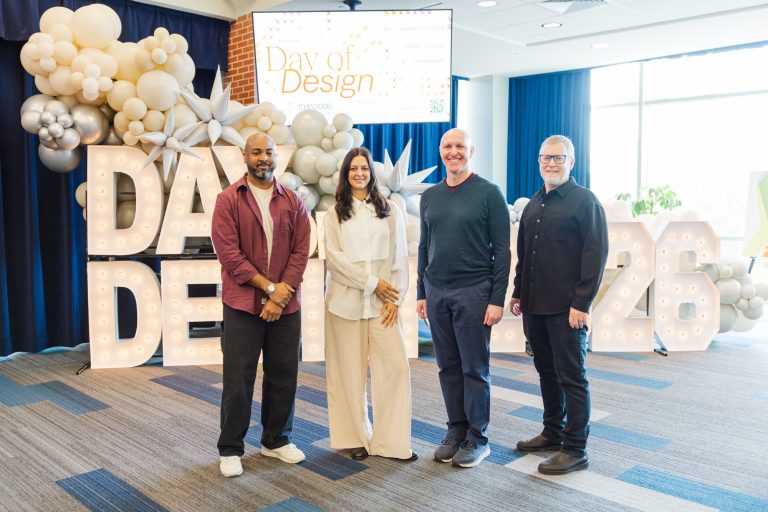
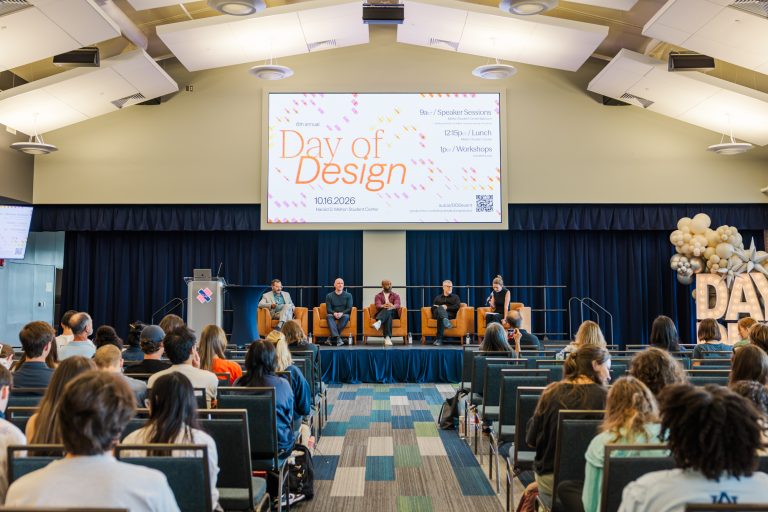
Friday, Oct.16, students, educators, alumni and guests gathered to hear from industry professionals and participate in interdisciplinary design workshops that explore how craft and technology intersect across time and how traditional making practices continue to shape contemporary design. The School of Architecture, Planning and Landscape Architecture (APLA) and the School of Industrial and Graphic Design (SIGD) co-hosted Day of Design 2026 in Auburn’s Melton Student Center Ballroom with the help of platinum sponsor PlayCore.
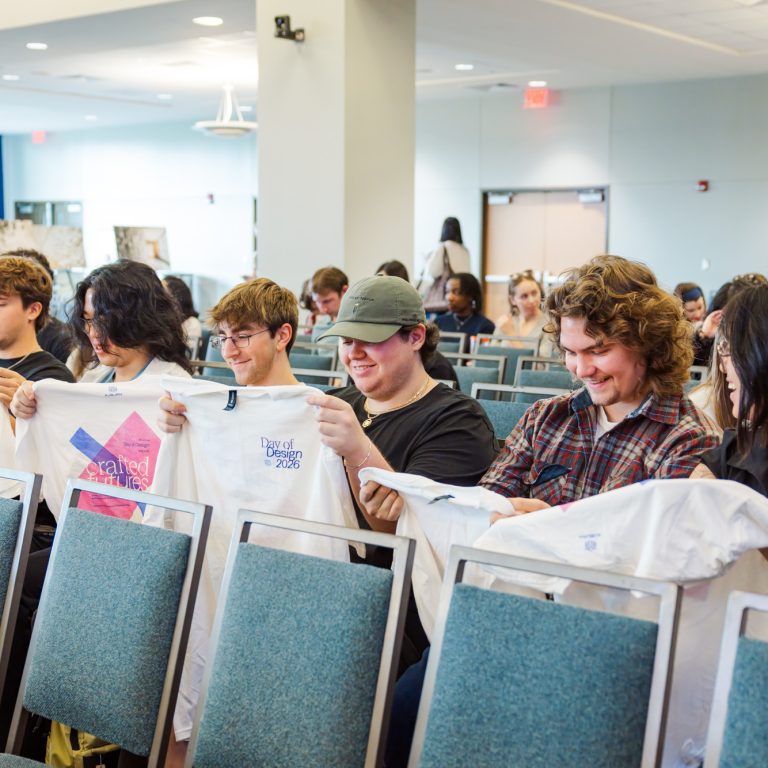

“Day of Design is an annual event that brings together students and faculty from different areas of Auburn University who might otherwise have limited interaction,” Industrial Design Associate Professor Jerrod Windham said. “The program features a themed sequence of lectures and workshops led by distinguished design professionals across multiple disciplines. Its purpose is to inspire, educate and honor the influence of design on society and culture.”
The morning schedule comprised four speakers representing expertise in architecture, graphic design, industrial design and landscape architecture and climate resilience.
Houston-based designer Andrew Kudless kicked off the presentations. Kudless is the founder of Matsys, a design studio exploring the emergent relationships between architecture, engineering, biology and computation— as well as Muddy Robots, an enterprise that brings two decades of research in robotic fabrication, parametric design and material systems to the challenge of building with earth. He is a professor in the University of Houston’s Hines College of Architecture + Design, as well as the Director of the Advanced Media Technology Lab. He is the recipient of a 2019 AIA National Honor Award and was the first American designer to contribute to Louis Vuitton’s Objets Nomades collection. Kudless shared how he runs a material practice with the students.
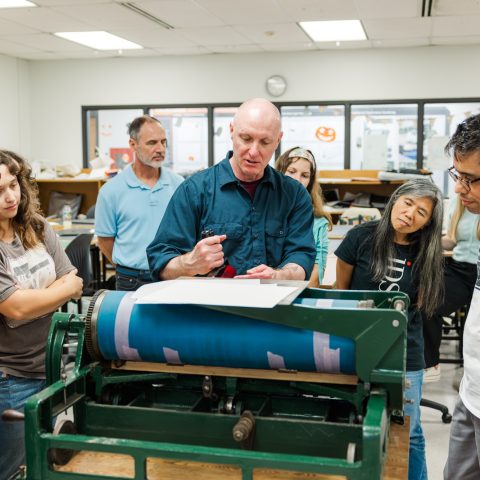
Associate Professor of Communication Design at the University of North Texas, David Wolske is a designer, educator and letterpress artist whose work explores the expressive potential of typography through systems, constraints and experimentation, combining antique wood and metal movable type with digital design processes. Wolske is a founding member of Letterpress Educators of Art and Design (LEAD) and an advisor to Partners in Print. Wolske presented his design methods centered around curiosity, iteration and intention.
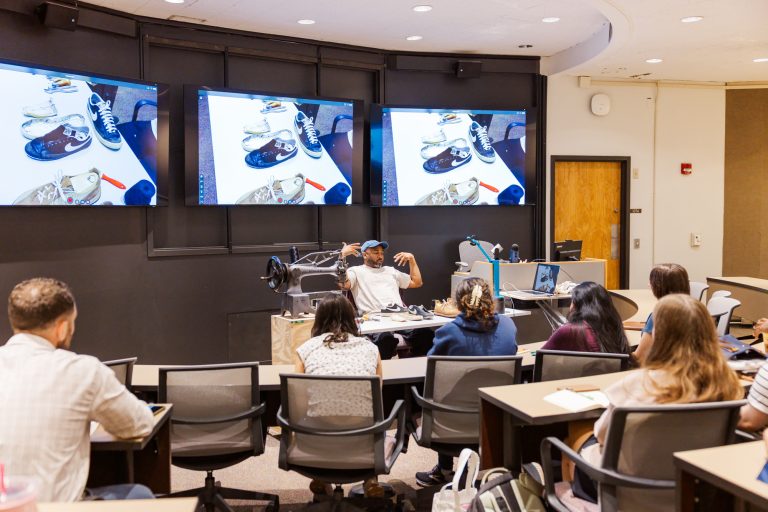
Industrial Design Program Coordinator and an assistant professor at the University of Louisiana Lafayette, Damien Mitchell wrapped up the presentations, sharing his work as a multidisciplinary designer and entrepreneur in the fields of industrial design, graphic design and studio craft. His current research integrates traditional craft principles into contemporary design disciplines like footwear and furniture to democratize design while promoting sustainability and local production.
Australian-born designer, author and TED speaker Julia Watson shared her story of founding the Lo—TEK movement, advancing post-carbon futures through the cultivation of post-carbon cultures. Working at the intersection of landscape architecture, ecology and Traditional Ecological Knowledge, Watson wrote Lo—TEK: Design by Radical Indigenism and Lo—TEK Water and founded the Lo—TEK Office for Intercultural Urbanism, in New York and London, and the Lo—TEK Institute.
The speakers then participated in moderated question and answer session with Windham and Assistant Professor of Architecture Cait McCarthy.
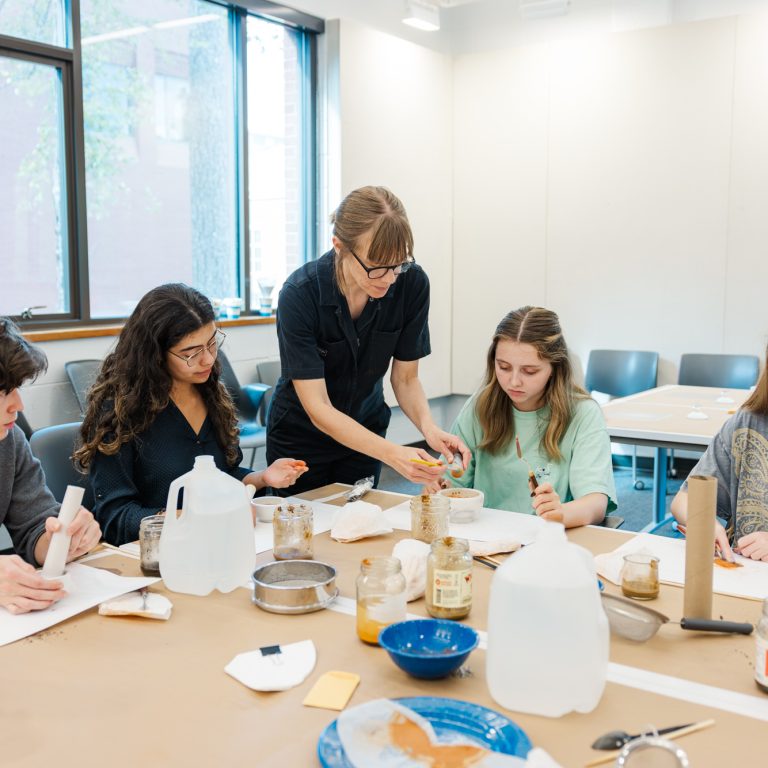
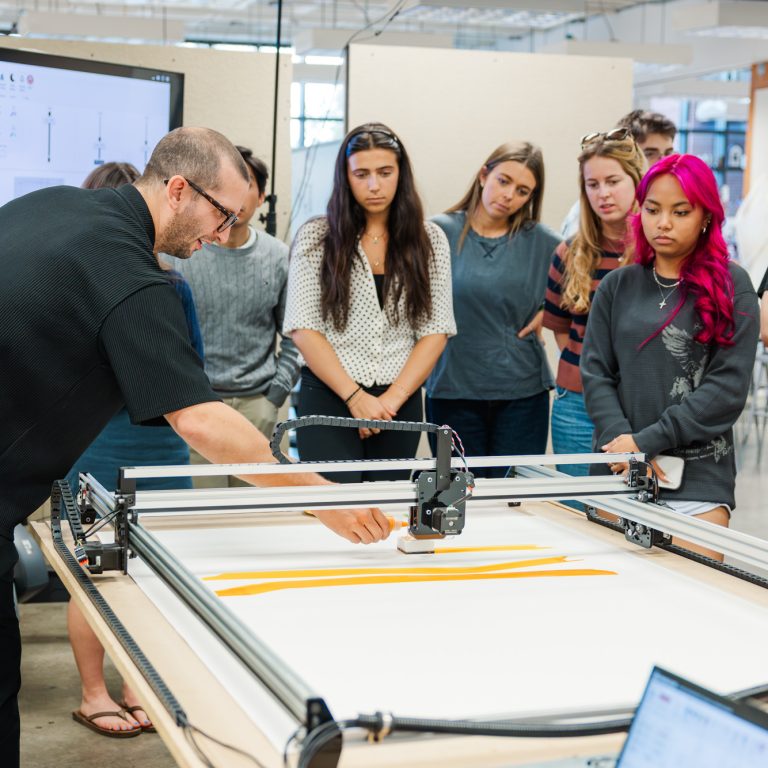
After lunch, the students broke out into six workshop sessions for hands-on design challenges with the guest speakers and faculty members. The workshops included a deep dive with Mitchell, a typographic workshop with Wolske and an exploration into the archeology of generative cities with Kudless. CADC faculty members Gwen Cohen, Sarah Page, Jordan Young and McCarthy also led workshops about making paint with soil pigment, transecting time and place and drawing between machines and materials.

“This year’s Day of Design brings together academics and practitioners from architecture, industrial design, graphic design and landscape architecture to explore the relationships between craft, technology and time,” McCarthy said. “Presentations and hands-on workshops give students the opportunity to encounter different ways of understanding and practicing craft, experiment with these ideas firsthand and explore new possibilities in their own work.”