LAND Faculty Collaborate on the Future of Indigenous Earthworks
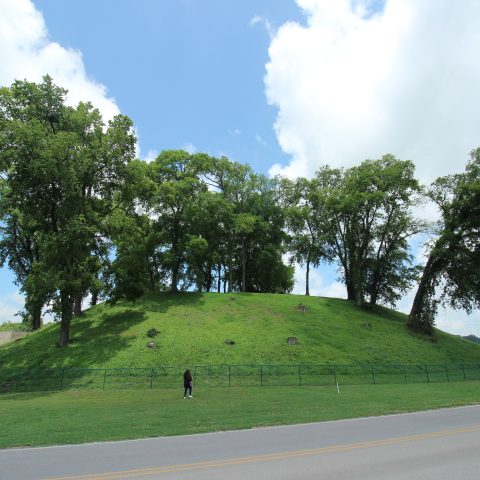
Two assistant landscape architecture professors from the School of Architecture, Planning and Landscape Architecture (APLA) have been envisioning new stewardship practices for the Indigenous Florence Mound in north Alabama.
Sarah Coleman and Isaac Cohen have been in talks with site managers in Florence, Alabama, to create a series of public events to promote awareness and preservation of the historic site. Their first event, “Generative Care at the Florence Mound: New Practices for Land-Based Relations,” will be held at the Mound’s accompanying museum, the Florence Mound Museum, from February 6–7, 2026. The event’s first day, Friday the 6th, is comprised of evening programming for the public, while the second day, Saturday the 7th, is a more intimate day of workshops as well as a panel for participants from across the region and beyond.
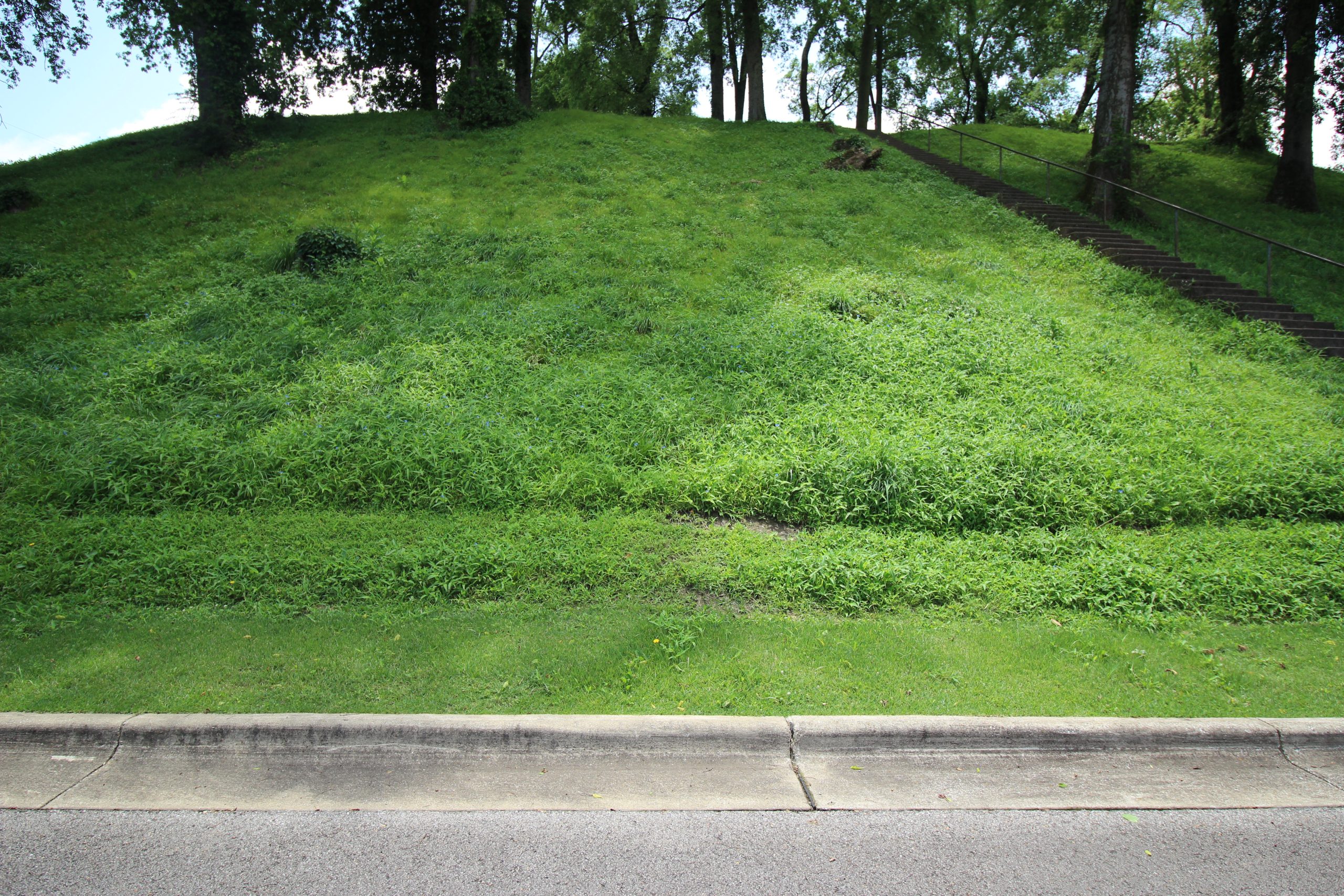
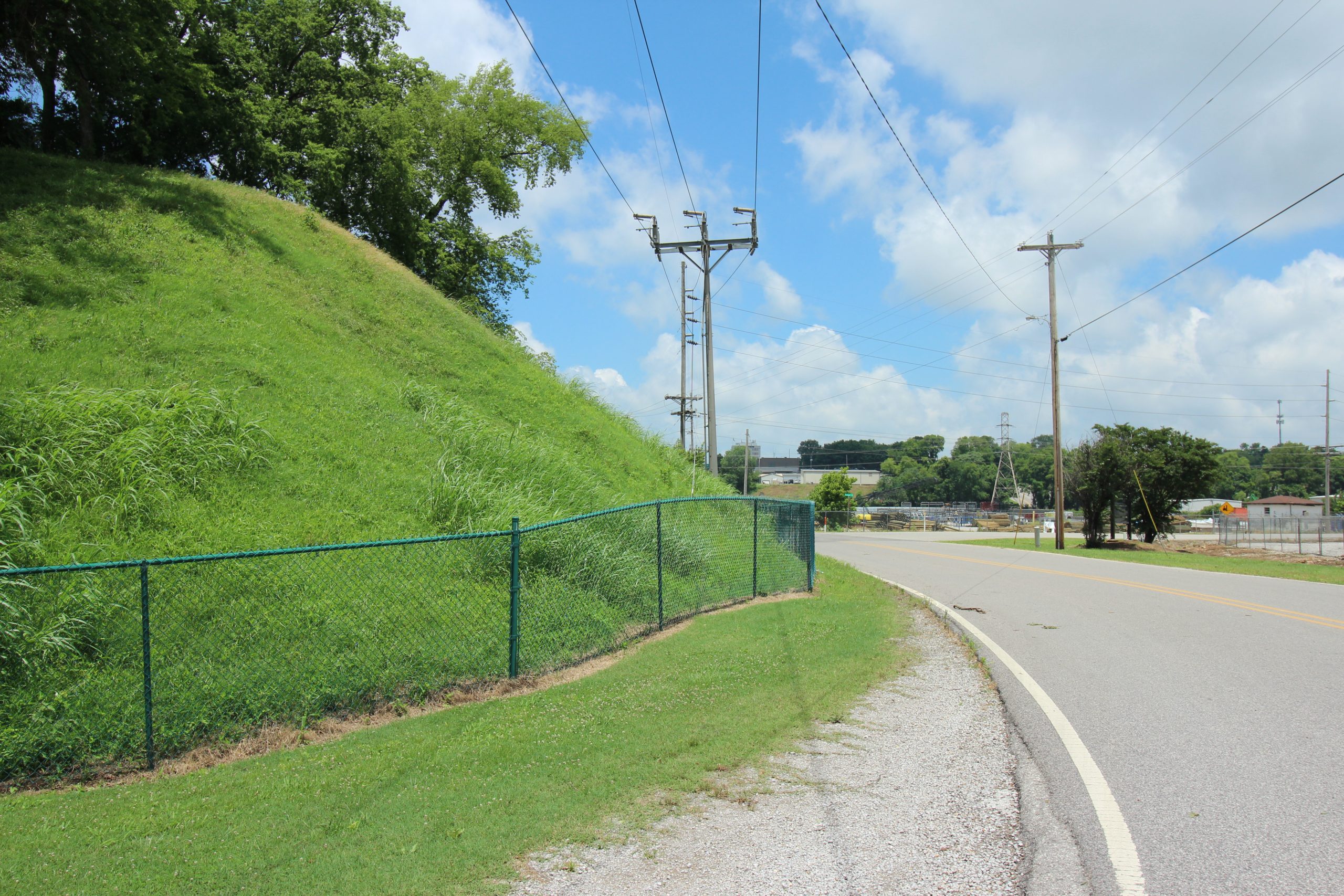
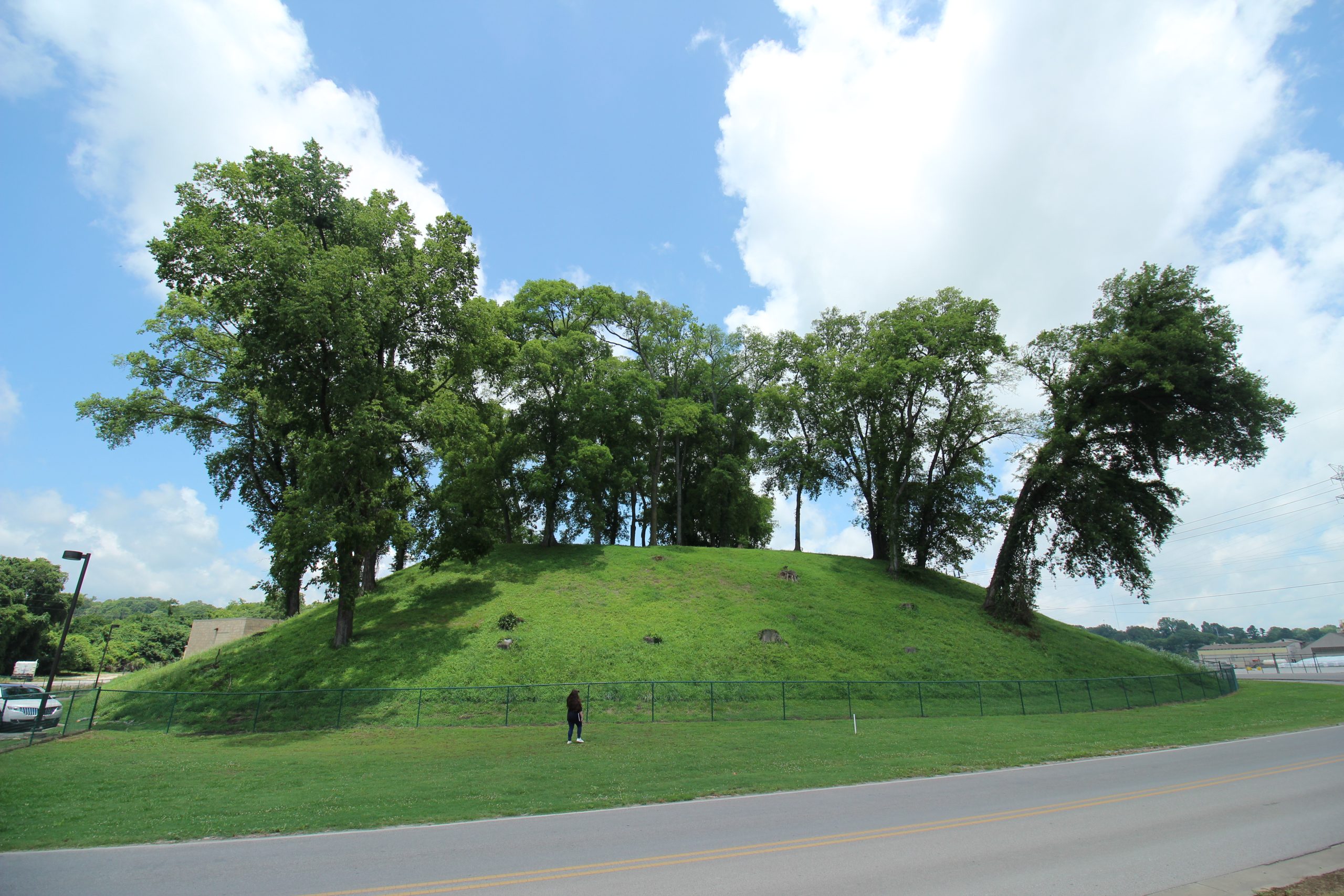
The Florence Mound rises 45 feet above the Tennessee River and has witnessed 1,700 years of transformation along the river’s edge. Earthworks such as the Florence Mound are vital, living forms of Indigenous knowledge, constructed out of the land itself and stand as testaments to the geological knowledge and engineering skill of its original makers. Over its history, the Mound has been cared for and tended by many generations of Indigenous communities. Today, the City of Florence and the Florence Mound Museum manage the site’s day-to-day care. As the cost of upkeep has become unsustainable, Coleman and Cohen both believe that the Mound stands at a critical point in which new modes of stewardship must be envisioned.
The February event centers knowledge keepers, and will convene mound caretakers, scholars, archaeologists and designers from across the region and beyond in conversations which will have broad implications for land-based relations at the Florence Mound. The keynote speakers for the event include Chadwick Allen, Professor of English at the University of Washington and author of Earthworks Rising: Mound Building in Native Literature and Arts; and LaDonna Brown, Tribal Anthropologist for the Chickasaw Nation Department of History & Culture. Other speakers include Brian Murphy, Director of Florence Arts and Museums; Ana Peeples, Museum Educator for the Florence Mound Museum; Katie Kelly, Senior Associate at Ten X Ten Landscape Architects; and Brenda Williams, Principal and landscape architect at Quinn Evans, a design collective.
Mario Bocanegra Martinez, an Assistant Professor in the School of Industrial and Graphic Design, has been working on the design of the images for marketing the event.
Coleman and Cohen have worked in collaboration with the Florence Mound Museum over the last year and a half to develop the project, which seeks to imagine modes of care that engage the “ongoingness” of earthworks as generative of new practices for stewardship. The project has been supported by several grants, including a CADC Seed Grant, which provides funding to support faculty research, scholarship and creative work. The team’s work has also been supported by an Auburn University Office of the Vice President for University Outreach’s Competitive Outreach Scholarship Grant, which seeks to promote community-engaged scholarship in the context of mutually beneficial and reciprocal university and community collaboration for the public good. Finally, the project is also funded by the Alabama Humanities Alliance’s 2024 Alabama Public Humanities grant, which seeks to support public humanities programs across the state to make Alabama a more vibrant place to live.
“We’re so grateful for all of the interest and expertise that will be brought to bear at this event. This work really builds on the many years of effort by Brian Murphy and Ana Peeples at the Florence Mound Museum, who have opened the door for more accurate and expansive understandings of this important place,” said Coleman.
Cohen adds, “We’re excited that these constituencies will have the rare chance to sit down in and share space and conversation. We hope this event will begin the work of building broader networks of care for these types of landscapes across the region.”
The public portion of the event starts at 2:00 p.m. on February 6, 2026, at the Florence Mound Museum in Florence, Alabama.
This project is supported by the Alabama Humanities Alliance, a state affiliate of the National Endowment for the Humanities. Any views, findings, conclusions or recommendations expressed in this website do not necessarily represent those of the Alabama Humanities Alliance or the National Endowment for the Humanities.
See more in:
Community Engagement,
Faculty Collaboration,
Faculty Recognition,
Faculty Work,
Outreach,
Research
Related people:
Sarah Coleman,
Isaac Cohen