INDD Alum, Former Faculty Tsai Lu Liu Elevated to IDSA Fellow
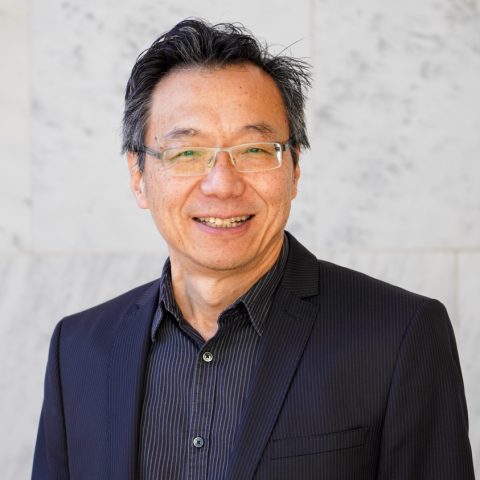
When Tsai Lu Liu ‘92 learned of his elevation to the Industrial Designers Society of America (IDSA) Academy of Fellows this fall, he described it as “a tremendous recognition—especially for my academic career.”
After more than three decades in design education, Liu’s acknowledgment by the field’s premier professional organization represents not only personal achievement but also the culmination of a career spent bridging disciplines, cultures and generations of designers.
Before his 21 years in academia and 13 years in industry, Liu’s design story began halfway around the world. He completed his undergraduate studies at the National Cheng Kung University in Taiwan, where one of his most respected professors, Alfred Chen ‘73, had studied at Auburn University under the legendary Industrial Design professor Walter Schear. Chen’s stories of Schear’s teaching and design philosophy left a lasting impression and ultimately led Liu to the Plains.
At Auburn, Liu earned his Master of Industrial Design degree in 1992 and discovered a way to synthesize his background in design with his Master of Business Administration degree from Georgia State University.
“It laid the foundation for me to incorporate both my design and business education into my practice,” he said. “I learned how to integrate the thinking and manage the process or new product development.”
That synthesis defined Liu’s approach to both professional practice and education. After Auburn, he spent over a decade in industry managing new product development processes—applying what he learned to develop design solutions for healthcare, telecommunications, semiconductors, toys and electronic gaming systems.
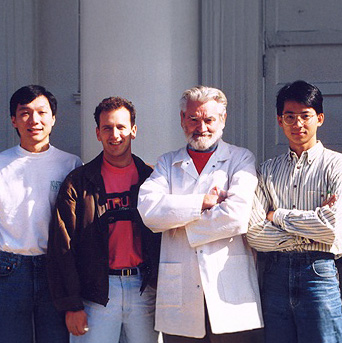
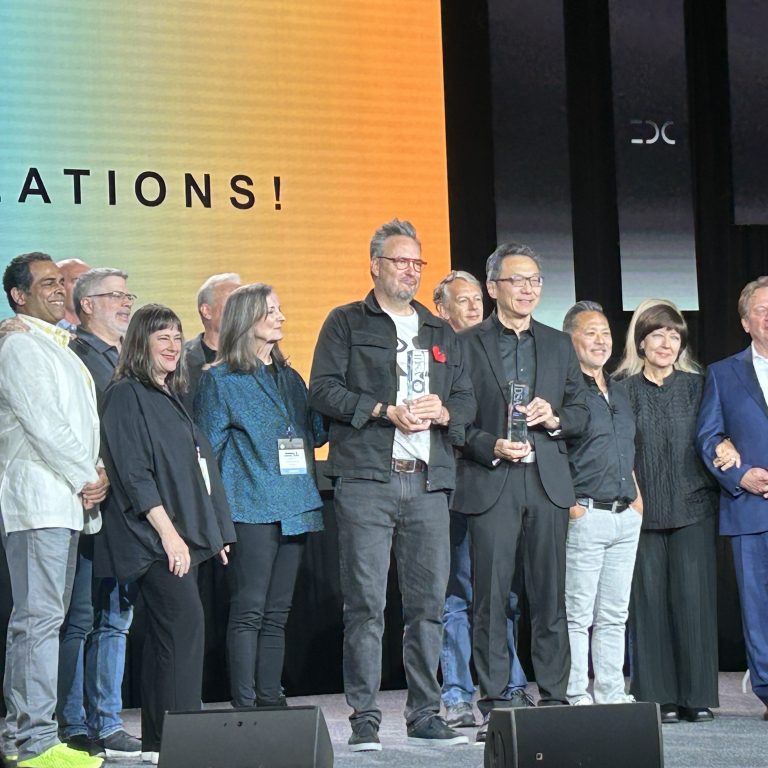
But in 2004, his path circled back to the university that had launched his career when he joined Auburn’s faculty in the School of Industrial and Graphic Design (SIGD). Moving with back to the U.S. with his family, Liu took on his first full-time teaching position—and his first English-speaking work environment in a decade—making him feel like a fish out of water.
However, the Auburn community quickly made him feel at home.
“My colleagues and students were so supportive and patient,” he said. “They gave me confidence. I learned how to work with them and how to advise them.”
During his eight years at Auburn, Liu’s influence extended beyond the design studio. His interdisciplinary mindset led him to co-teach in the Honors College, developing and leading a course alongside faculty from English, political science, history and engineering.
“It was a transformative experience,” he reflected, noting that working with faculty members from different disciplines taught him how to collaborate across academic boundaries, which became essential in my later administrative roles.
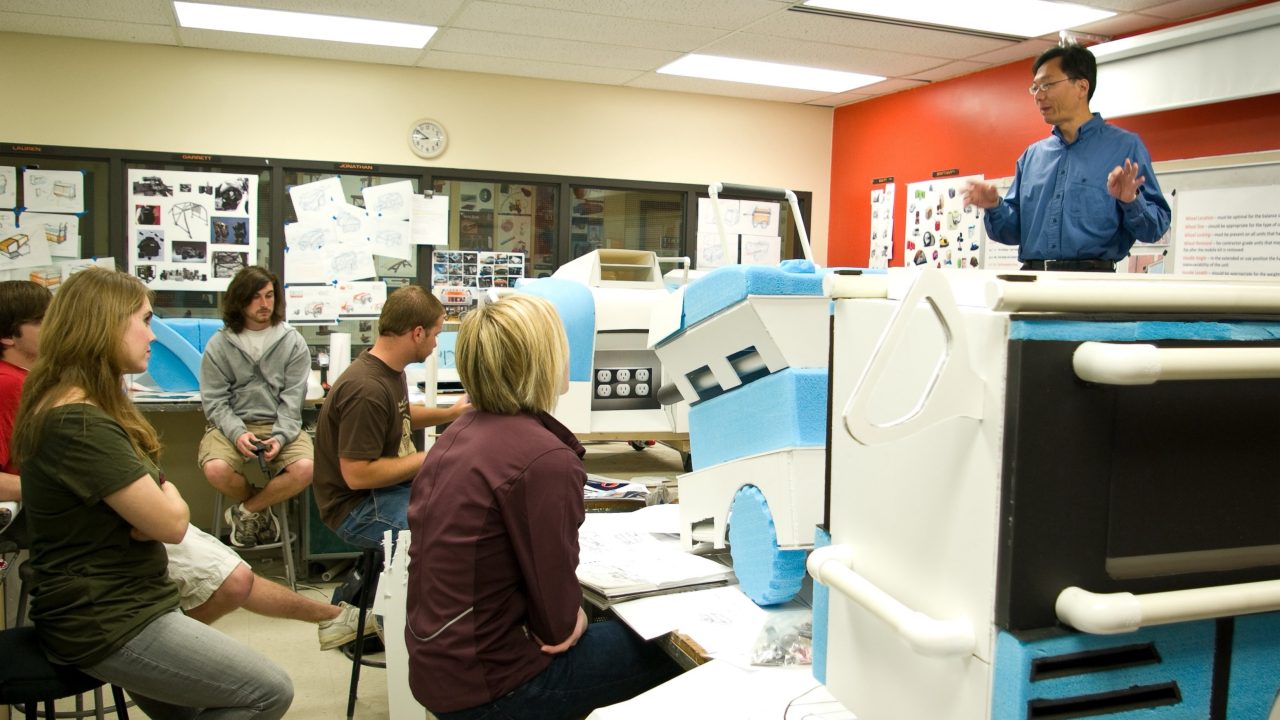
Liu also helped expand the school’s industry partnerships, experiential learning opportunities and interdisciplinary collaborations, like Studio+Build, a collaborative studio with the McWhorter School of Building Science that develops human-center product concepts for the commercial construction industry.
“Upon joining Auburn faculty, Tsai Lu Liu brought with him executive leadership and design management experience that was instrumental in expanding and enhancing our corporate-supported studios that better prepare students for practice,” said SIGD School Head Wei Wang.
Those collaborations reflected Liu’s belief that real-world engagement is central to design education.
“Our curriculum must align not just with the current state of practice but with its future,” he said, emphasizing the importance of students working in interdisciplinary teams the way professionals do.
In 2012, during his final year at Auburn, Liu served as interim associate dean of the College of Architecture, Design and Construction—a position to which he was appointed by then-dean and now Auburn University Provost Vini Nathan.
“That opportunity changed the trajectory of my career,” Liu said. “I never thought my industry leadership skills would be applied to academia, but she gave me an opportunity, and I never looked back.”
Liu carried those lessons through subsequent positions at North Carolina State University, where he oversaw both industrial design and graphic design programs, and now at Virginia Tech, where he serves as dean of the College of Architecture, Arts, and Design.
At Virginia Tech, he leads four schools—architecture, design, visual arts and performing arts—spanning 15 academic majors, 2,000 students and more than 200 faculty members. The vast interdisciplinary ecosystem suits Liu’s approach to collaboration—that creative pursuits are the strongest when the boundaries between disciplines are fluid.
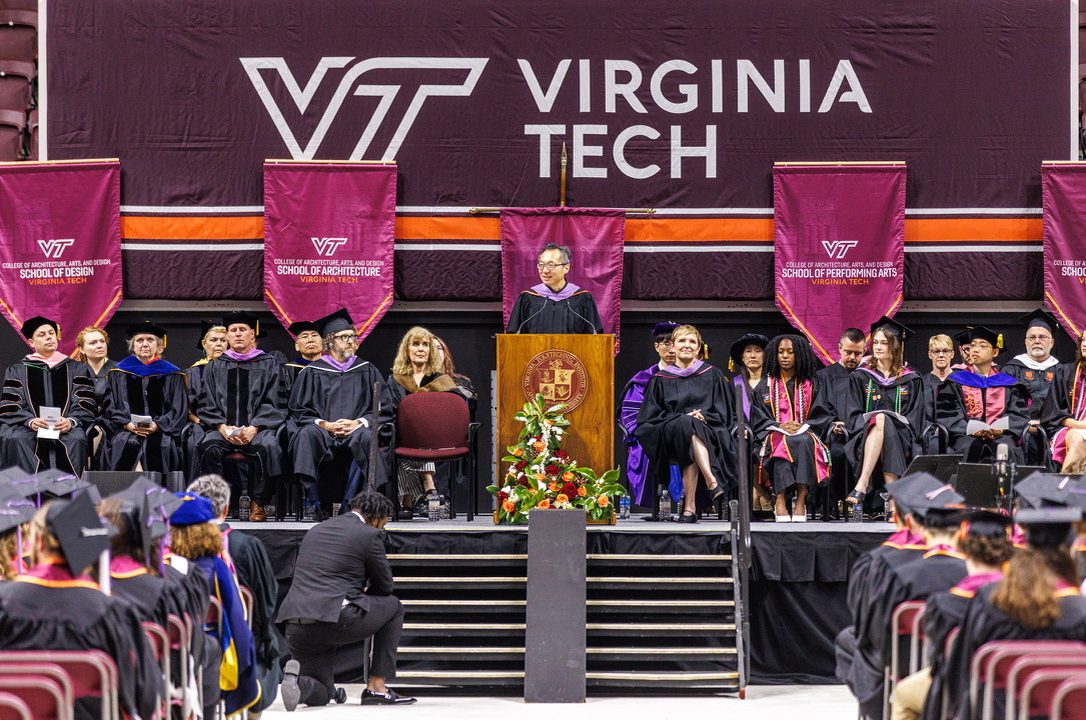
That belief has become a defining feature of Liu’s leadership. Under his direction, Virginia Tech has expanded its cross-disciplinary collaborations, launching projects and curricula that bring together faculty from architecture, industrial design, music, engineering, interior design and theater. One initiative focuses on acoustics research in healthcare environments, while another explores the emotional and experiential power of lighting across disciplines.
“Architects, product designers, graphic designers and storytellers sit next to each other and work on projects together,” he said, explaining how design studios work in practice. “The boundaries between disciplines are getting vaguer, which a beautiful thing.”
Liu’s design philosophy—rooted in empathy and human experience—aligns with this holistic approach.


“Design, rightfully so, has evolved to be more human-centered,” he said. “That is the core value of design, to elevate the human experience no matter the media—building, story, book, product, park or movie.”
Now, with his elevation to the IDSA Academy of Fellows, Liu joins the ranks of the designers he has long admired.
“Being part of that group is remarkable,” he said.” I didn’t expect it—especially because so much of my time has been devoted to administration rather than direct service to IDSA—but I was pleasantly surprised and deeply honored.”
True to his philosophy, Liu views even this personal milestone through a collective lens.
“Our mission as designers is to improve the quality of life for everyone on the planet,” he said. “If my influence helps students or colleagues think more deeply about the people we’re designing for—about how to make life more beautiful, meaningful and delightful—then that’s the greatest sense of accomplishment.”
See more in:
Alumni,
Alumni Recognition,
Industry Recognition
Related people:
Wei Wang