Urban Studio Students Turn Coffee Shops into Connection
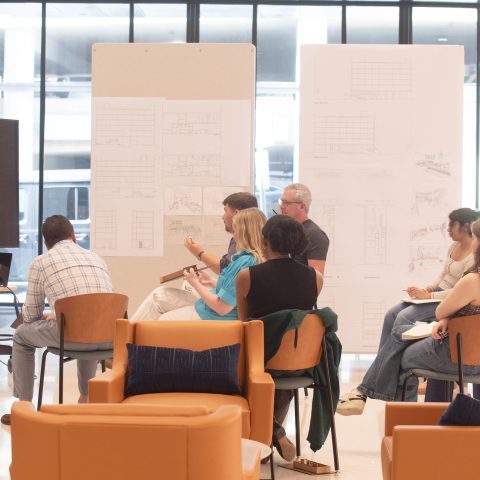
Third-year Architecture (ARCH) students explored adaptability, circulation and community in a coffee shop design assignment.
The students, who are part of the Architecture program in the School of Architecture, Planning and Landscape Architecture (APLA), completed their first project of the fall semester and presented their proposals at Urban Studio. The assignment asked them to design a coffee shop for Birmingham’s Auburn in Birmingham Building with attention to customer experience, daily operations and its urban setting.
Taught by adjunct faculty member Matt Leavell, the course used the familiar building type to help students concentrate on developing and communicating their ideas.
“They are beginning to define their own process, design strategies and aesthetics,” Leavell said.
After researching an architect or designer, students used that person’s process to inform original proposals. Projects by ARCH students Claire Carpenter and Addison Reynolds illustrate the range of responses.
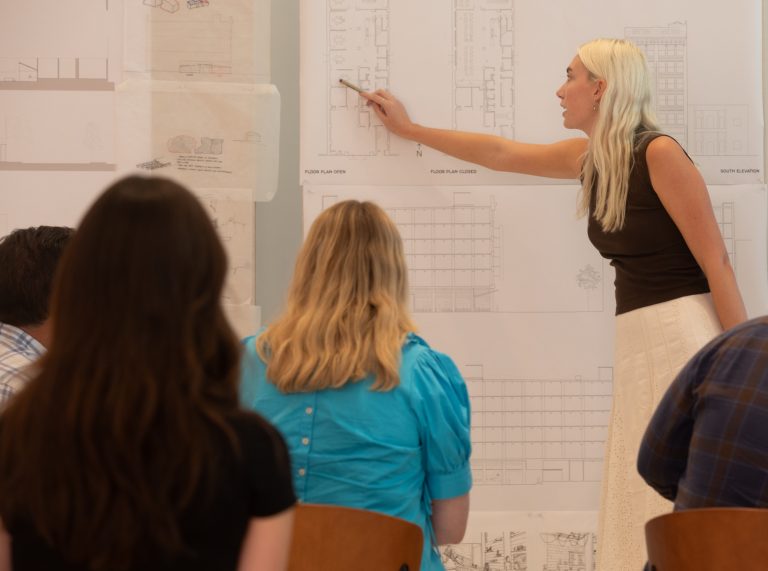
Carpenter drew inspiration from industrial designer Dieter Rams, whose work included transformable pieces.
“My main idea was creating transformable spaces using panels and walls, and I wanted to display Auburn student work from most of the design programs,” Carpenter said.
Carpenter narrowed several possible movements to pivoting panels, making the design more modular and connected to the existing structure. Review feedback also led her to consider steel instead of wood for greater flexibility in hanging and changing displays.
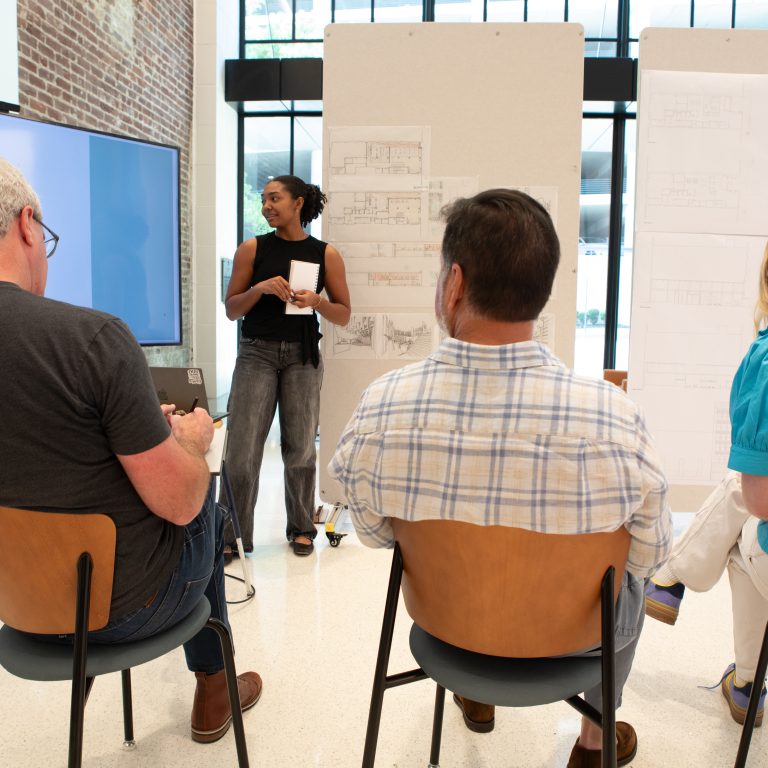
Reynolds organized her proposal around diversity, circulation and community. She designed a range of seating options and rotating pinup boards intended to catch the attention of people walking past the building and invite participation.
“I wanted to combine the Birmingham and Auburn communities and figure out a way to bring them together and dissolve the barrier,” Reynolds said.
Her design included private seating toward the back and a large, stacked seating area in the center where groups could gather and exchange ideas. After testing several versions of the ceiling, Reynolds replaced an earlier wood design with flowing fabric.
“I wanted something that represented movement because it is a space that’s constantly moving, constantly changing and exchanging ideas,” she said.
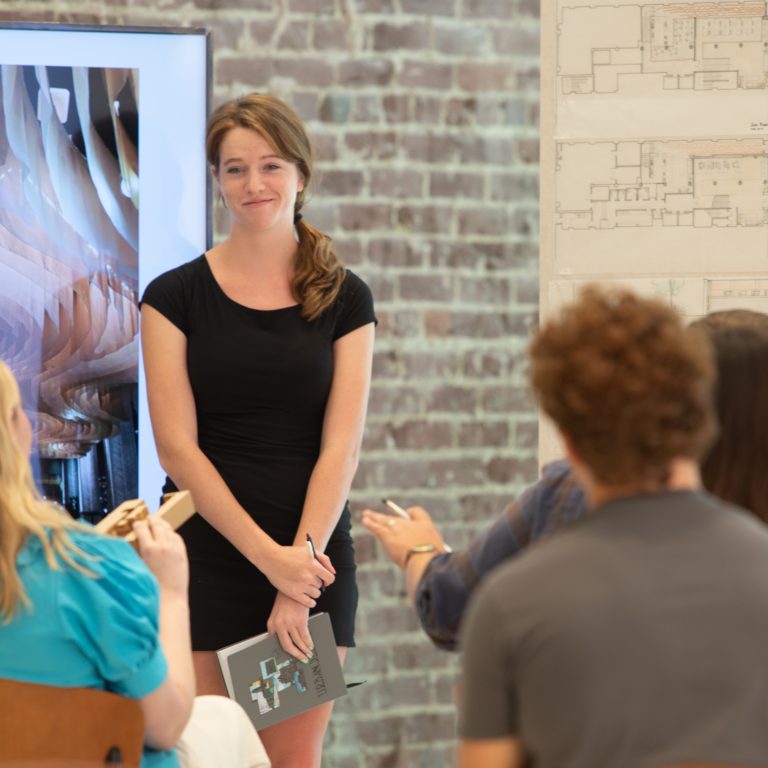
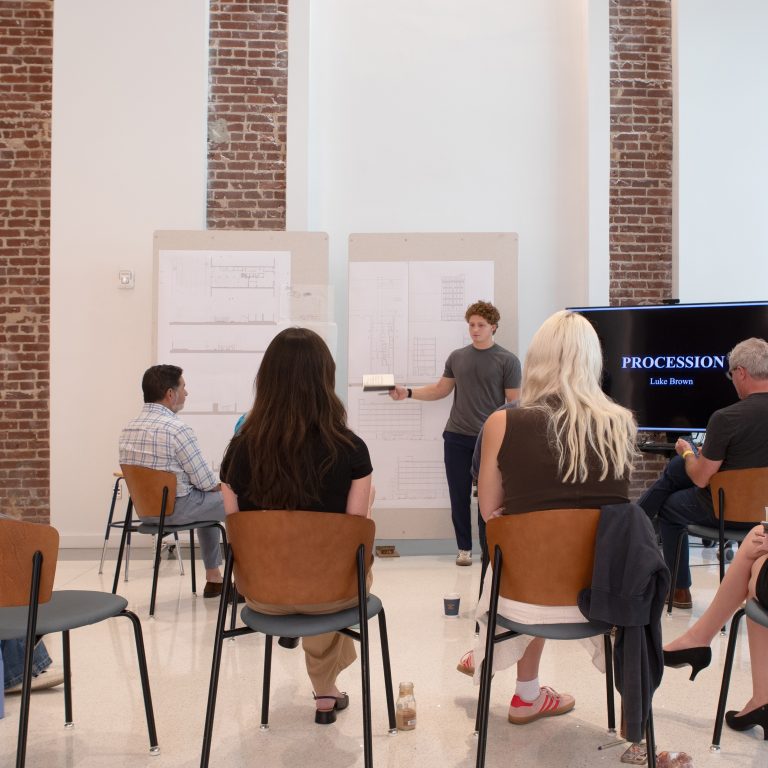
Leavell said the final review allowed students to test their ideas against questions and outside feedback.
“From a presentation and storytelling standpoint, it’s not just about the drawings,” he said. “It’s about how they communicate the idea in a way that other people can understand it and then use drawings to reflect those ideas.”
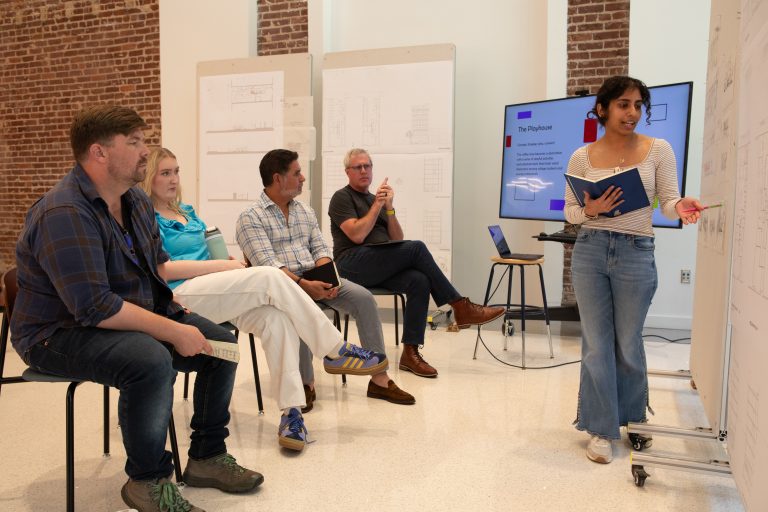
Learning to develop and clearly communicate design ideas at this stage will help students maintain that conceptual focus as they move into the more technical work of their fourth and fifth years.
“If you don’t have this understanding of concepts and design principles, it’s very easy to forget about them and go right into the technical stuff,” he said. “You lose the spirit of architecture when you do that. That’s why I think it’s important to pay attention to those things now.”
See more in:
Student Experience,
Student Work,
Urban Studio