ENVD Faculty Shaping Communities through Design, Civic Engagement
From the historic sites of the Civil Rights Movement in Alabama to communities across the nation, Associate Professor Robert Sproull encourages Environmental Design (ENVD) students to explore the intersections of architecture, design and civic engagement.

“Stories can be told, and lessons can be learned through the spaces we inhabit,” Sproull stated. “By studying the past, we can gain insight into how architecture and infrastructure shape communities.”
Early in his career, Sproull had the invaluable opportunity to work under world-renowned architect Renzo Piano for nearly five years.
Piano’s work on projects such as the Whitney Museum of American Art in New York and the Isabella Stewart Gardner Museum in Boston reinforced Sproull’s interest in the connection between community and design, and this passion has shaped much of his work at Auburn.
Bridging the Past and Present
Students in Sproull’s Research and Civic Engagement course partnered with Mount Zion A.M.E. Church to examine the built environment’s impact on the community.
“The I-85/I-65 interchange decision had a lasting negative effect on many people in Montgomery,” he explained. “By speaking with those involved in the march from Selma to Montgomery and visiting historic sites, students gain a deeper understanding of how infrastructure decisions can impact communities on multiple levels.” As part of the course, students develop solutions that range from mobile apps to city planning strategies aimed at revitalization.
Alongside Frank Hu, Assistant Professor of Landscape Architecture, Sproull is working with a community partner to create a model of the Peacock Tract neighborhood, illustrating its transformation over time.
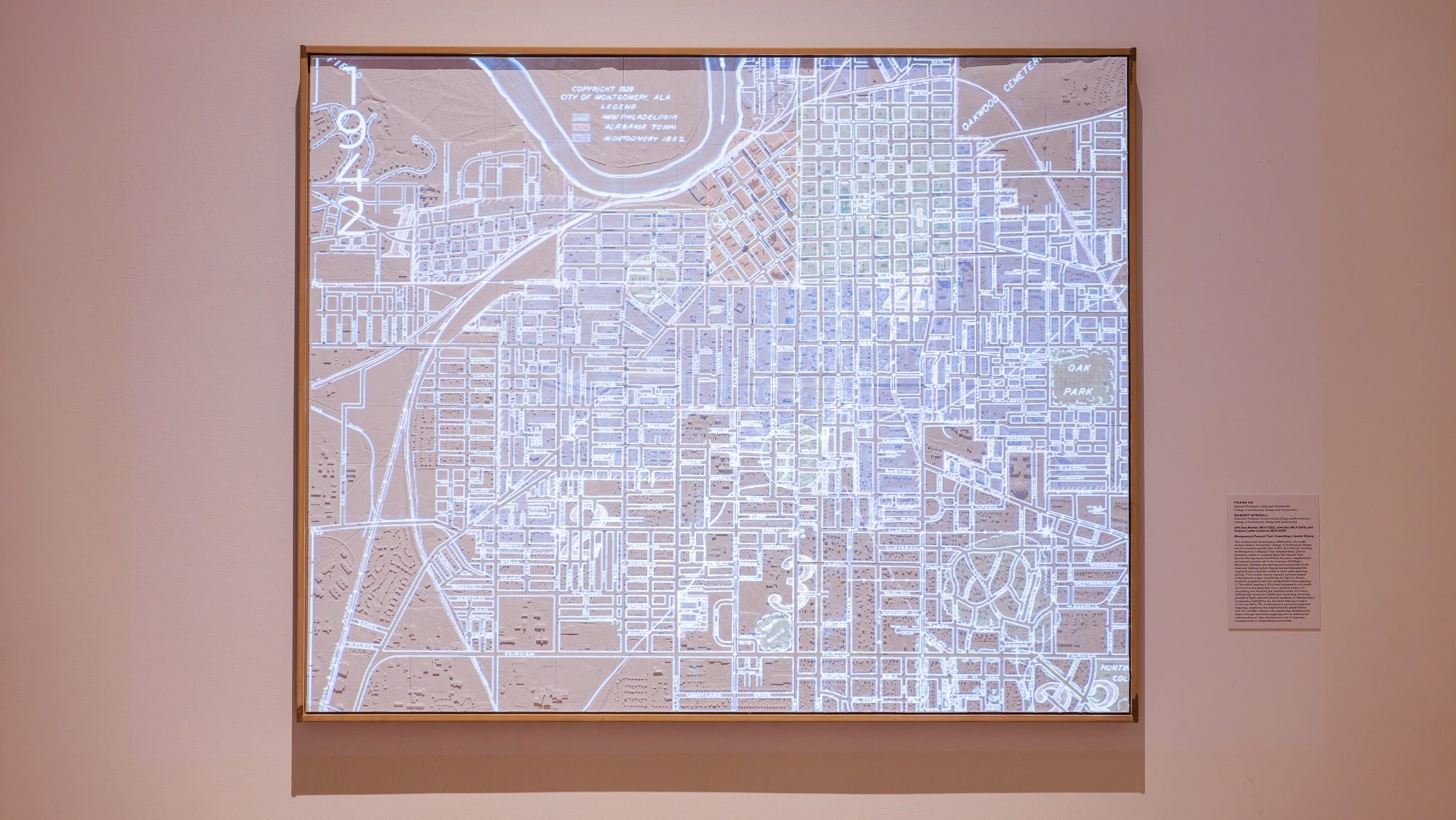
“By projecting historical maps and current imagery onto the model, we can visually demonstrate the inequitable changes that have taken place,” Sproull shared. “This work was on display at the Jule Collins Smith Museum of Fine Art as part of Auburn’s SHOWCASE 2025. This kind of storytelling is vital—there are many places across the country affected by inequitable infrastructure, and we’re seeking national grants to expand this work on a larger scale.”
Supporting Every Student
Sproull’s teaching philosophy centers on empowering all students, not just those who excel naturally.
“I once came across a quote that reminded me that you can’t just focus the best students—you have to help every student reach their potential,” he said. “It’s about recognizing that possibility and guiding them toward it.”
This philosophy is evident in courses like Systems in the Built Environment, “We focus on built systems, while my colleague teaches a parallel course on natural systems.” he explained.
“We try to overlap topics to explore how the two interact.”
He also enjoys summer studios, particularly the introductory course ENVD 2100.

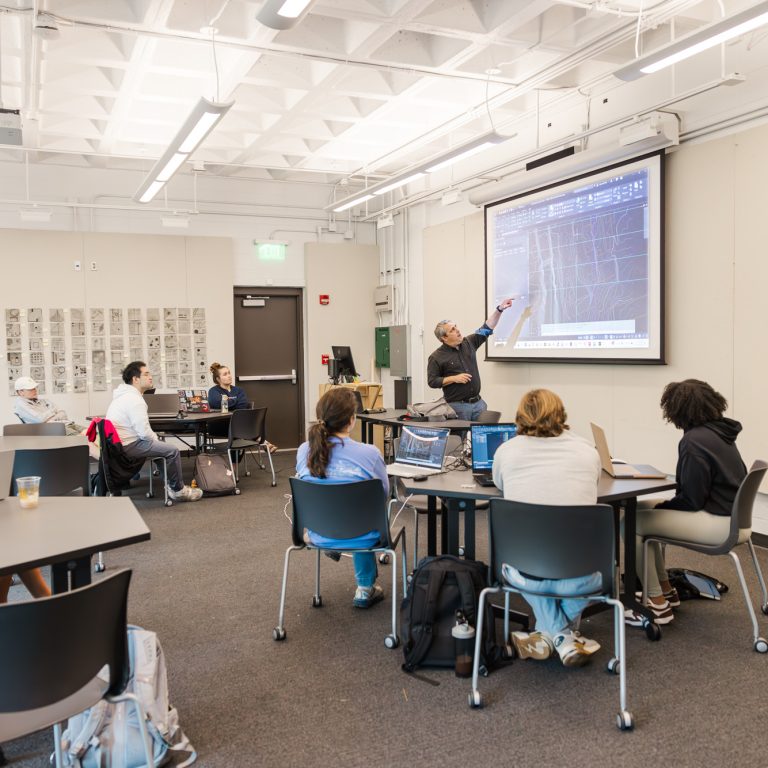
“You get to introduce students to design at multiple scales and across disciplines,” he shared. “It’s amazing how much they can improve in such a short time.”
Looking ahead, Sproull hopes to continue both his teaching and research while exploring new ways to share his insights. He is even considering writing a book on infrastructure’s role in society.
“A book on social and critical infrastructure would really build on my research,” Sproull said.
Through both his scholarship and his work with students, Sproull remains committed to deepening the conversation around how thoughtful design can shape more equitable communities.
Related people:
Robert Sproull