Autonomous Hyperspectral Analysis for Complex Differentiation of Visually Similar Construction Materials
A pilot study shows hyperspectral imaging with machine learning reliably distinguishes visually similar gypsum surface coatings in real time, offering a foundation for autonomous construction progress tracking.
Investigators
This pilot study explores hyperspectral imaging as a more reliable method for identifying visually similar construction surface materials compared to traditional inspection techniques. Conventional approaches such as manual walkthroughs, RGB photography, and image-based progress tracking often fail to distinguish subtle differences between plain gypsum, primer coated board, and semi-gloss paint. These limitations arise because RGB sensors capture only three broad color channels and are highly influenced by inconsistent lighting conditions. As a result, automated systems that rely on standard imagery may misclassify finishing stages and produce inaccurate progress assessments.
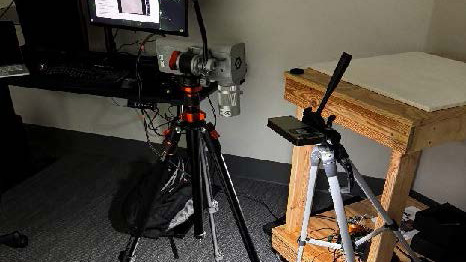
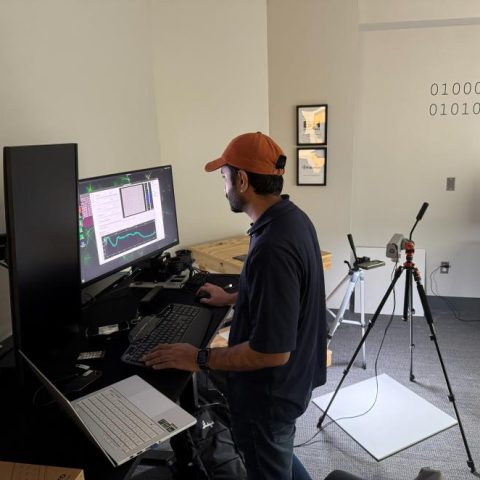
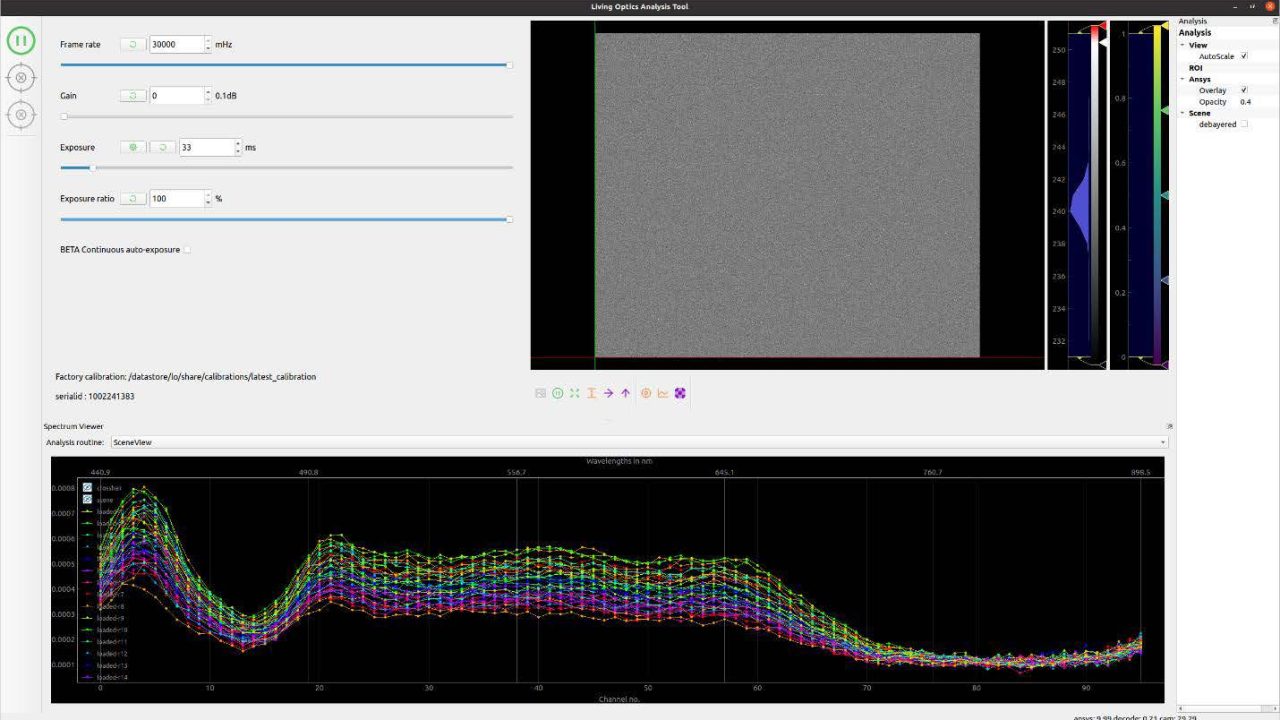
To address this problem, the study uses a Living Optics hyperspectral camera that records detailed spectral information across the visible and near infrared range. Experiments were conducted in a controlled laboratory setting using a Kelvin Play LED light source adjusted to both 6000 K and 8000 K. Reflectance spectra were collected from each material type and normalized before being used to train two machine learning models: a Support Vector Machine and a Random Forest Classifier. The Random Forest model performed the best, achieving more than 95 percent accuracy, particularly under the higher color temperature where material differences were more pronounced.
A real time classification pipeline was developed using the Living Optics software development kit and OpenCV. The system successfully identified material classes on a live camera feed with minimal latency. These results demonstrate that hyperspectral imaging, together with controlled illumination and lightweight machine learning, can reliably classify construction surface materials and supports future development of autonomous progress tracking systems.
See more in:
CCIC Awardees
Related people:
Eric Wetzel,
Salman Azhar