Auburn Faculty Collaborate on Gulf Coast Research and Design
It takes a village to build a resilient future along the Gulf Coast—and Auburn faculty and students are teaming up to do so.
Cross-departmental Collaboration
Interdisciplinary faculty and students from four Auburn University colleges—the College of Architecture, Design and Construction (CADC) the College of Agriculture, the Samuel Ginn College of Engineering and the College of Forestry, Wildlife and Environment (CFWE)—have partnered with Gulf Coast organizations to address challenges of coastal resiliency collaboratively.
The Gulf Coast Adaptation Studio is a collaboration between CADC faculty Rob Holmes, Associate Professor and Undergraduate Program Chair for Landscape Architecture (LAND), LAND Assistant Professor Isaac Cohen, Graphic Design Assistant Professor Devon Ward and Architecture Assistant Professor Aurélie Frolet—as well as Chris Anderson, CFWE Professor of Coastal Wetland Ecology, and Anna Linhoss, Associate Professor of Biosystems Engineering.
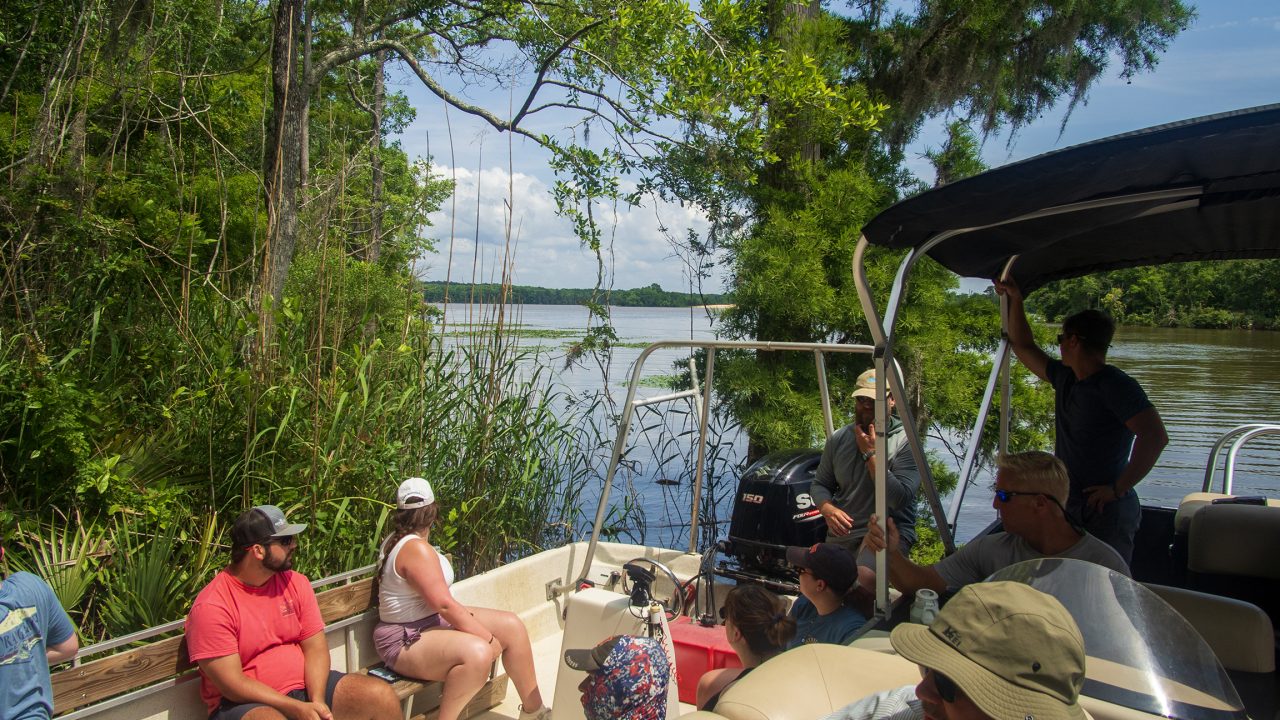
“Interdisciplinary approaches are necessary in practice, but don’t always happen in design studios,” Holmes said, explaining that the Gulf Adaptation Design Studio creates opportunities for students to understand how designers, landscape architects, coastal engineers and ecologists would collaborate in the field.
In 2022, the group kicked off a collaboration with the Gulf Research Program, which is sponsored by the National Academies of Science, Engineering and Medicine and is funding 30 years of research to address environmental change and community resilience following the Deepwater Horizon oil spill of 2010.
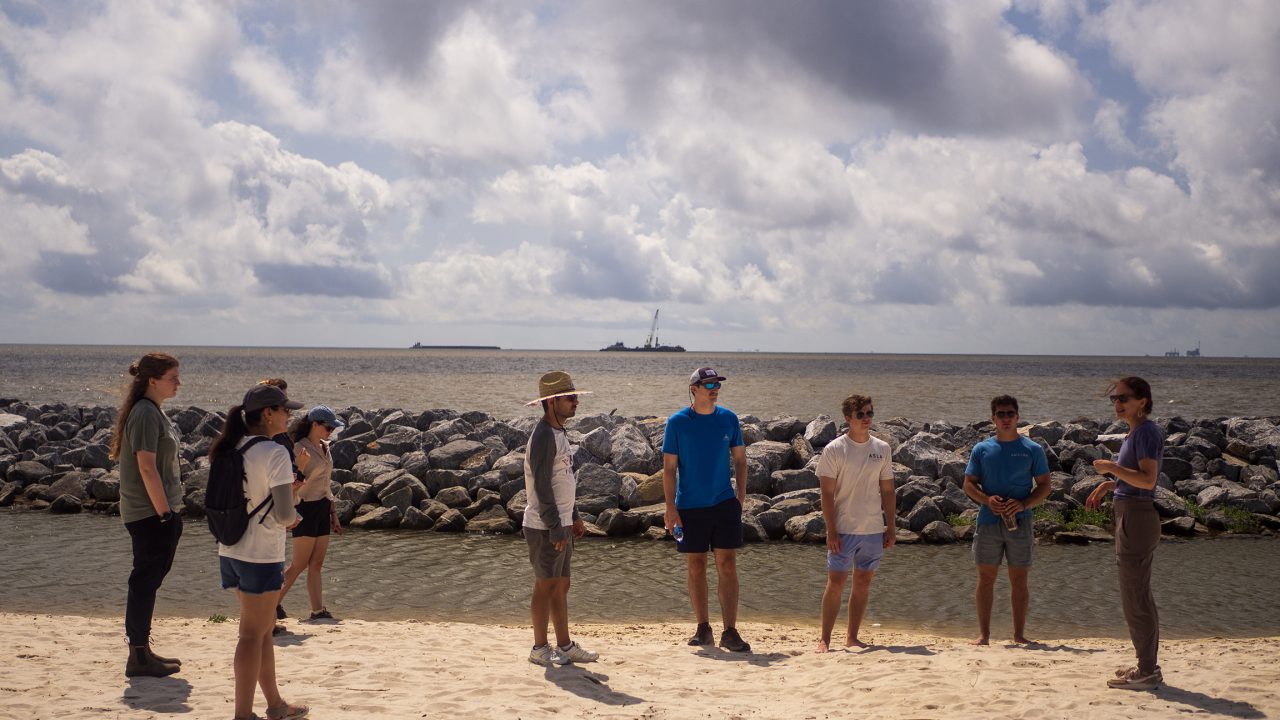
The first two years of the program served as a pilot phase, in which students collaborated with The Nature Conservancy, the Grand Bay National Estuarine Research Reserve and the City of Orange Beach on projects located in Grand Bay and Perdido Bay.
Maria Elena Vanegas Perez, Visiting Assistant Professor of Landscape Architecture, participated in the Gulf Adaptation Design Studio when she was in the Master of Landscape Architecture program, exploring habitat restoration techniques on a new scale.
“Working in a coastal landscape like Perdido Bay meant recalibrating how I approached design and observation, since the scale, dynamics and questions this shallow bay presented were quite different from previous studios,” she said, noting that she later presented her studio research at the Gulf of Mexico Conference in Tampa alongside Tulane University, Louisiana State University and various industry partners.
After two pilot years, Auburn’s Gulf Coast Adaptation Studio received a $750,000 grant from the Gulf Research Program to charter a three-year research and design program. Each semester, the faculty organizes courses across various disciplines to explore how people live in coastal environments now and how they can continue to do so in the future.
Gulf Adaptation Design Fellowship
One such interdisciplinary collaboration was the program’s first Gulf Adaptation Design Fellowship that took place in May in Mobile.
Eight students across the Landscape Architecture, Graphic Design and Biosystems Engineering programs were Gulf Adaptation Design Fellows, spending two weeks doing fieldwork, making professional connections and working on a design project.
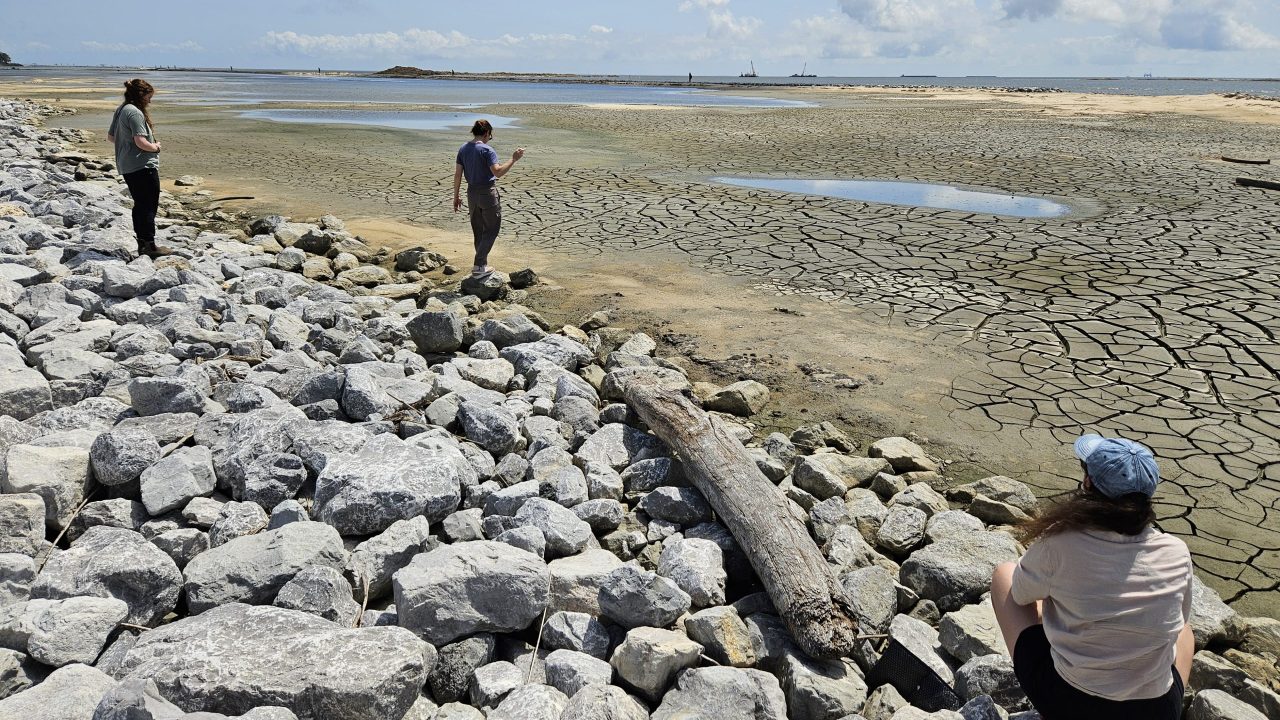
The Fellows gained first-hand experience with existing coastal landscapes in and around Mobile Bay and New Orleans, making observations about the natural landscapes of the Mobile-Tensaw River Delta, storm restoration projects like the Dauphin Island causeway and ecological restoration sites like Ship Island, Miss. The students also visited the offices of SCAPE Landscape Architecture and engineering firm Moffatt & Nichol and attended Louisiana’s State of the Coast conference to hear focused discussions on coastal resilience and design.
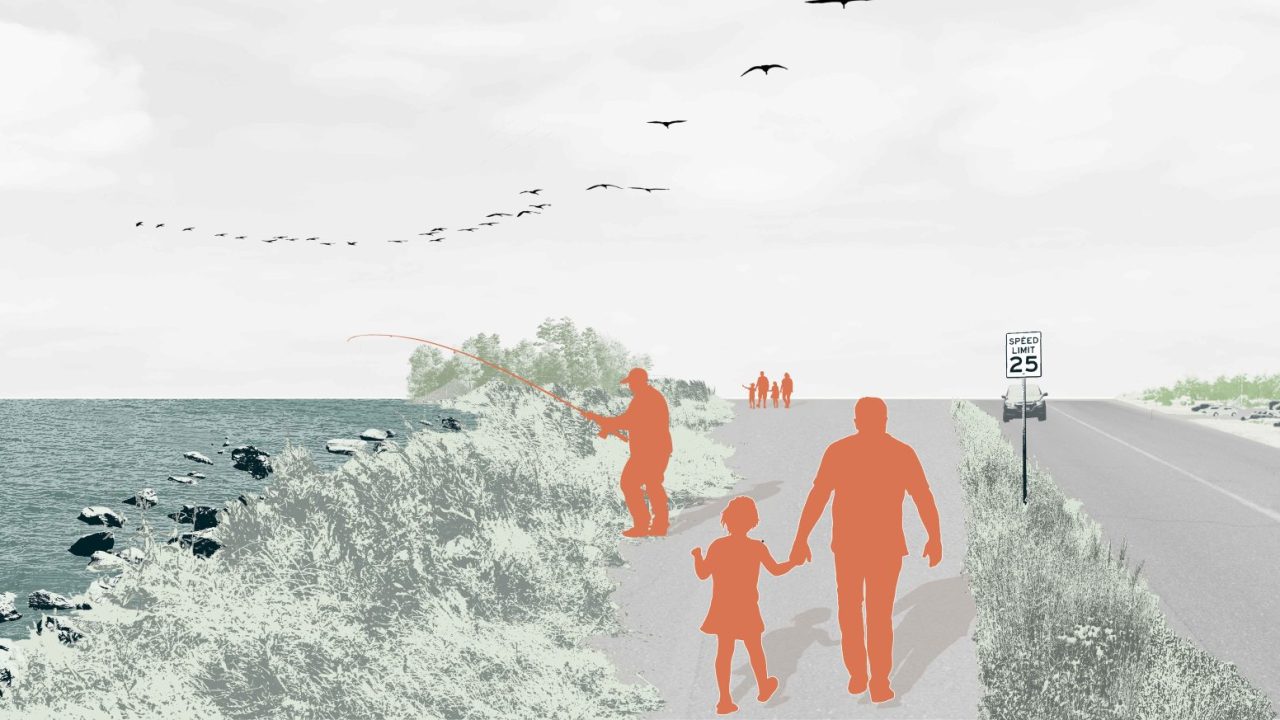
For their design project, the Fellows catalogued the Mobile Bay Causeway, drawing the seven-mile-long parkway in different sea level scenarios to discuss the infrastructure project’s relationship to sea level rise, ecological change and a larger urban system. The Fellows then developed a set of theoretical narratives about the long-term future of the Mobile Delta and Bay, considering the causeway in terms of 40–60 years of social, ecological and economic change.
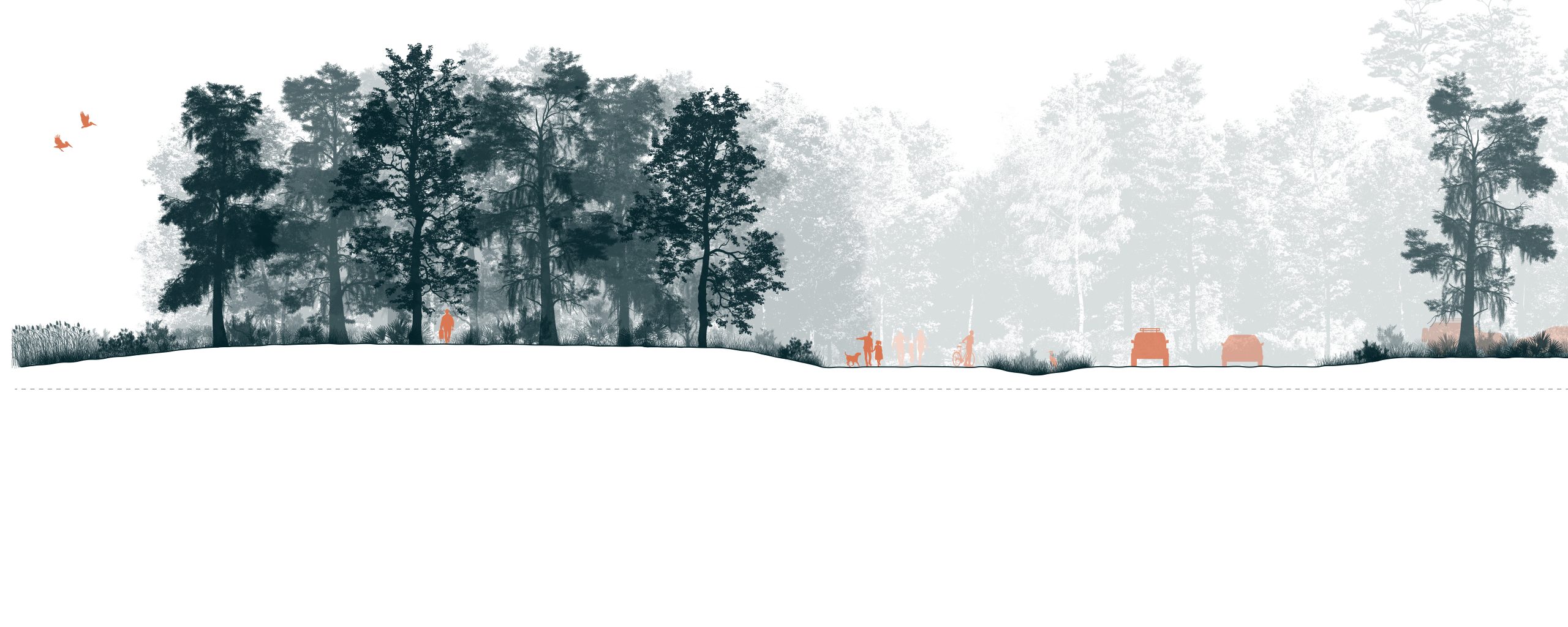
“The Causeway is physically simple, but an entry point into some really complex issues that happen at a big scale,” Holmes explained. “The student design project took them across a full range of scales.”
Looking to the future
The Gulf Adaptation Design Studio has now moved into its fourth year and is kicking off its next round of courses.
This fall Linhoss is teaching a course called Coastal Ecology Engineering, in which students will learn the basic principles of coastal systems, how to design coastal protection systems and how to simulate coastal dynamics.
“I hope that the collaboration with the Gulf Adaptation Design Studio will give students a holistic perspective of coastal science and design,” Linhoss said. “Real world problems don’t have the typical disciplinary boundaries that we teach in college.”
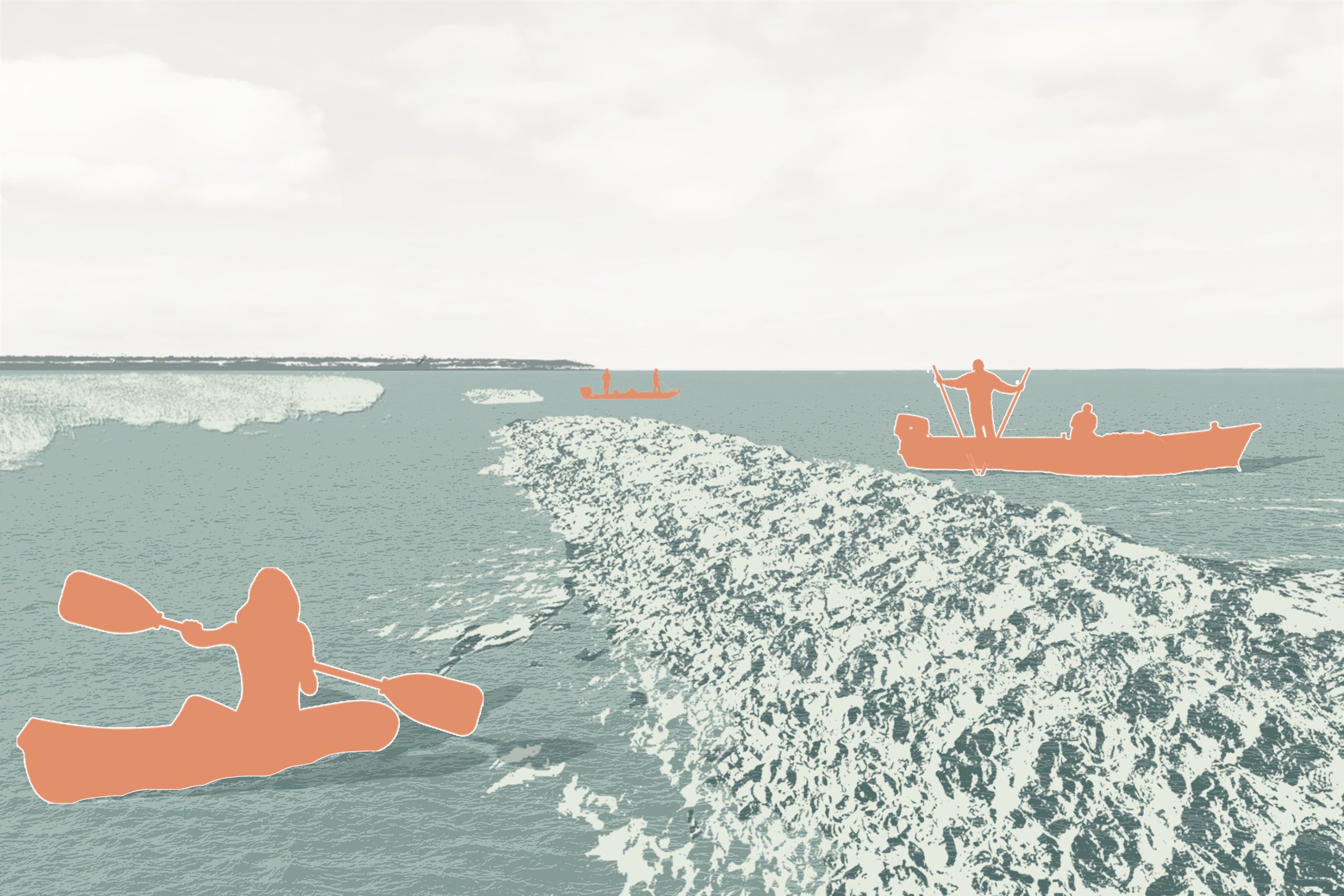
“Getting students together to understand how other disciplines approach coastal issues is really important for a complete understanding of the problems and solutions,” she said.
In the spring of 2026, Ward will hold his annual Biodesign course, creating the design materials to host a speculative festival that highlights the importance of the bald cypress to wetland ecologies in the Mobile Delta.
“The Gulf Adaptation Design Studio gives students an opportunity to apply principles of visual communication and graphic design to important environmental issues,” Ward said. “They learn how to conduct interdisciplinary research and develop visual narratives about coastal resilience that can be presented to a broad public.”
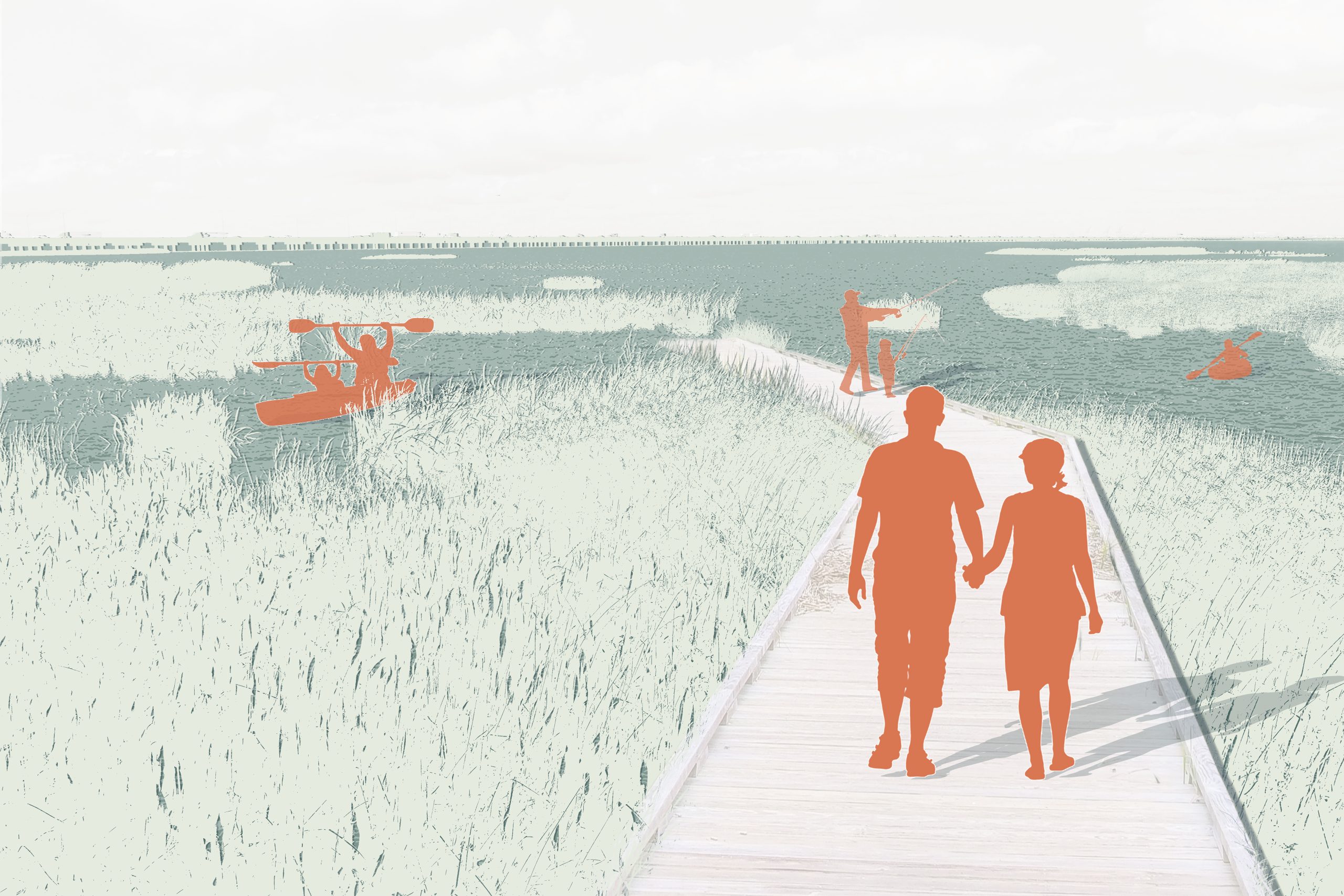
Frolet and Cohen will also run a joint studio between Architecture and Landscape Architecture, studying the overlap between environmental and social challenges caused by the global shipping industry, the coal mining and shipping industry, and the process of sewage and wastewater treatment.
“Water is a defining feature of the landscapes in which we live, work, and play,” Cohen said. “The ways that designers work both with and against it say much about how we imagine our work to address the critical challenges of today, remediate past harm and envision a built environment that meets the needs of human and non-human communities alike.”
“Few places offer the opportunity to engage in the intertwined relationship between water and the built environment like the Gulf Coast,” he continued. “The Gulf Adaptation Design Studio does just this.”
See more in:
Creative Work,
Faculty Collaboration,
Faculty Recognition,
Faculty Work,
Outreach,
Research,
Student Experience,
Student Recognition,
Student Work
Related people:
Rob Holmes,
Isaac Cohen,
Aurélie Frolet,
Devon Ward