ARCH, BSCI Students Explore Life Cycle of Mass Timber
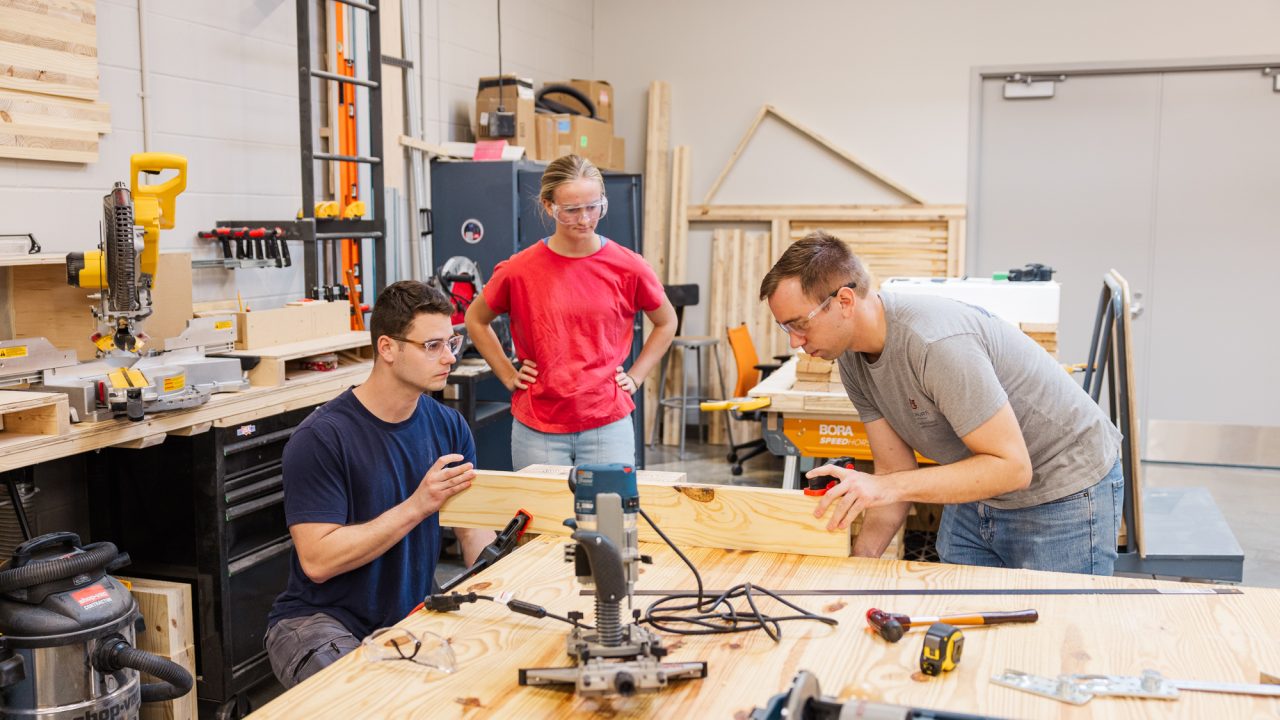
This fall, Architecture and Building Science students are gaining hands-on experience with one of the industry’s fastest-growing materials: mass timber.
The interdisciplinary seminar, co-taught by Architecture Professor of Practice Tom Chung and Building Science Assistant Research Professor Jake Elbrecht, takes students through the entire process—from forest to fabrication to installation. Both instructors are members of the Auburn Mass Timber Collaborative, a research group working to grow resilient communities through research, education and outreach.
Now in its third semester, the course blends design thinking with real-world applications. It gives students a 10,000-ft overview of mass timber.

“I hope students take away a general understanding of what mass timber is and how to work with it,” Elbrecht said. “Mass timber often gets value-engineered out of a project because of sourcing challenges and lack of expertise, both on the design side and the construction front. We want to change that, especially here in the Southeast.”
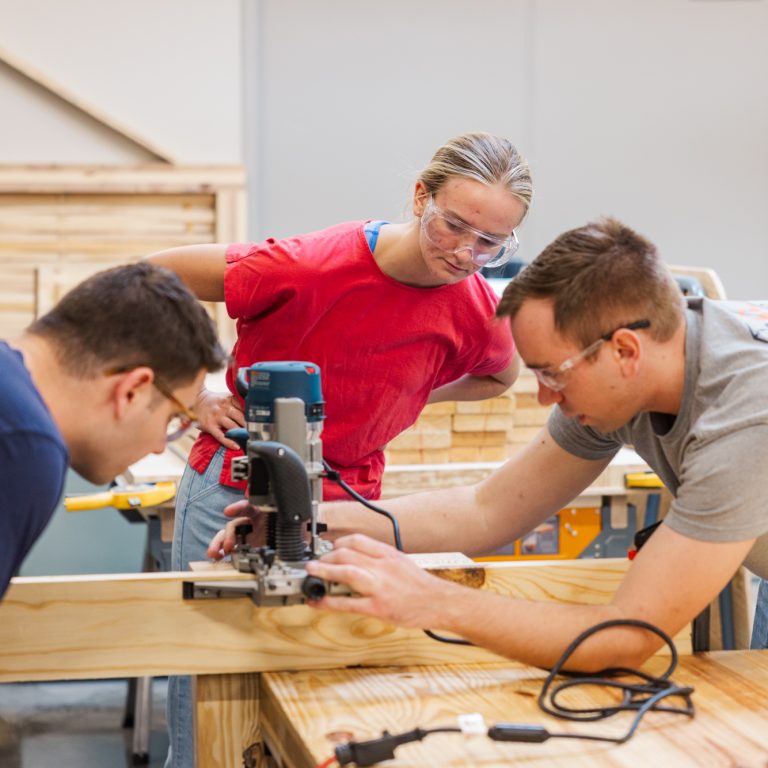
The class includes four students from the School of Architecture, Planning and Landscape Architecture (APLA) and seven thesis students from the McWhorter School of Building Science (BSCI), who work together to understand the opportunities and challenges of using mass timber in construction.
Throughout the semester, students visited the Mary Olive Thomas Demonstration Forest—which is managed by the College of Foresty, Wildlife and Environment (CFWE), the West Fraser Timber Co. sawmill in Opelika and the Kreher Preserve & Nature Center Environmental Education Building—a recent mass timber project designed by Chung’s Boston-based studio Leers Weinzapfel Associates. These experiences give students a tangible look at how the material moves through the supply chain.
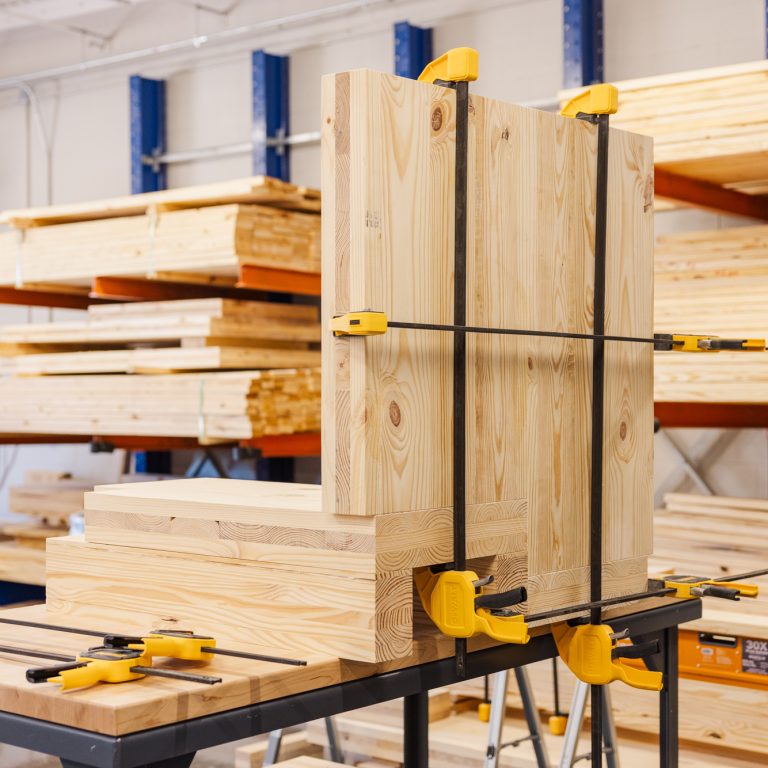
The first half of the course focused on case study lectures, while the second half challenged students to design and build a mass timber mock-up . The 9-sqft project is complete with load-bearing walls, columns and beams and flooring systems—all using different applications of mass timber—and was created using BSCI’s cross-laminated timber press. The project, assembled at the Robins & Morton Construction Field Lab, will serve as a teaching model for future classes.
The seminar builds on the College of Architecture, Design and Construction’s ongoing mass timber pursuits, like last year’s Studio+Build collaboration that prototyped tools for mass timber installation and the Timber Architecture Design Faculty Development Workshop that trained instructors on educational opportunities.
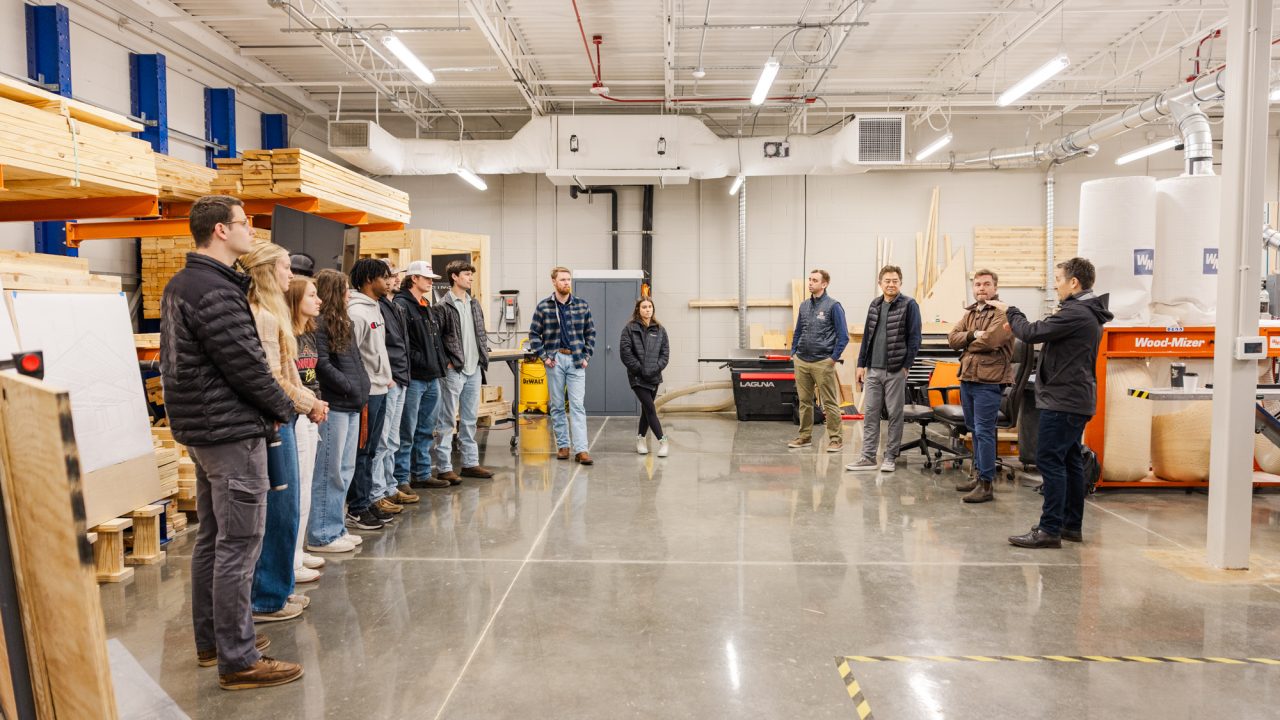
By integrating mass timber into both the architecture and building science curricula, the course helps prepare students for a changing industry.
“Every contractor and designer will likely encounter mass timber in the future,” Elbrecht said. “This course ensures our students are ready to lead that transition.”
See more in:
Faculty Recognition,
Mass Timber,
Research,
Student Experience
Related people:
Jake Elbrecht,
Tom S. Chung