APLA, SIGD Host Fifth Annual Day of Design
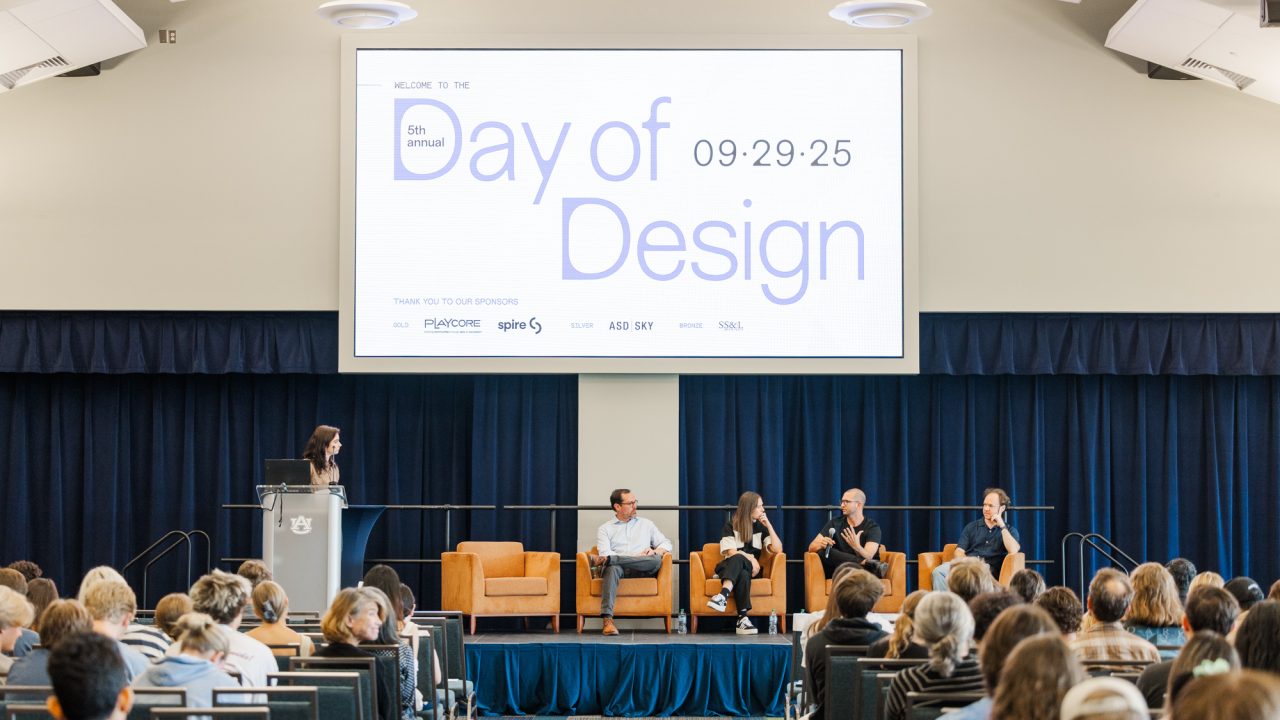
Fabrication was the name of the game at the College of Architecture, Design and Construction’s (CADC) fifth annual Day of Design.
On Monday, Sept. 29, students, educators, alumni and guests gathered to hear from industry professionals in the fields of architecture and industrial design and participate in interdisciplinary design workshops centered around fabrication. Day of Design 2025 was held at Auburn’s Melton Student Center Ballroom and featured speakers from the disciplines represented in the School of Architecture, Planning and Landscape Architecture (APLA) and the School of Industrial and Graphic Design (SIGD).

Cait McCarthy and Jordan Young
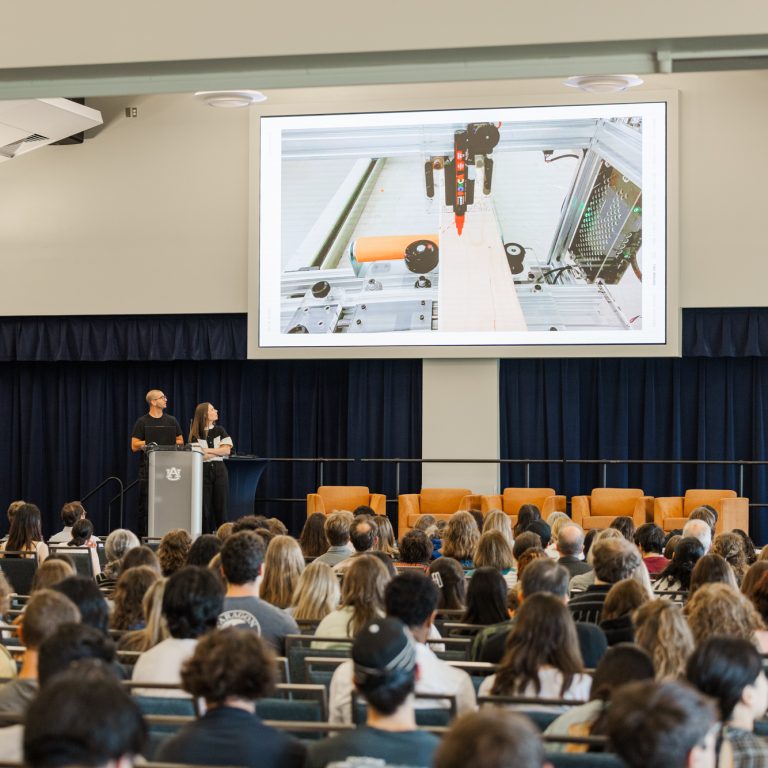
The day kicked off with a presentation by Auburn Assistant Professors of Architecture Cait McCarthy and Jordan Young, the co-founders of office office. The award-winning, interdisciplinary practice designs everything from tote bags to pavilions, graphic entities to exhibitions—creating and experimenting in playful and unexpected ways.
The pair presented their Direct Annotative Construction research, in which a robotic tool inscribes drawings and assembly instructions onto dimensional lumber, negating the need for a full set of construction documents.
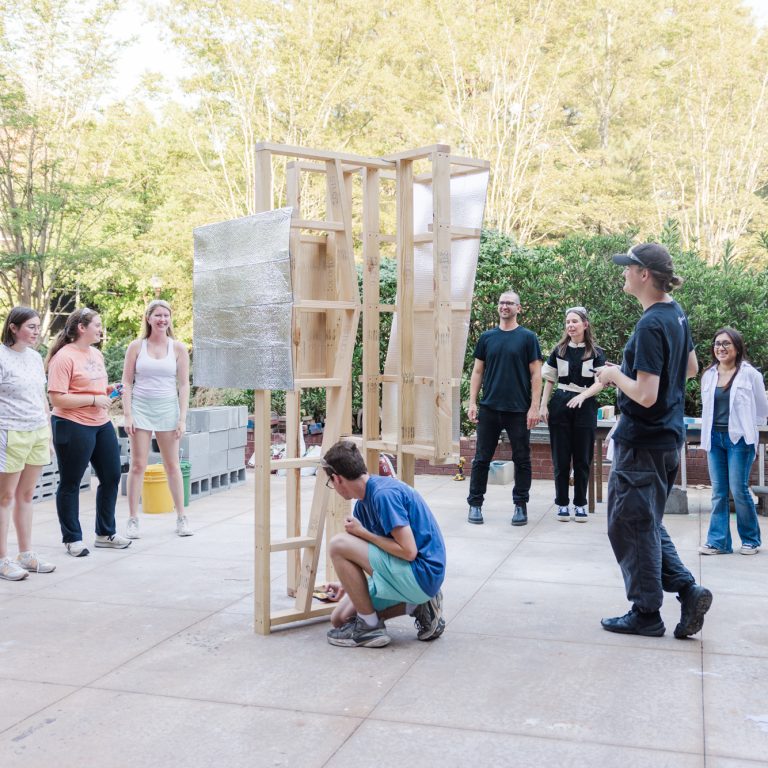
Following the presentations, the students participated in a workshop with McCarthy and Young, creating an installation entitled “Annotated Assembly 02” to test out the method.
“This technique allows people who have very little construction experience to take part in the fabrication process,” McCarthy explained.
Jesse Louis-Rosenberg
The next speaker was Jesse Louis-Rosenberg, the co-founder and chief science officer of Nervous System. An artist, computer programmer and maker, he employs simulation techniques to design and create new fabrication machines. After studying math at the Massachusetts Institute of Technology, Louis-Rosenberg worked at Gehry Technologies in building modeling and design automation.
“I hope students gain a hands-on understanding of how digital tools can transform creative ideas into tangible forms,” Louis-Rosenberg said. “By exploring computational design and fabrication, I want them to see how art, design and technology intersect to open up new possibilities for making.”
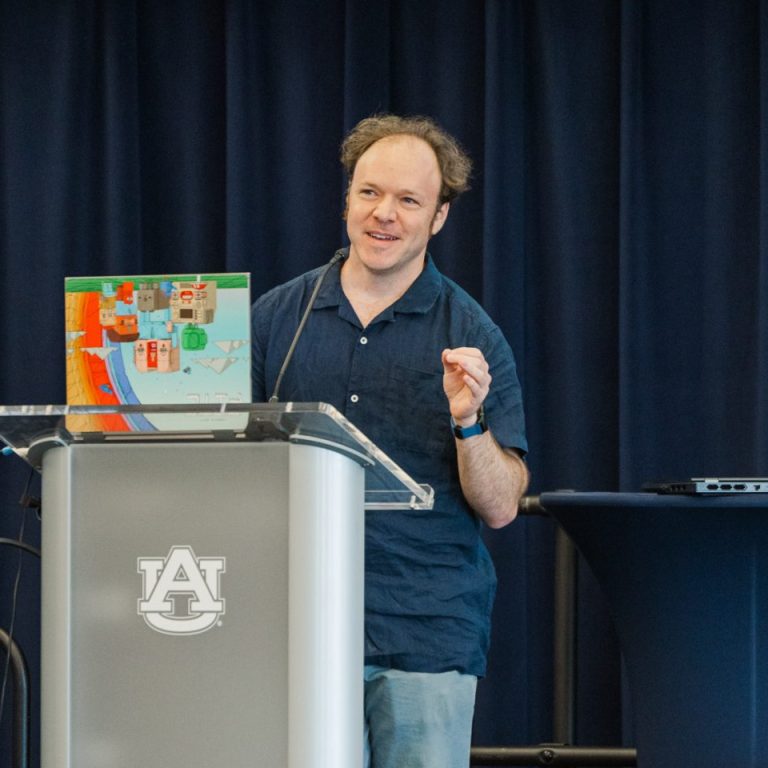
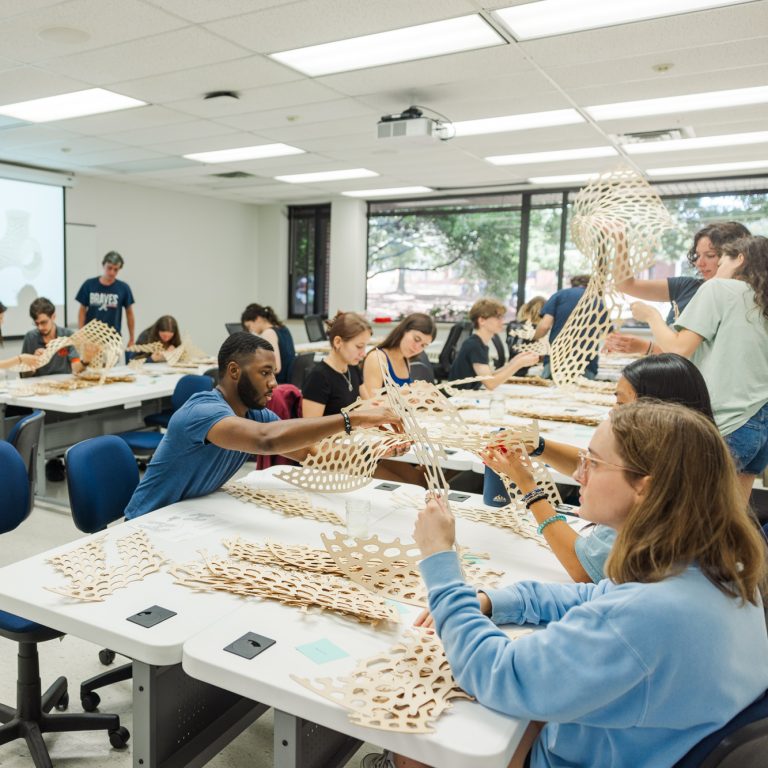
He led a computational design workshop in which students transformed pieces of wood veneer into art sculptures using Nervous System’s custom software.
Platt Boyd
The final speaker of the morning was alumnus Platt Boyd, a 1998 APLA graduate. Boyd is the founder and CEO of Branch Technology, a company that combines freeform 3D printing with conventional materials to prefabricate architectural assemblies. Branch Technology’s Cellular Fabrication method incorporates methods observed in nature, while minimizing material use, for design-build projects that give back—like homeless shelters that offer housing to those who don’t have them.
“Auburn’s focus on design-build, the integration of design and making has been fundamental to my career,” Boyd said, noting that he learned how to negotiate collaboration, material and budget constraints and deadlines when he was a student working at the Louis Kreher Forestry Preserve and Rural Studio.
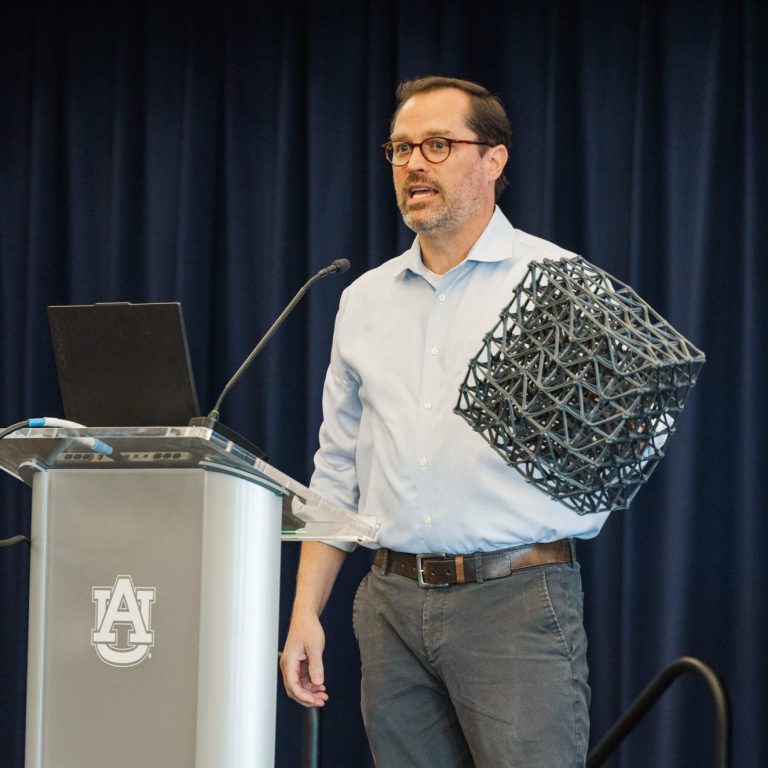
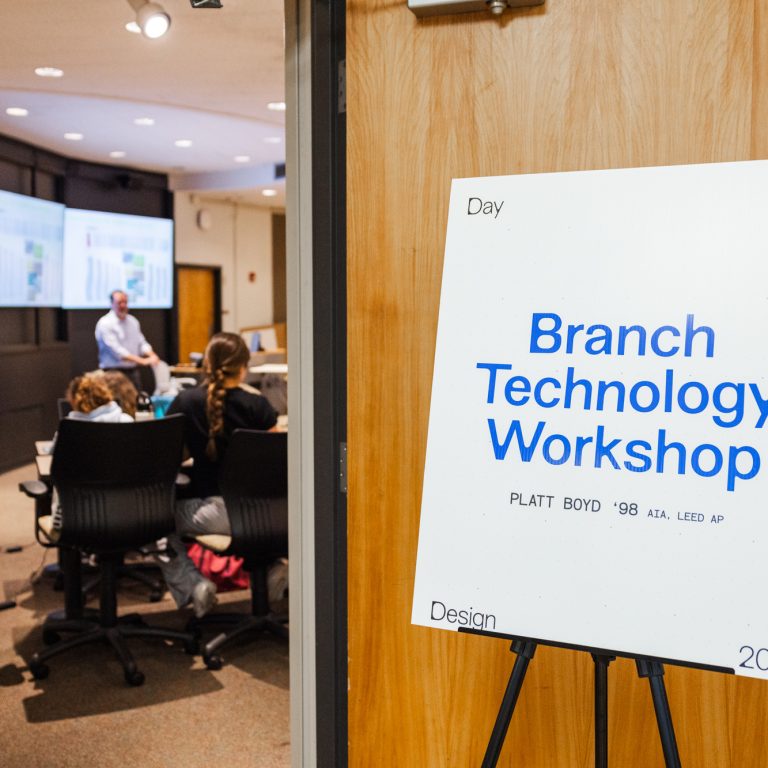
Boyd led the day’s third workshop, taking the students through the steps of Direct Digital Fabrication, illustrating how a project can go from an external idea to a tangible reality.
CADC is extremely grateful to those industry partners who sponsored the event, including Gold-level sponsors Playcore and Spire, Silver-level sponsors ASD | SKY and Bronze-level sponsors SS&L Architects.
Related people:
Cait McCarthy,
Jordan Young