APLA Alum Wins Auburn Black Alumni Award
For Jessica Hughes Bennett '08, architecture has always been about more than buildings. It is about authentic problem-solving and creating spaces that serve people and communities.

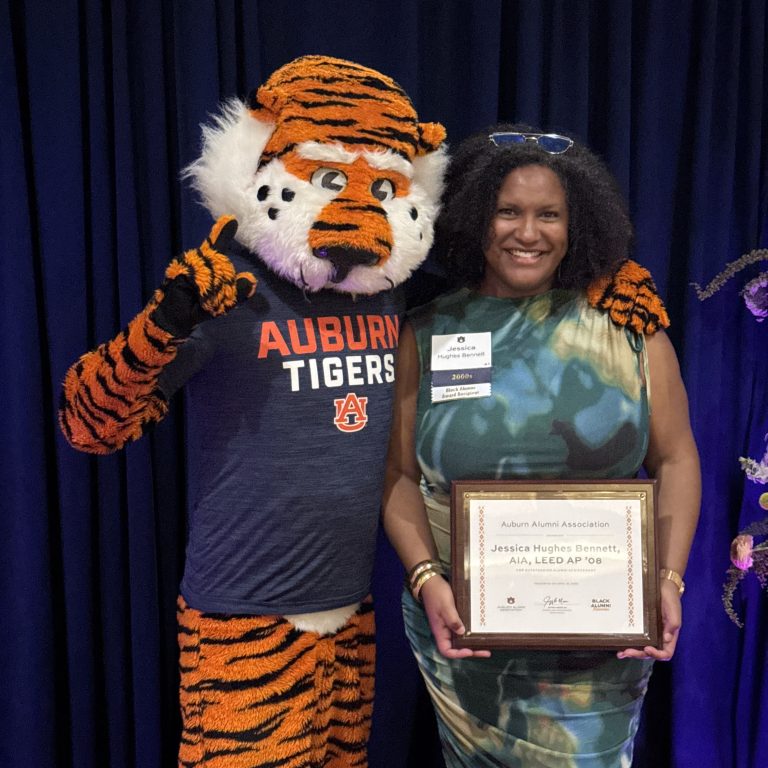
That philosophy has shaped her career as a partner at Birmingham-based ArchitectureWorks, informed her longstanding commitment to Auburn University and led to her recognition as the College of Architecture, Design and Construction’s (CADC) winner in the 2026 Black Alumni Awards.
A 2008 graduate of the School of Architecture, Planning and Landscape Architecture (APLA), Bennett has built a career defined by thoughtful design, mentorship and service. She traces much of that foundation back to architecture school, where long nights in studio and rigorous critiques taught lessons that still guide her today.
“Architecture school teaches you how to think,” Bennett said. “It helps you build the basic skills you need to survive in a profession that ebbs and flows, both with the economy and within projects.”
She credits Auburn with preparing students not just technically, but mentally—training them to navigate uncertainty, adapt to challenges and develop resilience. Those lessons were strengthened by a close-knit support system formed with classmates, many of whom remain friends and professional peers today.
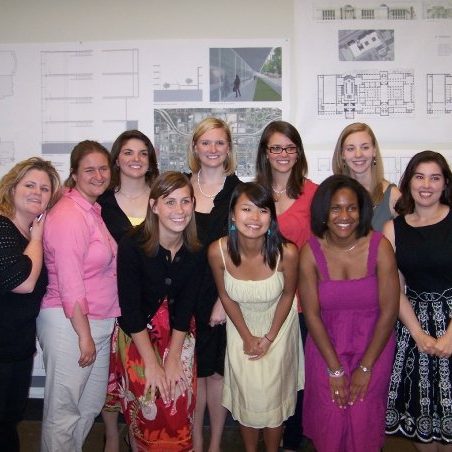
That collaborative spirit carried into Bennett’s professional life—finding her first post-grad job through Urban Studio, studying for her licensure exams with colleagues and calling on classmates to navigate early-career shifts during the recession before finding her long-term home at ArchitectureWorks in 2016.
In 2023, she was elevated to partner, a role that expanded her perspective from project leadership to mentorship and firmwide strategy. As a partner, she has found that success is less about individual achievement and more about guiding teams toward the strongest solution.

“We want to find the best solutions for our clients,” she said. “It’s very much a team effort, and we can get it right if we do it together.”
One of her favorite projects is the Leaf & Petal development in Cahaba Heights, a retail nursery and community area transformed tornado-damaged property in the Birmingham community where she grew up.
She finds long-term educational projects, including work with Highlands School and the ongoing Alabama School of Fine Arts, especially rewarding because they allow her to build relationships with educators from early comprehensive plans to building occupation.

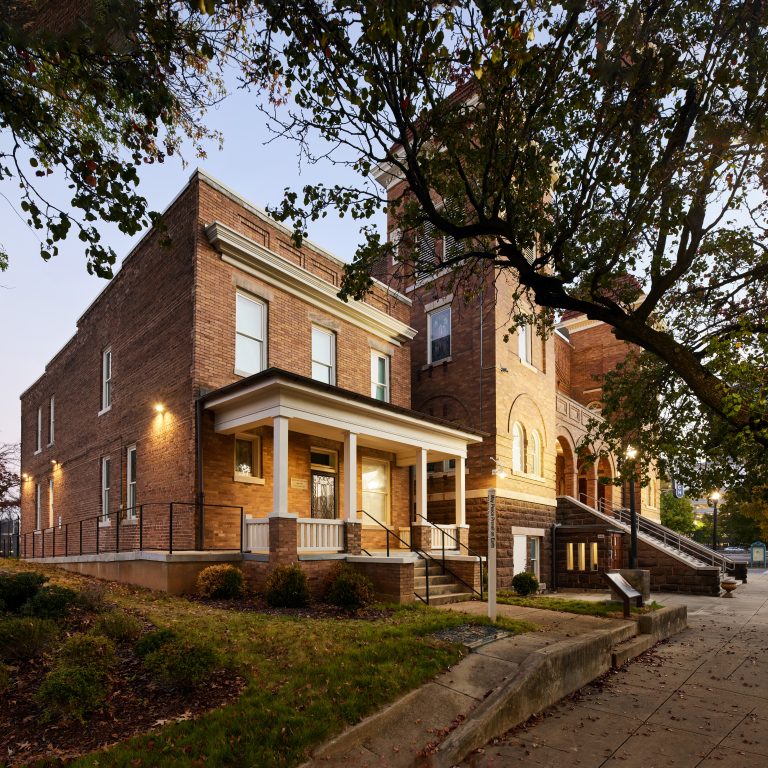
Equally significant to Bennett has been the firm’s preservation work at the 16th Street Baptist Church and Bethel Baptist Church in Collegeville. Through National Park Service-supported restoration efforts, she has helped protect sites central to Birmingham’s civil rights history.
“It’s a privilege to work on those and help maintain that legacy for years to come,” she said.
Bennett serves on the Birmingham Land Bank Authority’s board of directors, helping create opportunities for home ownership and rehabilitating aging city infrastructure. She is also a member of APLA’s Architecture Advisory Council, participates in the fourth-year professional practice course and supports Rural Studio, where more than half of ArchitectureWorks’ staff have ties. She sees that involvement as both responsibility and opportunity.
“It reinforces that we as alumni need to be active in our colleges,” Bennett said. “By shaping the opportunities students have, we’re shaping the future of architecture.”
That belief is part of what makes her Black Alumni Award particularly meaningful. Bennett was the only Black woman in her architecture school cohort. Rather than allowing that isolation to define her, she focused on visibility and representation—being present, saying yes and showing those who follow her what is possible.
“I want to be visible as a woman and visible as a minority and show students there are opportunities for them at a high level,” she said, viewing the honor as a reminder of the importance of continued engagement and representation within the profession.
She encourages Auburn students to take advantage of the place-based learning and outreach opportunities the university provides across many of its academic programs. Those experiences help students transition to their careers while finding unique, authentic solutions to the problems their professions aim to address.
“Learning how to think through problems in college means you can think through them in the real world,” she said.
See more in:
Alumni,
Alumni Recognition