Robins & Morton Field Lab Celebrates 5th Anniversary
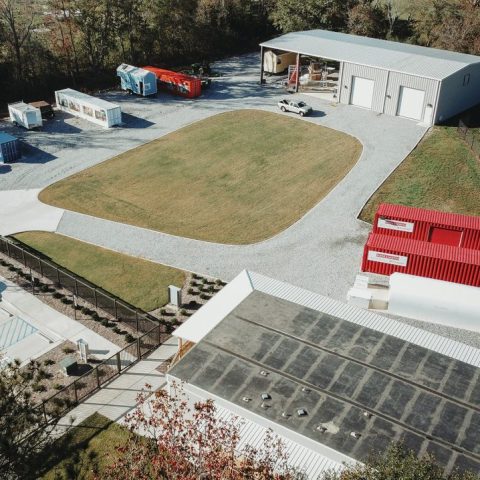
The McWhorter School of Building Science (BSCI) is celebrating five years of the Robins & Morton Field Lab, which took the program’s experiential learning to a new level.
“It offers the students the opportunity to learn about how construction materials go together,” Richard Burt, School Head and McWhorter Endowed Chair, said, explaining that the courses that operate out of the Robins & Morton Field Lab complement the construction theory courses taught in the Gorrie Center.
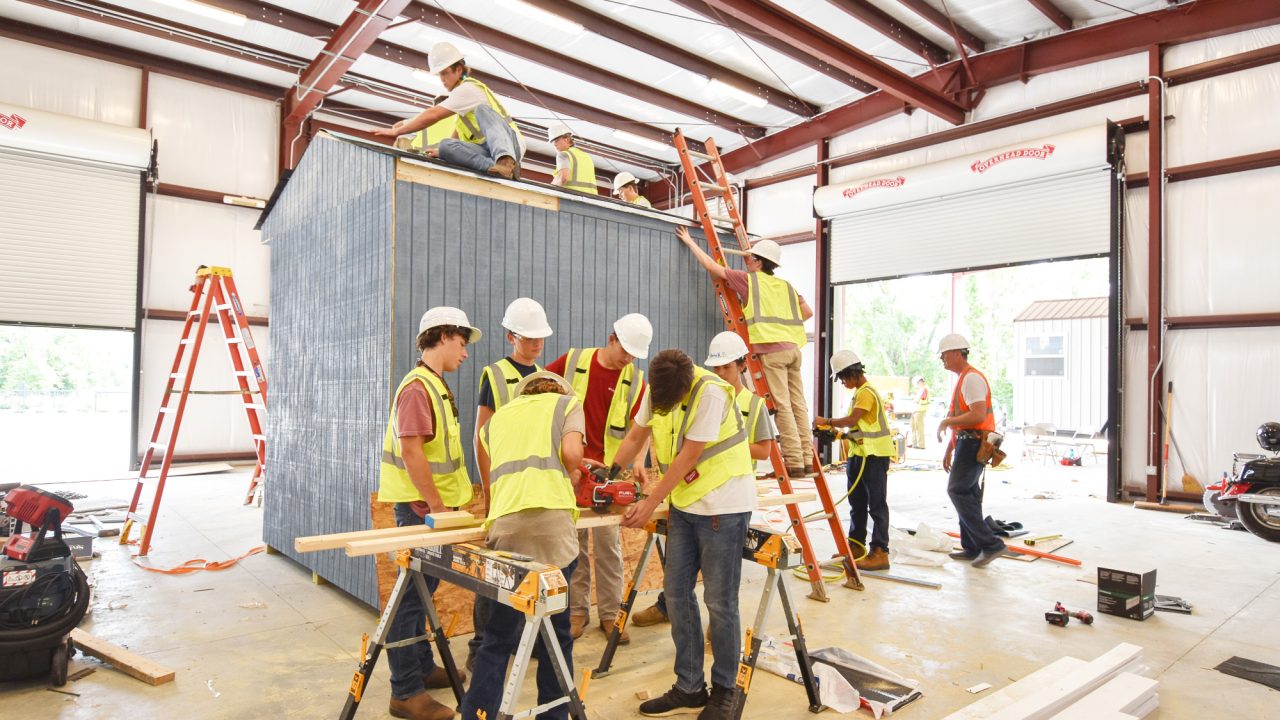
The BSCI program has included hands-on learning opportunities through community service projects for 30 years and has made use of a three-acre parcel of land on West Samford Avenue for the last decade. Once only a classroom trailer and a couple of storage containers, the space hosted workshops and research for concrete, geothermal heating and cooling and wood, steel and soil structures courses.
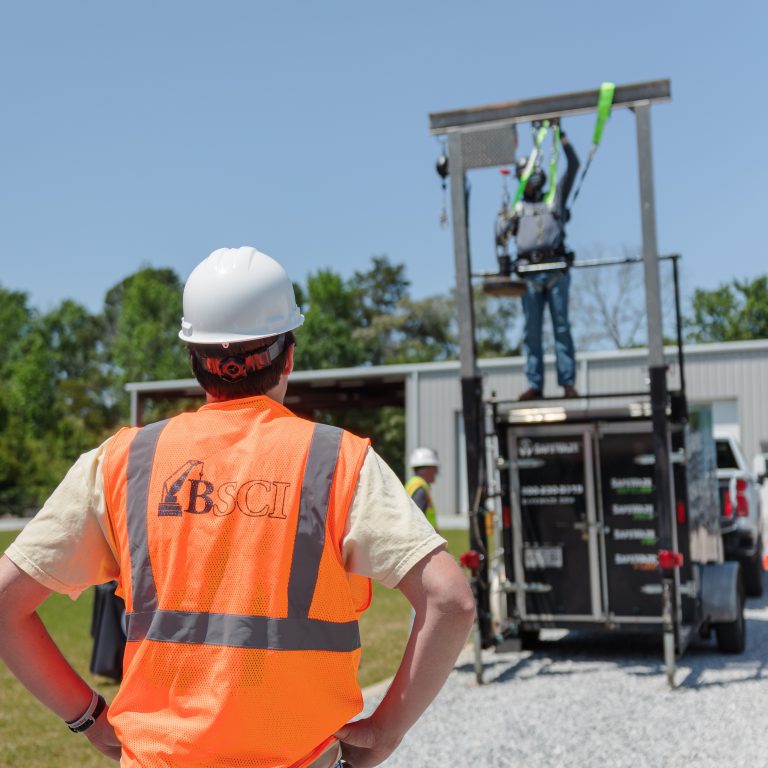

Under the guidance of BSCI faculty Bruce Smith, Michael Hein, Ben Farrow and Mike Hosey, the field lab grew to accommodate courses for Architecture students, safety training and construction projects like housing prototypes for developing countries.
In the spring of 2018, Robins & Morton donated $1.3 million to transform the existing lab to a permanent facility that could cater to the broad experiences and opportunities the program offers, opening the Robins & Morton Construction Field Laboratory in the spring of 2020.
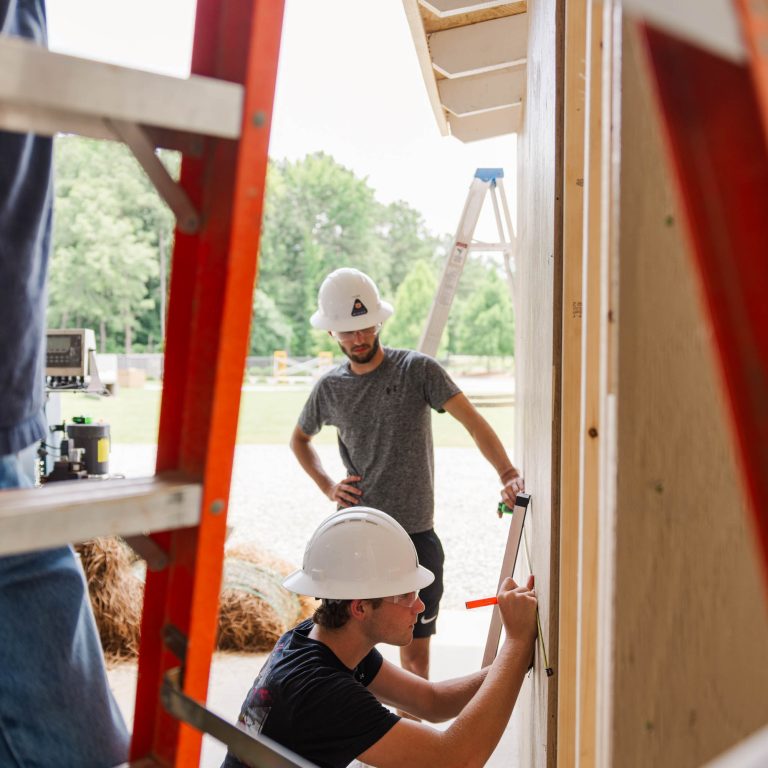
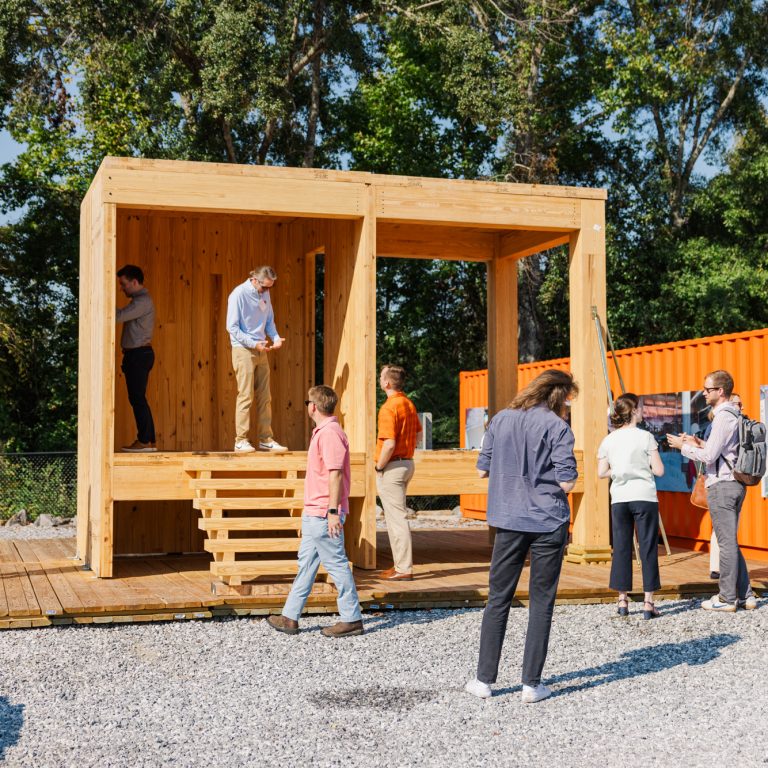
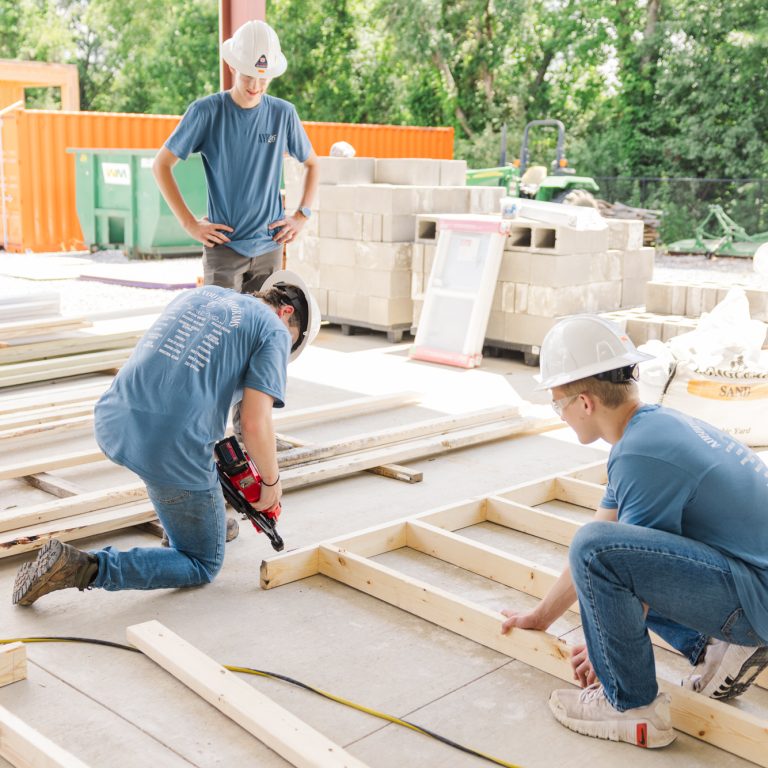
“It provides experiential learning about planning and executing projects, building and being part of a team, and being accountable while executing work,” Mike Thompson ‘82, Senior Vice President of Robins & Morton, said. “It hopefully gives students empathy for the tradespeople they will later encounter on job sites by better understanding how difficult it can be to perform the actual work.”
“Robins & Morton is proud to have been and continue to be a part of something that gives so much validation to the enjoyment and learning that comes out of it,” he said.
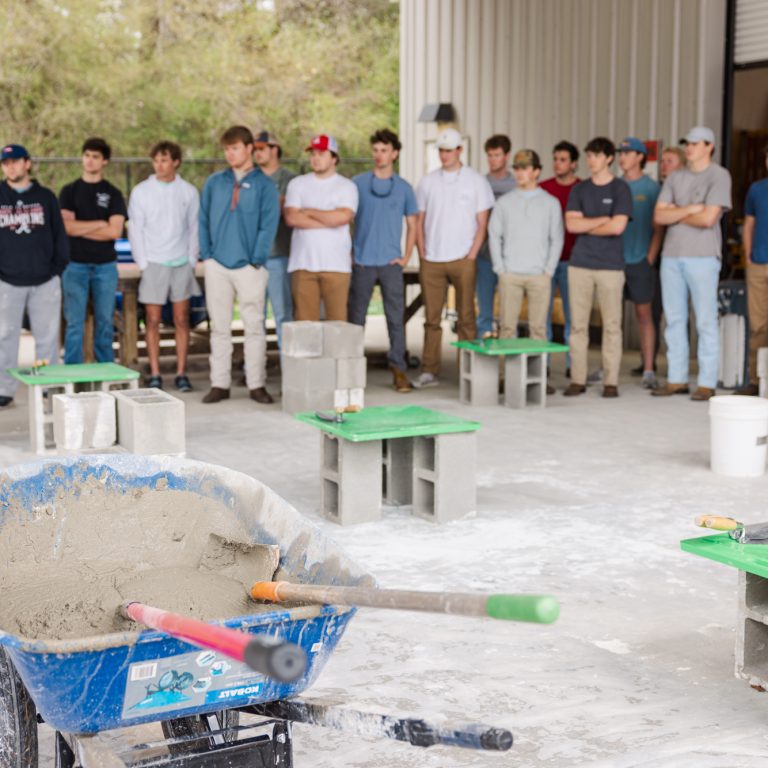
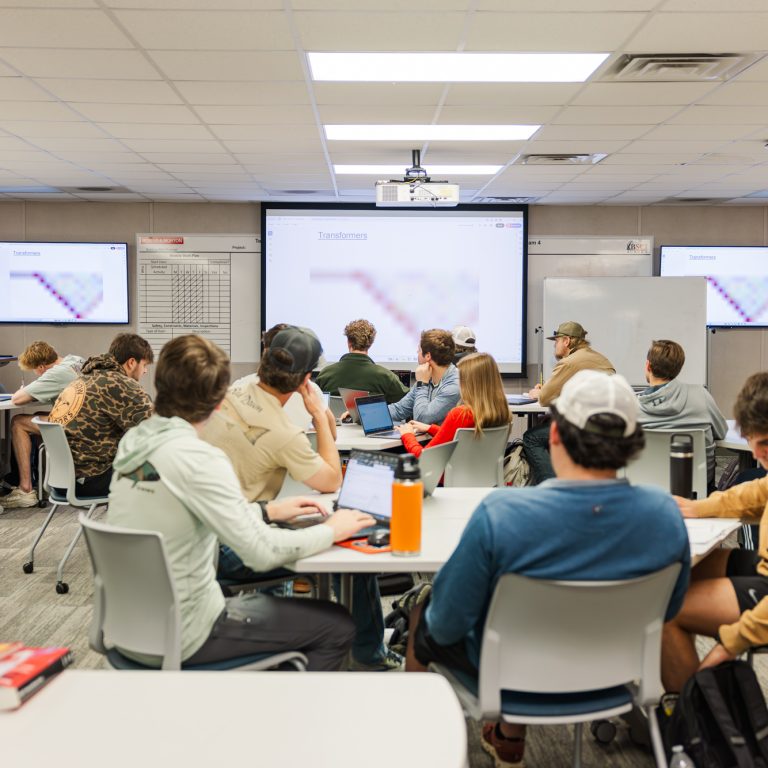
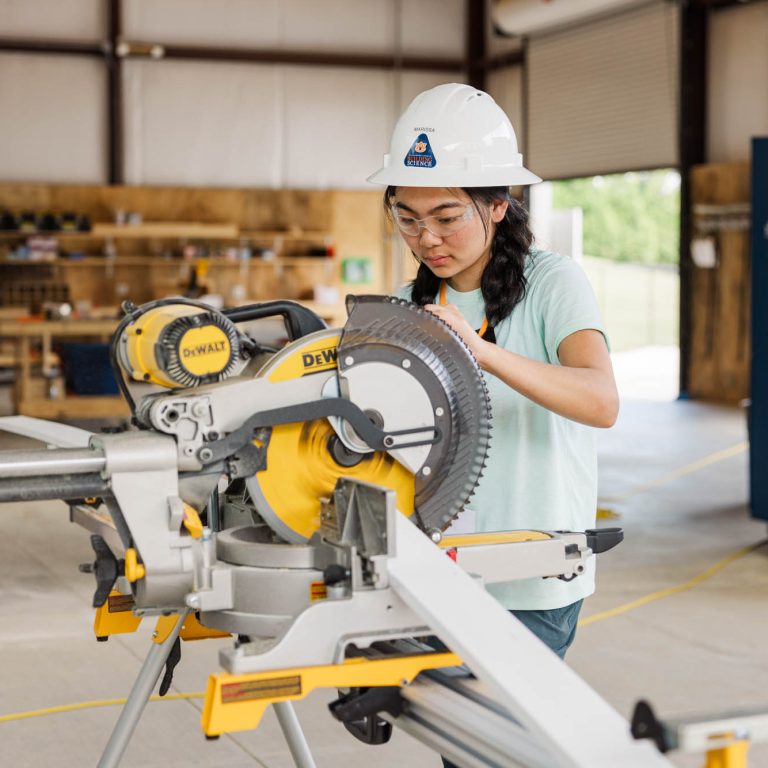
The first of its kind in a university construction program, the Robins & Morton Field Lab functions like a working jobsite with a high-bay building that allows students to build prototypes from scaffolding. The onsite classroom holds 40 students in a professional construction management setting. The controlled environment allows the students to prefabricate construction elements, like panels for Habitat for Humanity houses around Auburn.
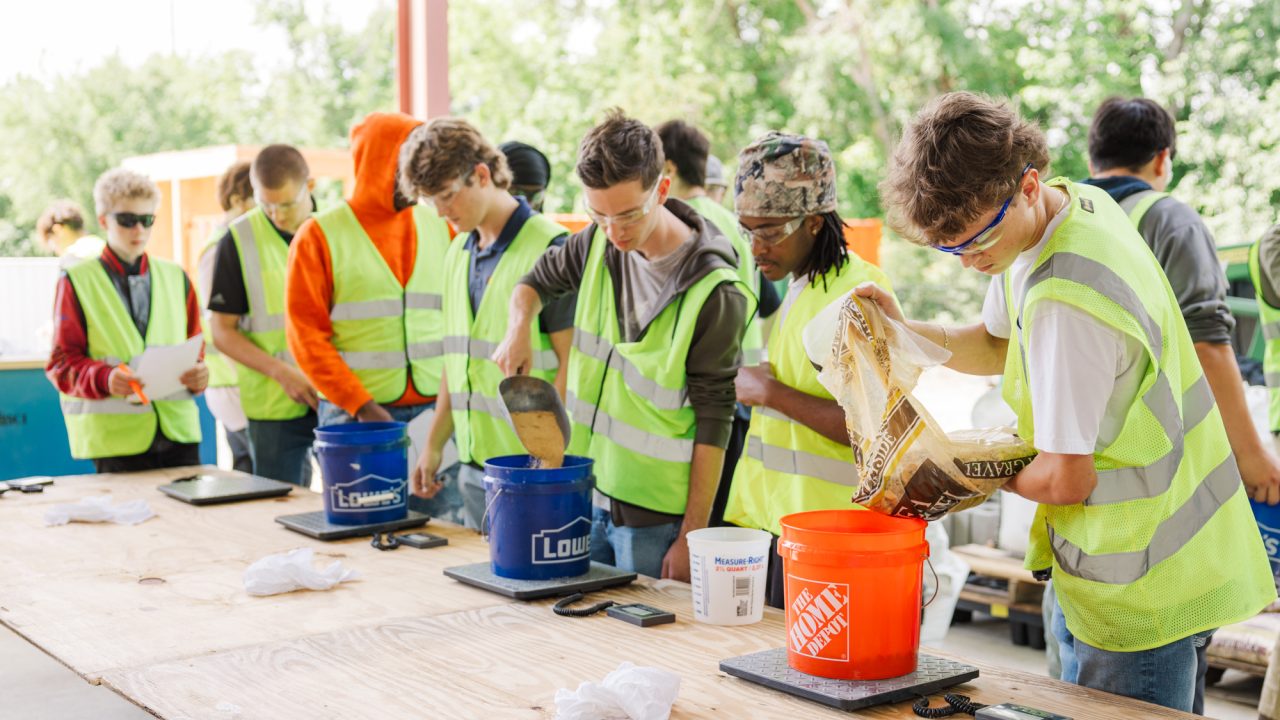
“The Robins & Morton Field Lab provides them with invaluable hands-on experience in building and safety practices, which are crucial for their development as effective construction managers,” Field Lab Manager Andy Hughes said. “This practical exposure not only enhances their learning but also significantly boosts their confidence and readiness for the industry.”
See more in:
Community Engagement,
Faculty Collaboration,
Faculty Work,
Industry Collaboration,
Industry Engagement,
Industry Recognition,
Student Experience
Related people:
C. Ben Farrow,
Richard Burt,
Mike Hosey,
Andy Hughes,
Amna Salman